Category: Issue 5

  • Incubators, Creators and a Wooden Motorcycle

    Incubators, Creators and a Wooden Motorcycle

    A black and chrome coloured motorbike with a large headlight travels down Glebe Point Road. Hilik rests upon the noticeably altered vehicle, wearing beige workpants, leather boots and prescription glasses. Attached to the bike’s rear are two parallel grinding wheels—levered to what looks like the engine of a lawnmower. Steel boxes hang off the bike’s frame for additional storage. Hilik veers right onto Mitchell Street and out of sight.

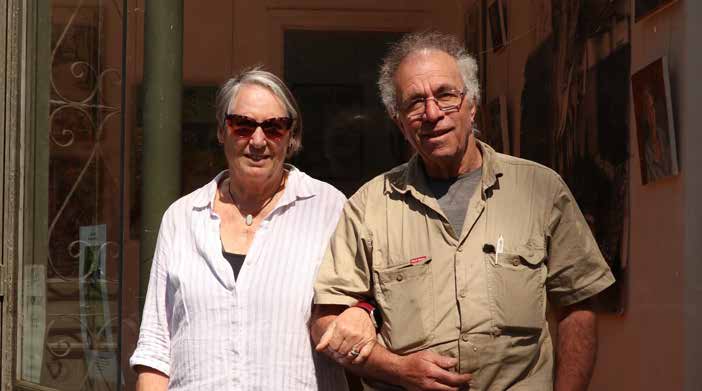
    A few minutes later, Anna reverse parks her white hatchback into an empty space directly outside 112 Glebe Point Rd— Otherwise known as The Shop Gallery. She exits the vehicle before opening the gallery door to a spacious room, well-lit by the morning Winter sun. Upon entering, both Anna and Hilik offer me a homely welcome. It feels like walking into a cloud before the warm tones of dusk take hold. The bare white walls and dangling vacant hooks emit an aura of looming imagination—an urban blank canvas to be interpreted and reinterpreted across time and space. Looking back out to the street, you can see a window-framed snapshot of this suburb in gradual motion— characters passing across the pavement like the steady hands of a clock: time marches forward, the youth grow too big for their bicycles, businesses come-and-go; this suburb inevitably changes, but at a tempo that suggests permanency.

    Anna reflects this outward gaze in her poem, The Street.

    the sun is blazing through the gallery window 
    we talk in the shade near the wall
    the artist prefers to sit on the floor
    young parents walk past with toddlers
    to the pre-school kindergarten down the road
    the garbos drop by for a coffee across the road
    and empty the street bins on the way
    a spiky seed falls from a street tree
    a couple of kids jigging school
    come downhill
    one on a skate board
    the other racing behind
    the guy with the straw hat walks past, waves
    from the outside
    taking photos
    the reflection of clouds is superimposed
    over the open bird cage
    the artist’s hats are visible in the mirror

    Anna Couani and Hilik Mirankar opened The Shop Gallery in December of 2014 as a space to share the vast spectrum of creative works emerging from within Glebe and beyond; from emerging artists seeking an accessible outlet, to those more established revisiting or reimagining their legacies. Hiring fees are kept cheap for artists. For those wishing to utilise the space, “it’s still a few hundred bucks,” Hilik says, “but it’s relatively cheap. Affordable, yeah. It’s not commercial rent”.

    “We don’t make any money out of it,” Anna says.

    Behind the exhibition space extends a long, two-storey warehouse. The bottom floor is filled with wooden sculptures: Hilik’s personal archive of timber expressions; shaped by the tools of curiosity, selfdiscipline, and fifty years’ experience. And then there are of course, the tools: an army of steel objects spread across the walls and benches—the little henchmen of a well-governed kingdom.

    There’s a youthful energy in how Hilik discusses his almost lifelong practice. He says that his creative process is “very self-directed. I keep sculpting all the time. Sometimes it’s more fluent than others. It’s ongoing. And sculpture is an activity that requires a lot of work. I will make sure that the tools are in good condition. The space is well organised, and the truck is running properly, and the crane is working and all the other things that relate to sculpture.” As to how he approaches each new project, he says “there are different modes of working. The motorbike that I’m sculpting now…. it’s a combination of construction and carving. The wheels are carvings”.

    The bike he refers to is a replica of the one seen earlier cruising down Glebe Point Road. It is recognisable to many throughout this city. The wheels attached to the bike’s rear have sharpened the knives of countless chefs throughout the city for decades—a door-to-door service that has been Hilik’s main occupation alongside his passion for sculpting.

    “He finds logs everywhere,” Anna, his wife of 39 years adds, “especially after big storms. There’s wood everywhere. He sliced those logs into circular shapes, and then he started making wheels”. “I’m in this stage of my life now that I’m just about to stop sharpening,” Hilik says, “I’ve been doing it for 47 years. It might happen tomorrow.”

    “That particular motorbike, symbolises for me the end of sharpening. It’s like something to put on my grave, you know?” Hilik jokes.

    We now sit on the second floor above the gallery space, surrounded by various sketches, prints, paintings, sheet music, an electric piano, books, journals, anthologies: the various means and ends of Anna’s imagination that has cast an ever-widening net throughout her life.
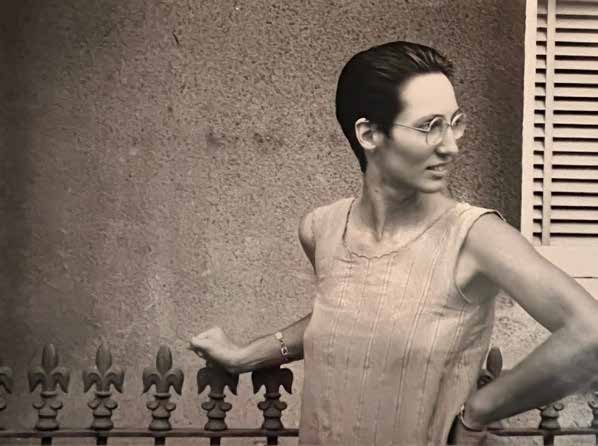
    Anna pictured in 1981
    Anna pictured in 1981

    Anna lived with her family in Surry Hills during the 1960s before eventually moving to Glebe in 1971. By then she had reached early adulthood—a painter and student of architecture at the University of Sydney arriving upon the doorstep of Glebe’s radical era. She quickly became immersed within a generation of students, activists and creatives inhabiting the decrepit houses that sheltered a fast-growing community. One that was eager to reshape culture in lasting and socially conscious ways.

    Anna portrays this formative moment of her life in the poem below:


    The Old Mansion
    The first place I lived in Glebe in the 70’s
    was a couple of rented rooms
    in a crumbling waterfront mansion
    a bay window in a big room
    overlooking The Harbour Lighterage Company
    with their fleet of tugboats
    that chugged home in the evening
    twinkling lights under the stars
    an industrial scene in miniature
    with their cranes and slip rails
    I remember my parents
    mother shedding a tear
    at the state of the walls
    that she would become immune to
    eventually
    after visiting so many more of the same
    down the years
    vintage Glebe
    the land sloped all the way to the water
    without a fence
    at the water’s edge in the shallows
    was a small beach
    and walking into the water
    the brown mud squelched between your toes
    seemed saturated with grease
    embedded with shards of civilisation
    sharp things

    today the waterfront walk has claimed a slice
    of waterfront land
    from the end of the bay winding around
    to the busy highway
    beautifully landscaped Council initiative
    I stand at the water looking up at the old mansion
    at its bay window
    at the still unpainted derelict walls
    just as they were 45 years ago
    now the slope to the water
    once dry and bare
    is jungle
    the big Harbour Lighterage crane
    now an arch over the path
    historical remnant
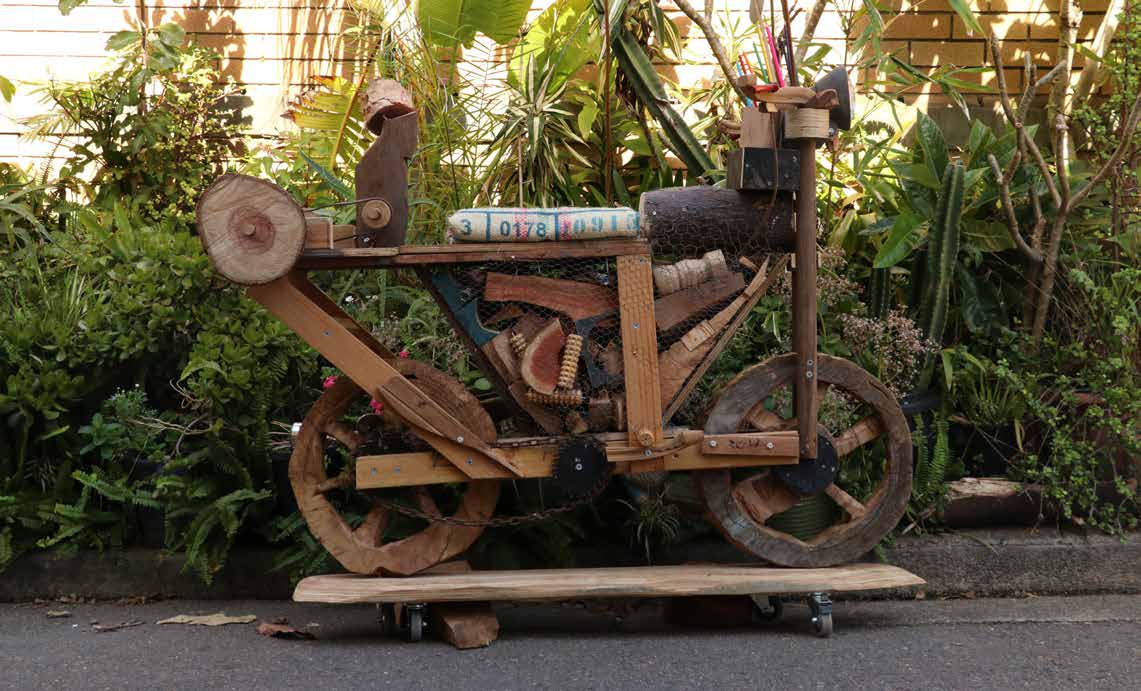
    Hilik’s wooden motorcycle replica. Photograph: Orlando Sagar
    Hilik’s wooden motorcycle replica. Photograph: Orlando Sagar

    Soon later, Anna developed a friendship with her university tutor Ken Bolton, who eventually became her partner of four years. Their relationship grew within a simmering local scene of creative writers.

    “I met a group of poets that would get together and read each other’s work. And there were all sorts of interesting people coming in. I had been writing a bit before that, but not in any kind of public way. And so I sort of ditched painting for a while and became a writer. We (Anna and her partner Ken) began publishing this magazine called Magic Sam, and a book series called Sea Cruise Books. We used to go up to Sydney Uni and run it off their Roneo machines (hand operated stencil machines used for duplicating documents). And we’d go to the Tin Sheds to do the silkscreen covers…and Tomato Press, which was in Glebe, to do the stapling. And we had these wraparound silkscreen covers.”

    Anna later published anthologies of short fiction alongside Damien White and Tom Thompson, collections that pushed the written word into unexplored territories.

    “It was (at the time) mostly just the novel. There wasn’t…I called it experimental prose.”

    As an emerging female writer of the 1970s, the weight of misogyny was a constant burden: “there was this big schism in the writing scene because the men couldn’t tolerate this idea of a women’s writers’ group. There were certain kinds of Jack Kerouac type of men: male writers who were On The Road kind of tough guys.” As a direct response to this, Anna and a group of women from the Poets Union formed the women’s writers group No Regrets.

    No Regrets operated on a monthly basis for twelve years, throughout which writers would meet, present their work, and openly workshop ideas. Throughout this time, No Regrets would publish three anthologies of their own work.

    In 1986, Anna walked through the doors of an old industrial warehouse at 2 Kelly Street, Ultimo—just 100 metres down the road from her home. Part of the councilowned building had been converted into a spacious art-gallery known as The Kelly Street Kolektiv—sheltering around 100 artists to create and exhibit their work. It was here that Anna would soon meet the gallery’s founder and form a decades-long bond.

    “We operated there for two years,” Hilik says, “and many other art studios emerged in the building. It was like a hive of artists. And it just snowballed. People kept hearing about it. More people would come in. I lived there. And after a while, there was another group of artists that took the floor below me”. The crew downstairs became known as The Ultimo Project, which remains active to this day at the Addison Road Community Centre in Marrickville.

    In a 2017 essay for The Sydney Review of Books, Anna recalls this critical juncture in her life:

    “I heard about an artist-run collective gallery across the Glebe/Ultimo boundary called the Kelly Street Kolektiv, housed in the old warehouse that is now the International Grammar School. A few friends said, ‘There’s this amazing guy called Hilik (Mirankar), you’ve got to meet him!’ The Kelly Street Kolektiv was a revelation at the time. It had similar ideas to the Poets Union, promoting practitioners independently of the mainstream art structures, with the same internal conflicts about independence. The Kolektiv policy: We accept anyone who calls themselves an artist.”

    The ethos of Kelly Street Kolektiv—the non-discriminatory acceptance of any selfidentifying artist— seems to have anchored the approaches of both Hilik and Anna in the decades since. The Shop Gallery carries forward this sense of openness and accessibility for artists from across the suburb, the city—this vast country. Just around the corner on Queen Street, Hilik’s wooden sculptures adorn the front porches of around a dozen terrace houses. For almost 25 years this public exhibition has become the beloved feature of a street framed by the sandstone walls and iron lace of old Glebe. Each sculpture carries a distinct personality— never imposing on what was long already there but revitalising the raw beauty of Glebe’s collective memory.

    Anna and Hilik share a commitment of passing down their knowledge and experience to emerging generations of writers and artisans alike. From 1972 to 2016, Anna was a high-school art teacher. She also taught English to ESL students throughout this time, eventually publishing ESL training booklets for the NSW Department of Education.

    More recently, Hilik has been sharing the techniques of his beloved craft, to “two girls who want to learn about sculpture.”

    They don’t work as apprentices where I give them jobs to do,” he says, “they do their own work… it’s more of a mentorship”.

    “One of them turned up here at the gallery,” Anna adds, “and asked to have a book launch because she’s a poet. It was about 18 months ago, and she saw Hilik’s studio. And then came back and asked him if she could work with him here. But then Hilik met someone at the market where he does knife sharpening. And she got talking to him and now she’s been whittling things. She started coming and she met Hilik’s other student. And it turns out they’re both poets.”

    Whether through the No Regrets women’s writers’ group, Kelly Street Kolektiv, their educational pursuits, The Shop Gallery, or the various other initiatives they have supported, Anna & Hilik have nurtured spaces that allow disciplines to converge, correspond, and connect people through streams of mutual inspiration. Their combined histories show how art transcends the individual and strengthens communities upon the foundations of our shared vulnerabilities; through the collective empathy that emerges thereafter.

    “Glebe has always been radical. I’ve always seen Glebe as an incubator,” Anna says before we part ways. I exit back through the front gallery space, out onto the footpath before waving Anna & Hilik goodbye, glance up and down Glebe Point Road while considering how this suburb has been a cultural incubator for countless writers, musicians, painters, wanderers, workers, thinkers and fighters. While Glebe’s radical era might now rest upon the pages of history, its spirit survives upon the walls of The Shop Gallery. Its front window reflects a suburb whose gutters have long flowed poetic streams—the salt tears of private pains and sweat-drops fallen from the pores of progressive struggles.

    French author Albert Camus once wrote that art is the greatest “advocate of the living creature, because it is alive.” He believed that the artist “truly argues for love of one’s neighbour”. The Shop Gallery and those inside of it reflect this idea, of how the freedom to express is also the freedom to grow—to entangle one’s branches with those around us in a mutual ascent towards the clouds that await our collective flourishing.

    The poems of Anna Couani included above are all extracted from her collection titled Local. It can be purchased from her website.
  • Glebe’s Strength, Vision and Legacy in NAIDOC’s 50th Year

    Glebe’s Strength, Vision and Legacy in NAIDOC’s 50th Year

    NAIDOC recently celebrated its fiftieth year. The annual event has continued to thrive despite an ongoing struggle for Indigenous recognition and representation within Australia’s media and political institutions. It is these very struggles that have made NAIDOC week all-the-more vital to Aboriginal and Torres Strait Islander People; a time to rejoice in the precious lineages that have nurtured this land for over sixty-five-thousand years.

    NAIDOC stands for National Aboriginals and Islanders Day Observance Committee. Its roots can be traced back to the founding of various Aboriginal civil rights groups in the 1920s, fighting to improve the status and harsh oppression of Indigenous Australians throughout the country.

    A crucial moment in this struggle occurred on the 26th of January, 1938, when over one thousand people filled the streets of Sydney’s metropole to protest the oppression of Indigenous Australians and reflect upon the tragedies of British Colonisation. One of the first civil rights events of its scale, the event became annually recognised as The Day of Mourning.

    By 1956, The Day of Mourning had evolved into ‘National Aborigines Day’; reframed as a time to appreciate the ancient Aboriginal lineages across the country. Both state and federal governments collaborated with Aboriginal organisations to form the National Aborigines Day Observance Committee (NADOC).

    By 1974, Indigenous Australians gained official ownership of the NADOC committee, and the yearly celebration had expanded to a full week of gatherings, ceremonies, yarns, truth-telling, and connections to Country and Clan.

    A decade later, The NADOC Committee recognised the breadth of Indigeneity throughout the neighbouring Torres Strait Islands. It was therefore renamed the “National Aborigines and Islanders Day Observance Committee” (NAIDOC). At the same time there was a push to make NAIDOC an official public holiday for the nation. The government is yet, over forty-years later, to grant such recognition.

    NAIDOC has nevertheless become widely embraced throughout the country. The inherent diversity of Aboriginal and Torres Strait Islander communities—often misunderstood in mainstream discourse—is reflected in the more local traditions that have emerged in recent decades.

    Glebe reveals the importance of NAIDOC at a grassroots level, and how it has been adapted in locally specific ways by First Nations communities. It is considered a sacred time for many throughout the suburb, including Kaanju Wirri woman—Aunty Kath Dodd Farrawell. She is a member of the Glebe NAIDOC Committee, and for the past several decades a beloved artist, teacher and Aunty to the Glebe community. NAIDOC, she says, “means many thousands of years of being and belonging.”

    “It’s very special to have the NAIDOC day,” Aunty Kath says, “because we never had that when we were growing up. We had our families and our way, but to be able to have it at the school and have the community involved, and people that lived in the community but have grown up and come back and contribute. We’re Glebe, respecting the land of the Gadigal people of the Eora nation, and we’re blessed to be able to.”

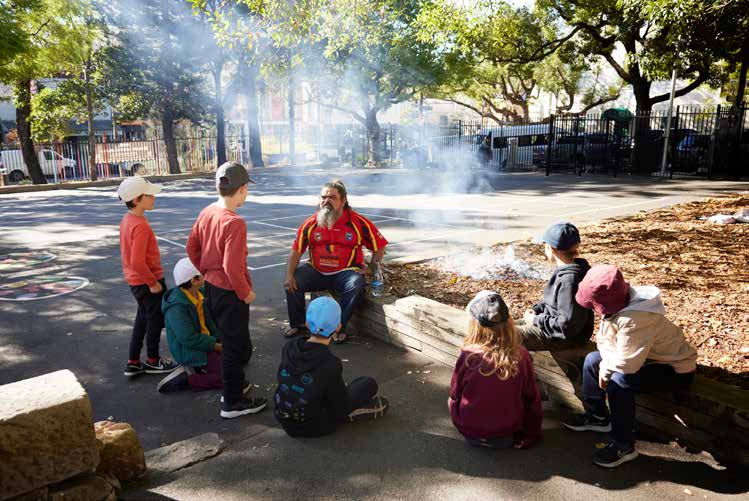
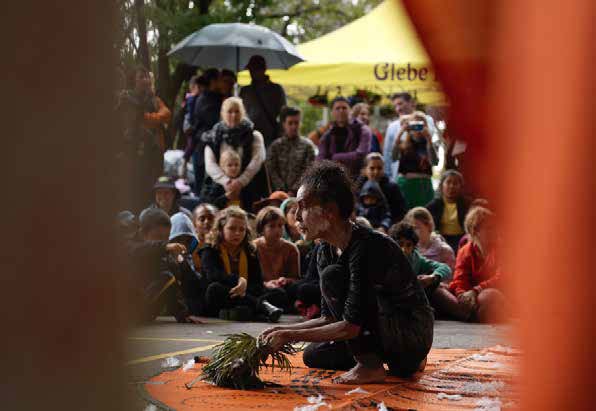
    The NAIDOC Community Day has been held at Glebe Public School for over fifteen years. On the last Friday of the second school term in July, the grounds that run along Glebe Point Road become filled with students darting between market stalls facilitated by local businesses and larger organisations keen to have their impact on a grassroots level. The day revolves around a series of speeches, songs performed by local artists and others invited from afar; a smoking ceremony to initiate proceedings, and dance rituals carrying ancient ties to this land.

    Helen Michael runs Glebe Tree House, a childcare service operating out of Glebe Public School. She has supported the operationalisation of NAIDOC Community Day for the past two years.

    “The event is based on school premises within school hours,” she says, “but it is open to the general public. We had about 1,400, maybe 1,500 visit this year, and about a thousand the one before.”

    In 2025, Helen says, “there was about 50 partners, but the main ones I would say were Bunnings, Officeworks, City of Sydney, SAGE, Glebe Youth Services, St John’s Church (Scarred Tree) and we had some local businesses such as, Addy Road, so many medical centres and local services. And the Oz Harvest gave us beautiful soup made there on their food truck. The school set up a petting zoo. And there was Pottery making from Mission Australia. The local member for parliament, Kobi Shetty was there… it’s just a beautiful thing to be a part of. We’re so lucky to live and be part of a school that hosts so many Indigenous students. We have one of the highest percentages in the state—25% of our enrolments are Indigenous students. And the school does a really good job at promoting cultural safety and cultural advocacy.”

    While the day marks a special point on the Glebe calendar, Aunty Kath emphasises the efforts required year-round to make the day what it is and urges the significance of holding it at the school.

    “It’s not just that particular day of the year or week. It’s about the involvement of Aboriginal education right across the board, and learning. You have really incredible people who are from different parts of the land. We all come from our own belonging areas, but we all work together as a community, and you’ve a big family here in Glebe. The NAIDOC committee is so important, and they’ve done so much over many, many years.”

    Aunty Sharon Minniecon and her daughter Larissa, who now chairs the committee, have been a crucial part of Glebe NAIDOC for ten and seven years respectively.

    “When Mum came on board,” Larissa says one morning, “it started extending to this place, to St John’s—or Scarred Tree. If you notice, there’s a Scarred Tree just outside,” she says pointing out the front window to the towering tree looking over us.

    “That belongs to the Gadigal Mob. Dad (Pastor Ray Minniecon who founded Scarred Tree Ministries) calls it The Sentinel— the thing that is actually guarding this community, reminding this community that our mob existed. The Scarred Tree offers a great metaphor of our people still surviving with the scars of invasion and colonisation.”

    In the past decade, Glebe NAIDOC has become a major aspect of their work. With Aunty Sharron and Larissa joining the Committee, the scope widened for Glebe NAIDOC’s annual program.

    “We went from like two events to about five events. I think there was a bit of momentum and excitement around what Glebe NAIDOC was doing. I think our biggest event that we ever did was for our Elders.”

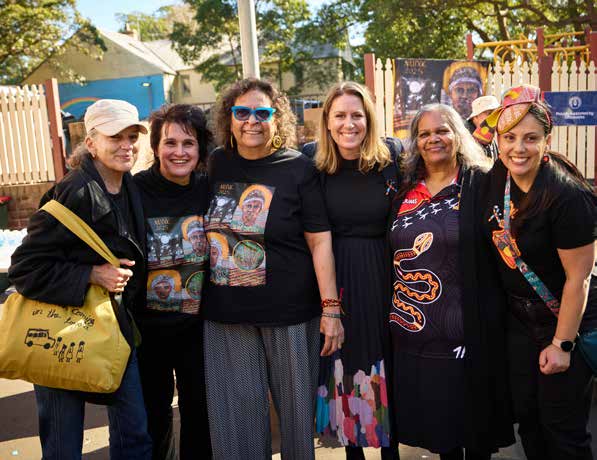
    Left to right: Aunty Wendy Notley, Liz Lecoanet, Aunty Kath Farrawell,  Greens MP Kobi Shetty,  Aunty Wendy Buchanan, Helen Michael.  Glebe NAIDOC Community Day 2025 Photograph: Tom Psomotragos
    Left to right: Aunty Wendy Notley, Liz Lecoanet, Aunty Kath Farrawell, Greens MP Kobi Shetty, Aunty Wendy Buchanan, Helen Michael. Glebe NAIDOC Community Day 2025 Photograph: Tom Psomotragos

    NAIDOC’s official theme for 2023 was “For Our Elders”, celebrating the invaluable knowledges carried by the guiding spirit of First Nations Elders throughout the country. Nagarluma Kariyarra and Yawuru artist Bobbi Lockyer wrote along with her official NAIDOC 2023 artwork (shown … ) that; “Where there is knowledge there are our Elders. Our Elders paved the pathways for us, taught us our knowledge, our history, they passed down their art, stories and wisdom. Our Elders are the foundation of our communities and role models for our children”.

    The Elders lunch at Sydney Opera House, Larissa says, “came out of a workshop there. I was mentioning that we wanted to do something collaborative. And I said that we want to put a light on our Glebe Elders. So we invited Elers from Woolloomooloo, Redfern , Glebe, and some Marrickville Elders. It was a fantastic event”.

    Another valued addition to Glebe’s NAIDOC celebrations in recent years is the cultural tours coordinated by Scarred Tree. The tour begins with a smoking ceremony at Bicentennial Park before the bus carries attendees through the culturally rich streets and spaces that reflect Glebe’s Indigenous legacy.

    “We wanted to build that that tour up a little bit and document our history. During the week of Glebe NAIDOIC, it’s free.”

    Aunty Sharon reiterates the importance of the Community Day at Glebe Public School and states how special it is “to see all the kids happy and doing their dances. And keeping our culture alive. Aunty Wendy (Buchanan) is amazing. She’s been really great. And helps, with the children and with the band. And Liz (Lecoanet) runs the school choir”.

    Uncle Les conducting a smoking ceremony while talking to Glebe Public School Students Photograph: Tom Psomotragos
    Uncle Les conducting a smoking ceremony while talking to Glebe Public School Students Photograph: Tom Psomotragos

    In 2025, the school choir performed a song titled Tracks. The song was composed by Liz with words written by Aunty Kath in dedication to Glebe’s Aunty Barbara McGrady (the main feature of our previous issue). It was a heart-warming gesture of appreciation for one of Glebe’s beloved Elders, performed by the community’s next generation of leaders, teachers, Aunties, Uncles, Elders and allies. It was also a potent symbol of NAIDOC’s official theme for 2025: The Next Generation: Strength, Vision and Legacy.

    2025 was, however, by no means an easy year for the Glebe community. The NAIDOC Committee were deeply impacted Sorry Business, and extra sensitive to the wellbeing of each other and the broader community. This meant a scaling back of initiatives to allow space for healing, reflection and togetherness.

    “You should take time to reflect on what’s important and what needs to be prioritised,” Larissa says. “Glebe’s gone through a lot, but we thrive and we survive and that’s just the Glebe motto really. if it’s not Sorry Business, then it’s issues with housing or issues of homelessness or just cost of living. And as Glebe NAIDOC, through our connections and our collaboration we look to continue that all year round—to thrive and to survive.”

    As our conversation comes to close, Aunty Sharon reaffirms this community’s unique strength in its vital and lasting connections: “It’s one of the best communities that I ever worked in, on how we all work collaboratively. That’s what I like, is how we all come together, and respect what each other is doing. I really, really love the way we work through NAIDOC. It brings us together.”

    “It’s not just events,” Larissa adds finally, “it’s also our own spirit, our own spirituality—keeping our culture alive… how do we keep creating opportunities to flourish in the midst of history?”

    The question seems to be what paves the path forward—beneath the vast branches of The Scarred Tree; through the sacred smoke of burning Eucalyptus; into the open-doors of the Youthie; down Glebe’s streets and alleyways guiding us back more than 65,000 years, and finally—out onto the school grounds in July of each year ahead.

  • Glebe’s Light of Grace

    Glebe’s Light of Grace

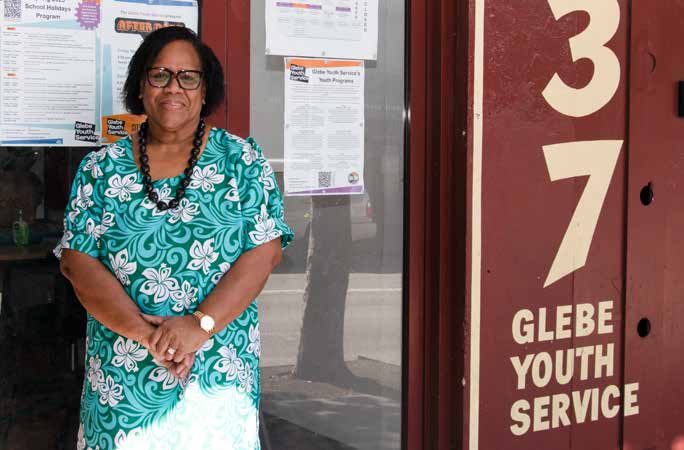
    “I remember there’s a lady that just lived across the road over there,” Keresi Balewai Rabuatoka says as she points out the window of the Glebe Youth Service attic. “She came and knocked on my door and she had two dollars with her. She said ‘Auntie Grace, I got two dollars here with me and I need to buy something for dinner’”.

    It was 2011 and Keresi, more commonly known as Grace around Glebe, had been living in the suburb for only a few years, but she had already cemented herself as a lifeline to many in the community.

    “Come inside,” Keresi replied, giving her neighbour the ingredients to make spaghetti bolognese for her family.

    “That’s the lifestyle around Glebe. I’m sure that every suburb’s got those,” Grace says one Wednesday morning in her neighbourhood of Glebe, a community she has called home for nearly two decades now.

    From volunteering at the Glebe Youth Service, Koori Radio Station and Addison Road Community Centre, to working as a migration consultant, Grace’s numerous acts of generosity have been felt by many over the past 18 years. In speaking to Grace, her innate awareness of knowing when someone is in need of her help is striking.

    “I can’t walk away if I see a gentleman or a woman or a small girl or a teenager in need,” she says. “Someone in need, especially older people. They’re always sitting around. [I ask them] how are you? How’s your day today? That is how I connect with them.”

    When she first arrived in Glebe, Grace was reminded by her closest friends that while it “is a good place”, it has a reputation for being dangerous. “I said [to my friends], why is it dangerous? I don’t see anything dangerous here. It’s how you connect with people,” Grace says.

    Originally hailing from Lomainasa in Tailevu Province, Fiji, she moved to Glebe after marrying her husband Peniasi Kata Rabuatoka, known to many as Ben. Becoming a step-mother to five children, Grace has never treated them as anything other than her own.

    “The first day when I walked into the family home, the body language that I can see from them, they were lost,” she says. “It’s different from motherly love and it’s very tough for a stranger like me to walk into the family as a step-mother.

    “Moving on to the first week, second week, third week, one month, we start to get closer and closer and closer and I told them, don’t be shy. Don’t be scared of me. If you need something, you let me know. Talk to me if you want something.”

    That is exactly what she has done at the Glebe Youth Service, providing the motherly love that she is known for. Since 2009, Grace has been volunteering at the Youthy, supporting local community members in times of need.

    The Food Circle program, where fresh food and other staples are hand-packed into hampers and delivered to “more than 80 families around Glebe”, has become an essential part of her volunteering routine every Thursday. For Grace, the hampers are more than just food, they allow her to connect with the community on a deeper level.

    “It’s so nice to mingle with the community,” Grace says. “It’s so nice to be nice to people. It’s so nice to know that I helped someone today.”

    The Youthy holds many precious memories for Grace and her family. Her stepchildren visited frequently when they were young while Grace worked as a volunteer. Grace recalls a memory of her son Uraia Rabuatoka, familiarly known as Oody, when he was seven years old.

    “He came back one afternoon and it was Valentine’s Day,” she says, “He walked inside [and said], ‘Mum, Mum, where are you?’. I said ‘I’m upstairs’, and then he walked up and said ‘close your eyes, I’m coming up’… When I opened my eyes, he was kneeling down with just a single rose, and said ‘will you be my Valentine?’” Smiling, Grace says that Oody was always very close to her heart. “Even though he’s not here with us, I’m happy that he’s at peace,” she says.

    Nearly a decade ago, Oody passed away from lung cancer. “I miss Oody so much,” Grace says: “It was very, very sad.”

    During his final moments, locals banded together to help Oody see his home and his community one final time, driving him around Glebe. “The last day, they brought him around Glebe, around everywhere,” Grace says.

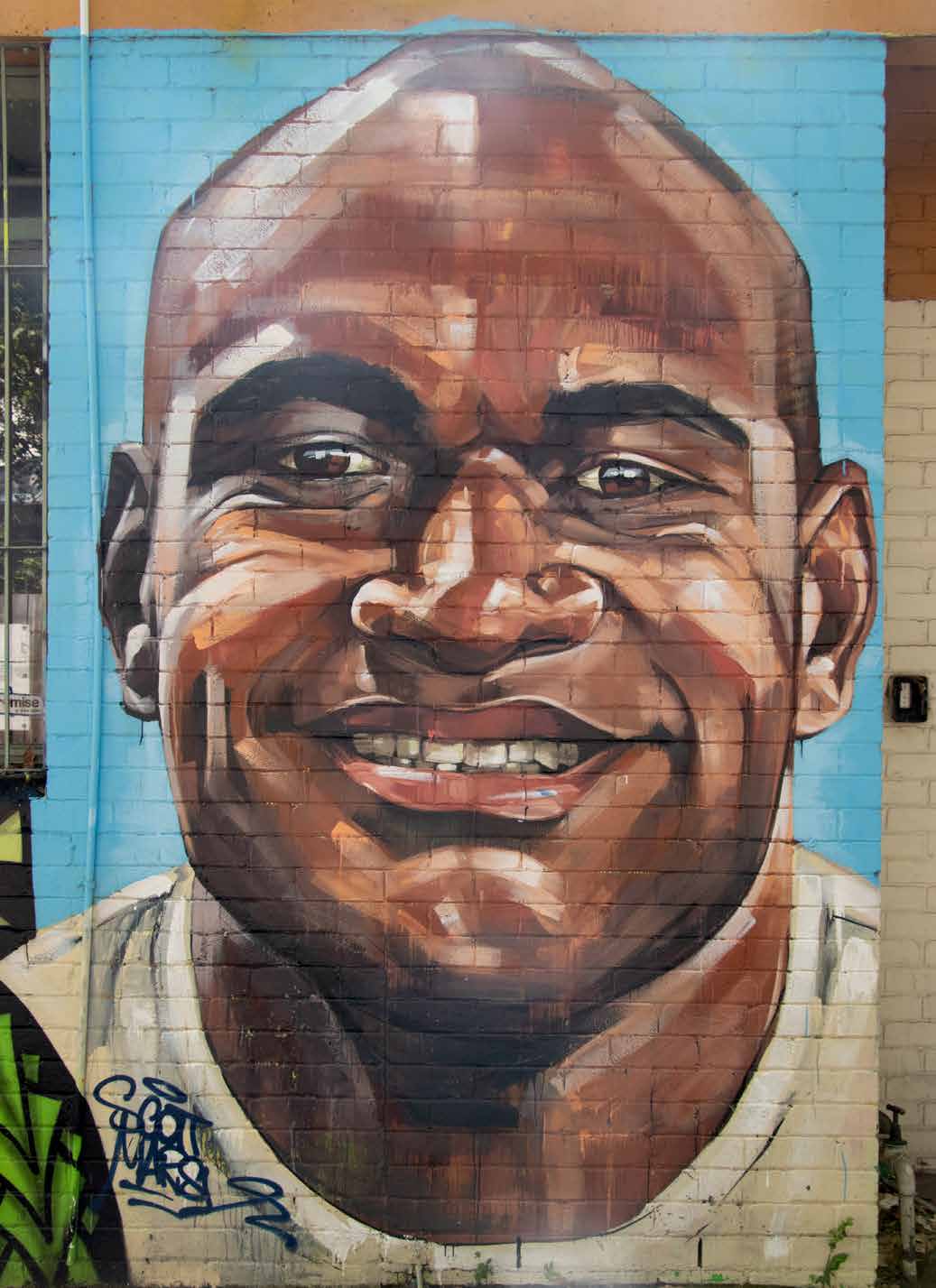
    A mural of Grace’s son, Undi, which was commissioned by the Glebe Youth Service after he passed away.
    A mural of Grace’s son, Undi, which was commissioned by the Glebe Youth Service after he passed away.

    His death was felt throughout the community, with many local youth left devastated by the loss of someone they had grown up with. Despite the years that have passed, Oody’s death has been far from easy for Grace. “We have to learn to get up and be ourself again,” she says. “The best thing is to keep this happier all the time,” Grace says whilst motioning to her heart. “That is why when I see someone sad, it touches me, because I know what sad is like in here.”

    Grace says many have wondered how she continues to remain optimistic to which she responds, “I chose to be like this. If you want to be happy, make this happy inside,” she says tapping her chest.

    Grace’s strong-willed nature has sustained her through other battles of her own. Shortly after returning home from an operation to remove breast cancer, she grabbed her laptop and headed straight back to work. “I’m so bored there,” was her response to her husband when she called to let him know how the procedure went as she made her way to work.

    During another hospital visit, Grace explains soon after undergoing major surgeries she could not lie in bed and do nothing while hearing other patients call out to the nurse for water. “I went with my drip and everything, I got a bottle of water [for them]. The doctor told me, ‘Grace you’re supposed to lie down’, and I said, ‘but I feel sorry for them.’”

    In 2003, Grace’s maternal nature led her to adopt a child. “The mother came to me and she asked if I could adopt her,” she explains, “So she stayed with me until she gave birth.”

    Her beloved daughter, Grace, is now 22 years old.

    Tuning into a Fijian radio program one evening in 2009, Grace came across an interview with Alan Rigas, a migration agent and solicitor where she was left inspired by his work. Calling the presenter of the show who was also a friend of hers at the time, she asked if she could come and meet Alan that night.

    “I went in there just as they finished… I walked inside and shook his hand and told him ‘I really love what you’re doing,’” she says. For the last 16 years Grace has worked closely with Alan as a migration consultant, helping Fijians and other migrants like herself secure work and permanent visas. “I only show [them] the right door to go to because he’s a migration agent and knows better,” she says.

    “I salute this gentleman because he handles the matters very differently from other lawyers that I know. He says, ‘don’t worry about the money. I want you to live here legally, not illegally.’”

    Consulting with migrants at all hours of the day, Grace shares individuals’ situations with immigration solicitors at Alan’s practice to help them understand what support and services are required. “It makes it easier to show them the right path,” she says.

    Many Fijian migrants are often apprehensive to approach immigration consultants or the police, Grace explains. “They understand English, they can speak English… but it’s very scary for them.

    “It’s good to help, especially when people are in need, when [they] go to a new country, away from home and no one cares. It’s very sad.”

    Her identity is firmly cemented in her Pacific Islander upbringing. Since Grace was a child, she had always known she wanted to be a presenter. Grace believed she would be some sort of announcer or TV presenter. Her most notable work, the radio show ‘The Fiji Voice of Australia’, is a testament to her young self and her passion for the Fijian identity.

    The three-hour long program has aired weekly since 2017. It is the longest segment of the well-known Koori Radio in Sydney, offering listeners the latest news coming out of Fiji, along with music, community announcements and the history of the island nation. Despite the late timeslot of 8-11pm, Grace was pleasantly surprised to know that Fijians from around Australia have been tuning in to her show. “I thought they went to sleep,” she says, “but our Fijian community sometimes work late hours; especially in the factory areas. They work as security. They’re driving semi-trailers. They use my radio station when they work,” she says.

    Along with her consultancy work, the radio show has provided aid for Fijians across the country who are struggling to navigate the complexities of living abroad. Every Tuesday, Grace discusses immigration help for Fijians in need.

    One family from Brisbane pursued immigration advice after listening to Grace’s commentary on the show. “I helped show them the right place, to show them the right door,” Grace explains. “They’re from Brisbane. And they heard on the radio and they called me. People from around the states… they called me because they heard this from the radio. And then I connect them with this law.

    “If you got stuck and you don’t know where to go, call me. This is my e-mail. Let me know what’s happening to you with your case.”

    After working a while at Koori Radio, she began volunteering at Addison Road Community Organisation, a Marrickvillebased charity that saves more than 475,000 kilograms of food from “fruits and vegetables” to “cakes, lots of doughnuts and croissants” going to waste every year. When Grace first started there, she made it her mission to volunteer every day. Now committing to every Wednesday, she helps out with the medical checks, laundry, salon, dinner and food hampers.

    These food hampers were vital during the COVID-19 lockdowns. Under a five kilometre travel radius restriction imposed on Sydneysiders, not all of the Inner West could make it to Marrickville. Even though Addi Road was subjected to restricted trading, Rosanna Barbero, CEO of Addi Road, asked Grace if she could deliver food hampers to the Glebe community. She rallied her local Fijian community to create a bus delivery system, deemed as essential, that allowed more people to receive the food.

    “I called a pastor, and the pastor knows the congregation. ‘What about a bus?’ they asked me. They can’t drive because we’re not allowed to drive. She [Rosanna] said ‘We can give them a pass’,” Grace says. “The Fijian community got their trucks, their cars, their vans to come and help the Addison Road Community Centre. We deliver food everywhere… hampers, whatever.”

    Grace’s tenacity to continually provide for others despite her hardships has been vital for countless members of the Glebe community. Her perseverance to be a shoulder to lean on has been indispensable for many.

    “The community, they need a bridge. I count myself as a bridge through the community,” she says. “That’s why I’m standing here.”

    “I can’t leave Glebe. Glebe is my home. Glebe is my village, and Glebe is my community.”

    While Grace’s unwavering commitment to serving others around her can be replicated in many other places, it seems there will never be another place that evokes such cherished warmth and familiarity for her. Certainly nowhere else can replicate her beloved community.

    “I can’t leave Glebe. Glebe is my home. Glebe is my village, and Glebe is my community.”

    If you or someone you know needs support, call 13YARN – 13 92 76 or Lifeline – 13 11 14. 24 hours a day, 7 days a week.

  • Ceramics Unifying Deaf Community

    Ceramics Unifying Deaf Community

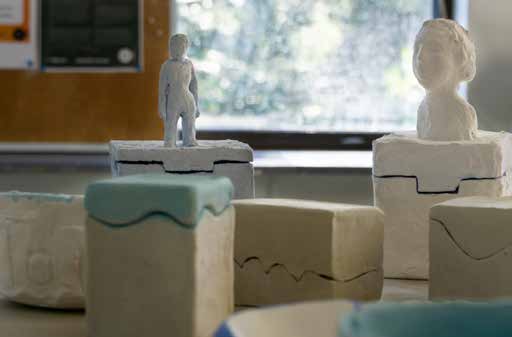
    Kirsty Collins’ Auslan ceramics art club has become a space in which experimenting with clay has brought together an often forgotten community. While only up and running for the past three months, the workshop has flourished into a creative hub for deaf and hard of hearing people.

    “I noticed that there’s a lot of Auslan courses… [but] you can’t really go and learn some skills and have fun while learning Auslan,” Kirsty explains as she clears away remnants of clay from her class earlier that morning. Used by almost 20,000 people every day, Australian Sign Language, commonly known as Aulsan, is a visual language composed of hand, arm and body movements used by people who are deaf and hard of hearing.

    Originating around 200 years ago, the development of Auslan came about after British, Irish and Scottish migrants brought sign language to Australia. Auslan is now one of 130 sign languages used across the world and continues to evolve as the deaf and hard of hearing community grows.

    “I think once you have Auslan, you don’t feel disabled, you can communicate beautifully with other people”

    Kirsty’s fortnightly workshop is located on the premises of Kil.n.it, an experimental not-for-profit ceramics studio in the heart of Glebe which aims to provide a space for both artists and community members to explore the world of ceramics. Participants are encouraged to bring an idea and an open mind to every session. They are given the chance to meet and work alongside other deaf and hard of hearing people while practicing Auslan with the help of an interpreter. “I think once you have Auslan, you don’t feel disabled, you can communicate beautifully with other people,” says Kirsty. “It’s really important to do joyful things and to have good things to look forward to, especially if you’re isolated or if you’re disabled.”

    The ‘sound off’ workshop encourages participants to communicate with one another only using Auslan, a challenge which Kirsty says still tests her today. “It’s a bit like we’re all kind of going through this experience together and helping each other,” she says. “I’m also coming up against problems I need to solve, like how do I explain this in Auslan? how do I show how to do the steps?”

    Kirsty quickly came to realise how isolating being deaf can be when her ability to hear was suddenly stripped away. When she began to experience a significant amount of tinnitus in both her ears during her early 40s, Kirsty immediately felt something wasn’t right. It was only after multiple visits to specialists, and a misdiagnosis, that she was diagnosed with Cogan’s Syndrome four-anda-half years later: a rare autoimmune disease which often results in hearing loss and in some cases, visual impairment.

    Kirsty’s diagnosis came as a relief after years of frustration and confusion over why she was going deaf finally became clear: “Doctors had been giving me these incredibly strong medications for years to try and stop me going deaf and it was really stressful”. Her hearing had deteriorated rapidly in her left ear and more gradually in her right ear. She was left with limited options to communicate with others, having not received cochlear implants yet. “They won’t give them to you until you’re completely deaf… because they won’t put it on a viable ear,” she explains.

    Kirsty was left in limbo. As her hearing continued to decline, and finding her hearing aids to be ineffective, she decided to take Auslan classes at TAFE. Yet she found she had no way to communicate or understand instructions and so was left to rely on others to write notes for her until she received a cochlear. Since then, Kirsty reassures that “learning Auslan has been the most wonderful thing I’ve done since going deaf”.

    While hesitant at first, Kirsty’s husband has also started attending Auslan classes, helping her to practice and learn how to sign. But Kirsty attests that it is only people in similar situations who can fully understand what it is like to lose your hearing. “In hearing families, it’s a massive struggle. They really can’t imagine what it’s like,” she says.

    Entering the disability space was far from a new venture for Kirsty. Having already experienced a similar journey with her two children being diagnosed with autism and ADHD, she felt she had already been given “firsthand experience”. However, Kirsty says that losing her hearing was still confronting as it wasn’t until her hearing was completely gone that she “realised how much society is not inclusive for all people”.

    The rarity of her disease continues to be a struggle. A recent hospital visit became stressful for Kirsty, finding herself surrounded by doctors who had never heard of her disease before. “That happens every time you go to a hospital,” she says. “They just look at you like, ‘oh God, what am I gonna do?’”

    Since becoming completely deaf, Kirsty expressed that isolation remains one of the main barriers that affects deaf and hard of hearing people, and often means that “it becomes quite difficult to socialise,” she says. A study conducted by YouGov in 2024 found that two in five Australians aged 50 years and over with hearing loss had lost confidence in social interactions. Despite this trend, Kirsty hopes that the workshop will help to overcome the isolation she has not only witnessed many people experience, but felt herself. “I think the main thing I’m trying to do is create a community.”

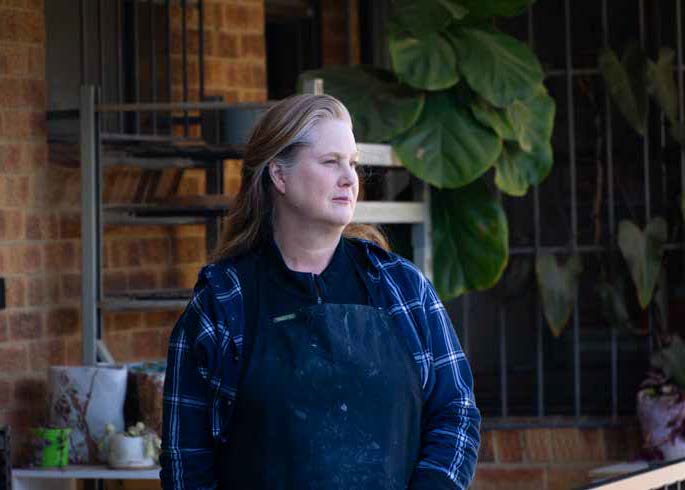
    Kirsty says ceramics were a vital lifeline during her long journey to diagnosis. Photograph: Sarah Goff-Tunks
    Kirsty says ceramics were a vital lifeline during her long journey to diagnosis.

    Ceramics however weren’t Kirsty’s first calling, but rather a way to cope with her hearing loss. Doing something new and creative became a “fantastic way to spend [my] time and to get through things”. She studied and worked as a web designer for over a decade before returning to university to complete a Masters degree in electronic and temporal art.

    Her passion for art grew at the age of five when she made the decision to become an artist. Kirsty’s life hasn’t been without art, but when her hearing began to worsen she made the snap decision to start creating ceramics with the belief that “you can’t be sad and make beautiful things”.

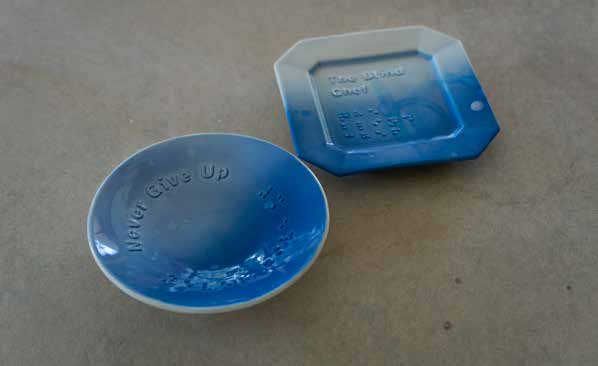
    Outside of the Auslan workshop, Kirsty has dedicated her time to experimenting and developing new ceramic artworks and tableware which incorporate braille and Auslan to engage both deaf and blind communities. Last year she created plates with braille, a project she describes as challenging her skills due to the need for consistency. This time around Kirsty says she is going freehand, which she has found to be a much faster process to “work everything out by hand first and see what works.”

    Braille tableware created by Kirsty. Photograph: Sarah Goff-Tunks
    Braille tableware created by Kirsty.

    Kirsty is continuing to pioneer disability design through her ongoing efforts to create Auslan tailored ceramics. She has set herself the challenge of capturing the moving language of Auslan, where pieces would form words; a way for her to speak to her audience. “I need to see how it is received by the deaf community,” she says. “They might say to me ‘that one doesn’t work’ or ‘I don’t get that one’… so I need to get that feedback from everybody.”

    After learning that a number of people who have attended a class have never had the chance to learn Auslan, Kirsty hopes more people will reach out and find comfort in meeting others who have experienced a similar journey. She aspires to break down the inhibition felt by many through continuing to build an inclusive community. “It’s not the end of the world if you go deaf, it’s okay, you’re still a valuable community member.”

    The Auslan ceramics art club runs on the first and third Mondays of each month. To attend the workshop, you can book tickets on Humanitix by searching Auslan Ceramics Art Club.

  • Anchored in Creativity

    Anchored in Creativity

    For over twelve years, Nat Cheney has been on a mission. A mission to provide an affordable community workspace where creatives can dedicate themselves to their art whilst also fostering collaboration.

    Before this, in her early twenties, she scoured Sydney for an established creative space, but nowhere sparked a connection. There was no sense of belonging. An illustrator from the Northern Beaches, Nat felt the waves of procrastination that often blighted creatives’ practice and, particularly, the constant blurring of boundaries between work and home.

    “I tried illustrating at home for a little while but I never felt truly rested or never truly productive,” says Nat. “Say I’d be working and the couch was right over there and I’d be like ‘I could watch one more episode of Battlestar Galactica’. Then I’d be on the couch watching it and thinking ‘I really should be working’ and I would feel really torn about one or the other.”

    Nat needed a place; a studio that could compartmentalise her life.

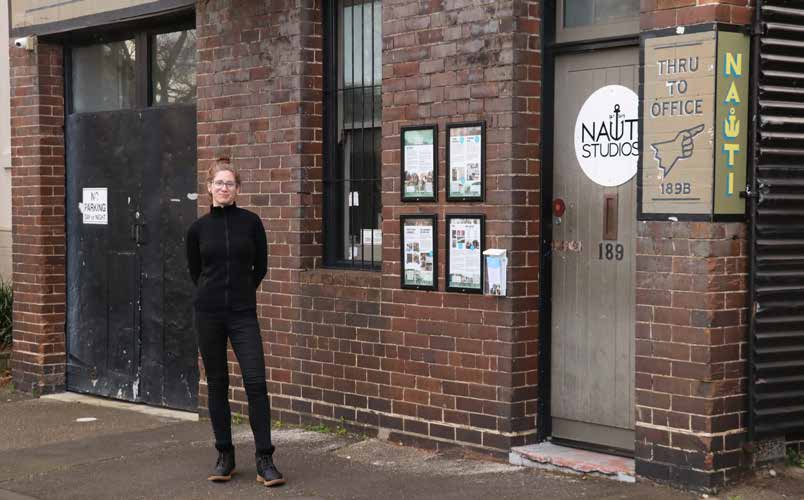
    Through regularly attending an improv class, she discovered that other creative people shared her frustration about the lack of a communal space. Spontaneously in 2014, she founded Nauti Studios. The name was derived from the word nautical, and emerged from her “obsession with the ocean.” Nauti Studios was born in Stanmore during 2014, a nonprofit company that represented her ideal vision of a communal artistic space replete with nautical imagery throughout.

    After recovering from the lockdowns, Nauti Studios was forced to relocate in 2023 after almost a decade at their first location in Stanmore. Now located on the border of Glebe and Forest Lodge on St Johns Road, Nauti Studios has been a safe haven and productive outlet for a diverse range of people. This includes: painters, illustrators, roboticists, florists, glass blowers, hairdressers, professional clowns and even someone who 3D prints gravestones.

    The space is made up of three combined warehouses which cater for over fifty artists. They were originally occupied in the 1940s and 50s by John Durst, the first person to bring electric motors to Australia.

    Nat emphasises the benefits of working in a multidisciplinary environment; how through conversations and making connections across various art practices, one can step out of their own frameworks of inspiration and into new, foreign worlds.

    “If you have lunch with someone like Ed who does robotics, I don’t know what he’s going to talk about. Then he talks about something and I’m like ‘I didn’t even know that existed’. It takes me out of my own world as opposed to talking to another illustrator,” explains Nat.

    “When I was in a studio in Melbourne, I was illustrating and there was a space with a sculptor. We’d sit down and our mediums weren’t the same but when they would talk about their ideas it would ignite something in me. It doesn’t matter that it’s a different medium. It’s almost like because what they were doing was different, it was more stimulating.”

    “It’s always been really diverse. I never set out for it to be that way but that’s how it worked out.”

    Over the last 18 months, Nat has been working by hand in the construction of each studio space. Her hard labour mixed with an unwavering ethos of sustainability provides individuality that goes against the ubiquity of cookie-cutter, corporate office cubicles, breathing a new life into the environment.

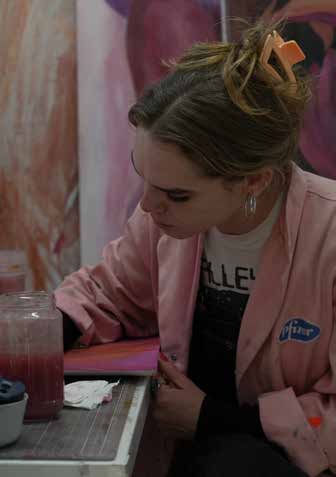
     Resident artist Vashti painting onto a canvas in her studio.
    Resident artist Vashti painting onto a canvas in her studio.

    The character of the space comes from the pastiche of oddly combined elements that nonetheless work well together. The chocolate-coloured wooden doors carved with symmetrical patterned squares, rusted winches hung from the ceiling reminiscent of Durst’s motor workshop, recycled lounges in the entrance, exposed ceilings emphasising the industrial past of the space, all contribute to this uniquely designed collaborative environment.

    Nauti Studios holds several types of social gatherings in the industrial warehouse (known as ‘The Deep’), and the plant-filled foyer (known as ‘The Dock’) that was once used as the motor workshop. Each week on a Tuesday is ‘Jazz Night’, monthly is the free ‘Sydney’s Best Worst Movie Night Club’. ‘Sydney’s Plant Doctors’ is a monthly workshop where people learn how to nurture indoor plants from ‘The Plant Doctor’.

    “My initiative is community and cultural events. If someone says ‘I’m doing this thing for the community or I’m doing this creative thing’ then I think ‘hell yeah’. As long as it’s under that bracket then it’s welcome,” says Nat.

    At the studio entrance there is a parked boat, impulsively bought by Nat in the early days of the business. Now used as a makeshift plant display, it reinforces the sustainability initiative that fills the space.

    “I had a few people tell me that it saved their lives and their mental health. People were telling me about how their practice developed by being here. I like hearing stuff like that. Anytime I have a doubt about what I’m doing I’m like ‘No I’m ok’.”

    With 12 years of experience at the helm she is no stranger to dealing with the adversities that come with running a business. These get-togethers coupled with the tightknit community of artists has been “a real motivator” for Nat and kept her engaged.

    “Because a lot of studios and coworking were open over COVID, because everyone has their own private, locked space, we had a strategy for people not to come in contact in the hallways, no one was allowed to use the computer space but people could come in to work. I had a few people tell me that it saved their lives and their mental health. People were telling me about how their practice developed by being here. I like hearing stuff like that. Anytime I have a doubt about what I’m doing I’m like ‘No I’m ok’,” she says.

    Nat looks back over the years and laughs at her so-called “stupidity”. In the beginning of Nauti Studios, she regularly declined help, opting to build her dream alone. Nat now considers her crew as a “big help” to her success and an important reason that she continues working in this studio space.

    “In the beginning, when I just started, it was friends,” says Nat. “The more people who joined the space like artists, would help out when they saw I needed it. Now as I’m more involved I know more people in business. Some people give me business advice or ideas.”

    “As the people I know have expanded, the help that I’ve received is more varied.”

    The goal has not changed for Nat, despite over a decade and more than 400 artists later with steady growth in the Glebe location and a second location in the Blue Mountains that houses 16 artists. Spending alternate weeks in each location, her aspirations haven’t changed.

    “I’m probably just more aware of admin and management but my goals haven’t changed. My desire to provide affordable spaces for people to make stuff is the same, if not more so,” says Nat.

    “My priority at the moment is to make sure this one [Glebe] is good, then we’ll see what happens. There’s no part in my mind that thinks ‘I want to have an empire’. I don’t think that’s where I come from.”

    The only blueprint for a successful space, as far as Nat’s concerned, is through a persistent dedication to the local community and nurturing established and emerging artists.