Category: Issue 4

  • The Sounds of Connection at Studio 37

    The Sounds of Connection at Studio 37

    Youth access to recording studios can transform their relationships with music and provide pathways that may otherwise seem well out of reach. At Glebe Youth Service, Studio 37 offers young people between 12 and 18 the opportunity to learn about music production, hip-hop culture, and songwriting in a supportive environment. The collaboration between Nakama Arts and Glebe Youth Service combines technical instruction with mentorship, creating a space where participants develop both artistic skills and a better understanding of the music industry. Beyond teaching the mechanics of beat-making and recording, Studio 37 helps young people find their creative voice while building pathways to potential careers.

    The Independent Foundation: A Different Approach

    Established in 2022, Nakama Arts operates under a funding model distinct from most creative initiatives. Its founder, Chris Hamer-Smith, brings over fifteen years of industry experience as a producer, recording artist, and DJ, including the creation of two ARIA-nominated albums with his group Astronomy Class.

    Working alongside Chris is Lorenz (known professionally as P.Smurf), whose journey in hip-hop began in his early teens.

    “I’ve been doing hip-hop as a performer and as a writer, releasing music since I was quite young, since around 13-14. I started to MC in about 2003, and then by 2005, I was doing live performances. Over the next few years, we are doing lots of gigs with our group Reverse Polarities. Releasing selfengineered mix tapes and CDs out of our bedroom.” Lorenz explains.

    Unlike many arts programs constantly struggling for dwindling government grants, Nakama Arts operates from a position of financial independence.

    “One of the best things about Nakama Arts is that it’s independently funded. It’s not relying on government funding or community funding” Lorenz says. This support comes through Technical Audio Group (TAG), a physical music distribution company, and their charitable arm, TAG Cares.

    “We’re not competing for funding. We’re only aligning ourselves with organisations that we feel could use our support”.

    This funding model provides stability, allowing the program to focus on development rather than constantly seeking grants.

    From Student to Mentor: A Natural Progression

    Studio 37 also encourages a transition from student to mentor. Mali, one of the younger instructors, is one example of this journey, having first come to the studio as a high school student interested in making music.

    “Since I was in high school, I started making beats here at the studio,” Mali recalls. After absorbing the technical and artistic elements during her mentorship, Mali found herself invited to guide others on the same path. Her transition from participant to mentor reflects a cyclical process of giving back to the program while continuing with her professional development.

    When asked about what she most values from her time with Nakama Arts, she responds, “probably just how much I’ve learned about song making and how much I’ve developed as an artist. I’ve learned a lot about what I like [to compose and sign], and then I’ve learned how to do that.” This self-knowledge–understanding not just the technical aspects but one’s artistic identityforms one key pillar of the program’s success.

    Beyond the Classroom Paradigm

    While structure exists within Studio 37, the approach differs from traditional mentorship programs. Friday nights transform into open studio sessions where community members between 12 and 18 years of age drift in and out, each finding their own relationship with music.

    “That’s more of an open session, free form. If someone rocks up, we could work with them on building whatever style of music they would like,” explains Lorenz, highlighting the program’s responsiveness to individual interests rather than prescribed curricula.

    Mali further expresses their unique approach: “To be honest, it’s not a classroom type of thing at all. As much as they say workshop, we’ll sit up here and we’ll start making a beat usually just on our own and then wait for kids to come in. They give us a reference of something they like, and we try and teach them how to recreate it.”

    Balancing Creative Expression with Positive Content

    Contemporary music, commercial rap among those, often features themes of violence, wealth, and other potentially negative content. Young aspiring artists naturally draw inspiration from what they hear in mainstream music. The instructors at Studio 37 work to balance respect for creative expression while encouraging more constructive themes.

    “A lot of rap music that they might be listening to,” Mali says, “which is mainstream for their generation… is about violence, it’s about money, it’s about negative things that, quite frankly, kids that age shouldn’t be listening to.”

    “To have a microphone and utilize your voice, it’s a great opportunity to be able to connect with people and show them a positive way out of their situation.”

    The mentors at Studio 37 don’t seek to censor expression, but rather to reveal the responsibility that comes with artistic voice.

    “To have a microphone and utilize your voice, it’s a great opportunity to be able to connect with people and show them a positive way out of their situation,” Lorenz says. “Having a voice to be able to record and show that music to a wider group of people, you’re in a position of power there, and we want to empower the kids to utilize that position to enrich their communities, listeners and audience.”

    The approach isn’t to sanitize or simplify. Rather, it’s to expand: “I don’t ever want to stifle someone’s creative outlet, but we always encourage people to talk about… how can we find a way around this situation? If we’re going to talk about something heavy, how can we create an avenue away from that at the end? Or how can we educate people into potential ways of supporting themselves or supporting each other throughout their lives?”

    The Music Industry’s Shifting Terrain

    The last decade has witnessed tectonic shifts in how music reaches audiences. Physical albums have largely surrendered to streaming platforms, altering not just distribution but the fundamental economic structures supporting artists.

    “Over the last 10 to 15 years, the industry has swayed a lot from physical sales into music streaming. Spotify and Apple Music have become the major ways of connecting and distributing your music.” Lorenz explains. This more open access has double-edgedimplications: while artists can now release music independently without label backing, the support systems traditionally provided by industry structures have also narrowed.

    Hip-hop’s technical accessibility – requiring fewer physical instruments than many genres – has positioned it at the forefront of this DIY revolution. Yet the question remains: how can artist’s survive now that music has lost so much of its economic value?

    Here, Nakama Arts intervenes. The program offers a non-profit label structure, where revenues flow back to the artists rather
    than being siphoned upward. Along with studio access, engineering expertise, and industry guidance, this model offers a chance for young creatives to grow beyond mere artistic development, towards actual career viability.

    “I think having support networks to be there that aren’t taking any money from that artist, but are inputting their knowledge and facilities and connections to help grow and educate artists on the best ways—I think that’s something that Nakama is really amazing at,” Lorenz reflects.

    The Community Canvas: Glebe’s Distinctive Composition

    Studio 37 doesn’t exist in a vacuum. It’s embedded within Glebe, a suburb with a unique demographic and social composition that is reflected in the program’s participation.

    The challenges faced by many young participants stem from broader socioeconomic realities. As Mali puts it, music is also affected by “how socioeconomic issues like poverty or family issues impact kids that are still growing up, still learning about the world.”

    The studio offers neither escape nor distraction from these realities, but rather a constructive channel through which to process and express them. “We make it clear that this room is for music; anything that doesn’t belong in this positive space, shall be kept out,” Mali emphasizes.

    This necessary boundary-setting creates the adequate atmosphere to channel creativity into a healthy expression.

    Beyond Entertainment: The Case for Continued Support

    Studio 37 stands as a reminder of art’s fundamental role in community cohesion and individual development.

    “Glebe is an extremely special space with a tight, strong community and so much talent,” Lorenz says, ‘The youth centre as a whole, people should be investing in that because it is just a really great place for the community to come, to connect, and to get the support that they might need.”

    “Glebe is an extremely special space with a tight, strong community and so much talent. The youth centre as a whole, people should be investing in that because it is just a really great place for the community to come, to connect, and to get the support that they might need.”

    After more than a decade witnessing the centre’s impact, Lorenz has witnessed the benefits from plenty of lived experience: “It needs ongoing support and funding from a wider group. It’s a key meeting point and support for that community, and we’re very blessed to be a part of it.”

    At its core, Studio 37 represents a counterargument to mainstream narratives about youth, creativity, and community. While commercial forces restrain creative freedom through the narrow interest of what is marketable, this modest studio in Glebe invests in authenticity and connection – qualities that may not immediately translate to streaming numbers but build something far more valuable: voices that will carry forward long after the trends have faded.
  • The Housing of Glebe’s Beating Heart

    The Housing of Glebe’s Beating Heart

    “It was November of 2020,” Rose says across the low timber coffee table between us. The late morning sun is creeping through the back-alley Eucalyptus trees and into the Youthy attic.

    “I was walking along Franklyn Street. The wind and the leaves were swirling. I picked up a piece of paper and it was my home of 20 years, my garden of 20 years turned into a cafe with umbrellas all along Franklin Street. That’s how we found out that they planned to demolish the estate and put up to 14 storey high apartment blocks.”

    The flier that Rose describes was a discarded copy of the NSW State Government’s Franklyn Street Glebe Redevelopment Proposal. The front page featured a digital projection of what was being proposed. It showed footpaths bustling with pedestrians, vibrant greenery, and several orange umbrellas of a street corner cafe. This was a graphic designer’s interpretation of the proposed changes; a view of what the future could hold for the residents of Franklin Street and broader Glebe. Notably out of view, however, were the downsized dwellings that were to be built in replacement that would force families to look elsewhere. The image didn’t show all of those tenants who would likely never return after the total upending of their lives. Nor could you see the transfer of public property into private hands—the losses to our commonwealth. It is, after all, quite difficult to envision what’s no longer there.

    As Rose reflects now—nearly five years since she first came across that A4 printed obscurity of her home—there’s a heaviness in her eyes; voice lowered by a lingering anvil of injustice. She’s clearly still affected by that day and the events that came after, that threw into disarray a community she has long held close to her heart.

    “There’s only six people in our apartment block. And because they’re all one bedroom, it’s not families. It’s all single people. Edwina is on the top floor. I’m on the bottom”.

    Edwina sits comfortably across from me, along-side her longtime friend a neighbour.

    “I’ve lived there like 11 years.’ she says. ‘But I’ve actually lived in Glebe probably 15, 16 years or higher.”

    Edwina knows all too well the unpredictability of the state housing system. For much of her life she has been thrown by the waves of poverty, racism, and the traumas that followed—into the burrows of drug addiction, and in more recent years, out onto the streets of her neighbourhood alongside friends and neighbours in a collective struggle for the basic human right of a solid roof over their heads.

    Edwina is a Māori woman, having ventured from Autoera in … as a young woman in search for new beginnings.

    “I came to Sydney to be myself because I wanted a new life. And I got it … I managed to go to TAFE, graduate, went on to work for Qantas, and then went on to work in packaging. It took me bloody years because I’ve had to fight for everything I’ve got. I was one of the first people who was approached by ACON to work for them (A leading community health organisation in NSW since the 1980s, focusing on social inclusion and HIV responses). I did volunteer work for Sex Workers Outreach Project and worked for them for many, many years. That was my community service giving back … At the time, I was very naive, very young, very stupid. I didn’t know what I was talking about. I had friends tell me, get away from whoever you’re hanging around with. Tell them to go away. They’re just wrecking your life. I was young, pretty. I could have had any boyfriend I wanted at the time. But as you get older, those things don’t matter as much. All you think about is your home, your security, your welfare.”

    Before living on Franklyn Street, Edwina was shuffled through various housing estates of Inner-Sydney. She had once lived down on Cowper Street, along the outskirts of Wentworth Park.

    “I loved it,” she says, ‘because it’s so close to everything. I was working for Qantas. I was on my push bike. I was fit. I got to travel. I went to Bali. I went to Nepal. I did all these wonderful, great things.”

    However, this fitting situation was cut short when the Kenneally State Government decided to sell off most of the land to private developers for them to eraect their fortunes. Not only were the residents evicted, but the land lay vacant for four years before the construction of new dwellings began on the remaining slice of public land. It was around this time that Edwina found a home within the Franklyn Street community she still proudly works to protect.

    “It’s a very supportive community.” Rose says, “I broke my leg in the first lockdown. I stayed with someone and then Edwina helped. I felt like I joined a Māori family. I woke up one day and Edwina was sitting there with a coffee and came in to take the garbage out.

    “I think being Māori,” Edwina adds, “you have a much more sense of connection, looking after people. Community.”

    Rose has lived on Franklyn Street for twenty-five years and is no stranger to the difficulties in dealing with the state housing system.

    “We already had done some protesting about 15 years ago. I and a couple of neighbours put gates on our estate. Because as tenants, we knew the kids, not just local kids, but other kids were running through the estate away from the cops, because there were six or seven ways out and no car access. So, they’d run from the cops. The police called it The Rabbit Warren. They came back one day and ripped all the greenery out, every hedge, so no kid could hide behind it, like overkill. So we put the gates on, and the crime rate on our street dropped by 95% overnight. So, its actually people doing the work, connecting to each other. And some of the gates are not functioning anymore. And I did hear from someone that housing wants to take the gates down to create a community ground. And I was already warned when we did this that these things are cyclical, they’ll come up again.”

    But this friendly warning from her community could in no way prepare Rose for the shock of that now infamous image, plucked from the concrete just after the Covid-19 lockdown in late 2020.

    “It was so shocking because we’d just been through the first lockdown, and people’s mental health issues…so many people. We had the isolation of the pandemic, and no services for anyone. And they got an eviction notice just before Christmas, after the lockdown, because they don’t care. They don’t care … And the only way we could give our point of view, was that online Zoom meeting. We were only allowed to write things, and they selected what they read out. And they said, they’re going to give us a park and a community. ‘It’s going to be really nice’. Most of us would say, ‘we have a park and we have a community. The money we save each other when someone’s sick or needing mental health support, or just navel illness, we have a community.’”

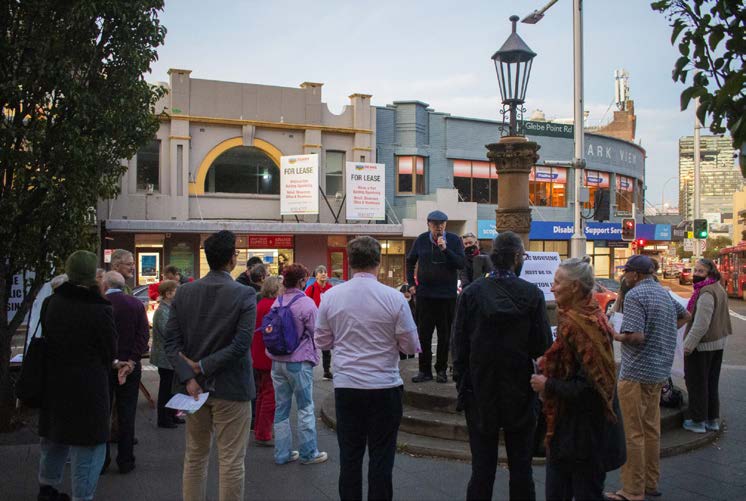
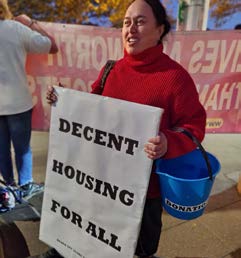
    What came next provides a glimpse into the unique strength of this community: hundreds of tenants, neighbours, students and legacy activists entered the surrounding streets in a collective outcry towards the State Governments immoral and seemingly ill thought actions. Many held banners, waved flags of working-class unity, and chanted phrases that echoed through the yards and alleyways of Glebe’s east end.

    “We pounced immediately; we called a rally” says Hannah Middleton in late 2024. She is sitting upright in her bed on an upper level of Balmain hospital. Alongside her sits Denis Doherty. Both have been prominent, active members of Hands-off Glebe for over a decade.

    “We first met in a group set up in Sydney to oppose the US military bases in Australia. We had a shared social justice commitment.”

    Throughout the 1990s, the pair noticed a shift in the political climate; the face of their beloved suburb being transformed.

    “We noticed that Glebe was about to face change: buildings were being torn down, horrible little boxes were being erected.”

    Throughout the next few decades, they would remain involved in various movements, pushing back against the increasing developments that continued to plague the suburb, especially its more vulnerable cohorts.

    The coordinated response to the Franklyn Street Redevelopment Proposal was informed by years of experience, friendships new and old; from past successes, and lessons learnt from inevitable missteps along the way. When representing the interests of more vulnerable groups, such as those living at the Franklyn Estate, Denis says that “there’s a responsibility to make sure that you’ve got enough connections into the tenant group to be fairly certain you know what they were thinking. The experience usually was that they didn’t want to move because the local shopkeepers knew what they wanted in the shopping bag. They knew where their doctors were. They knew if it was really hot or really cold, they could go down to Broadway Shopping Centre and they could hang out there because there are places you can sit. They have all these things, and they know their network. And so, for many of them, moving was very traumatic.”

    In describing the initial protest, Hannah says, “they allowed us to walk from the little park across from Badde Manors to Franklin Street. it was quite a remarkable event. We got maybe 300 or 400 people. And we had sort of all sorts of people coming out of the woodwork, people that we hadn’t really worked with before. There was Hands Off Glebe, we had the Anglican Church at St. John’s putting a sign up, saying we support public housing. We had a faction of Young Labor, the Congress Party and the Socialist Alliance.”

    The resistance continued throughout the next few years, as tenants remained in a state of limbo, yet still vigorous in their defence. On the 22nd of February 2023, Hands Off Glebe, with support by the Glebe Society launched The Franklyn Report at Sydney Town Hall. The report vehemently rejected “the NSW Government’s demolition and redevelopment plan, calling instead for maintenance, renovation and reuse of the solid brick flats on the site.”

    It outlined in great detail how the proposed redevelopment “would result in adverse outcomes for the community, the environment, heritage and the government’s own stated policy aim of increasing public housing,” and that redevelopments “would actually reduce the number of public housing places by reducing the total number of bedrooms”.

    “The most irritating or angering thing was that they weren’t revolutionary, billion dollar things. They were small, simple, common-sense, improvements that people shouldn’t have to ask for.”

    As for the sentiments echoed throughout its pages, Hannah Middleton explains, “a lot of the pushback from the community was: ‘we’re not going to have enough sunlight, it’s going to reduce our open space, we’re not going to have as many gardens’. Things like how much sunlight you should be able to get are actually already included in building codes. It’s nothing new. But in talking with people on the estate, and because this had been built by the government, it became clearer that they’d actually they’d broken their own rules. And people were very clear about what they wanted. The most irritating or angering thing was that they weren’t revolutionary, billion-dollar things. They were small, simple, common-sense, small improvements that people shouldn’t have to ask for.”

    “The report was something that Ian Stephenson did for us,” Rose says. Ian Stephenson was an integral member of The Glebe Society in recent years, president since 2020, and a well-loved figure of the community.

    “He was just such a friendly, supportive person.”

    Ian passed away in October last year, yet his legacy thrives through Glebe’s resilient spirit and the ongoing protection of its people and historical structures that he tirelessly worked to protect. His dear friend and fellow member of The Glebe Society, Duncan Leys wrote in late 2024: ‘The Glebe Society has lost not only a skilled, passionate and effective advocate but a wonderful human being.” The rigorous effort put into The Franklyn Report, and its ultimate success, embody a lasting symbol of his character and legacy.

    Edwina standing in protest, as photographed by Rose
    Edwina standing in protest, as photographed by Rose

    On the 13th of May, 2023 a decision was passed by the City of Sydney Council to reject the proposed redevelopment of Franklyn Street. Council members formally congratulated “Hands off Glebe and The Glebe Society for publishing the Franklyn Report, highlighting the inequalities of current government policy, and facilitating a platform for public housing tenants to have a voice.” The Council recognised “the courage, endurance and strong social bonds of public housing residents residing in the Franklyn Street public housing complex.”

    The decision to accept recommendations of The Report was a testament to the efforts of all those mentioned above, and so many more integral figures of the movement and tenants of Franklyn Street. It also coincided with Gladys Berijiklians’ departure from office which alludes to the influence of the broader political climate, and relief from the Liberal party’s corporatist politics. This article provides a mere snapshot into a community of vital figures without which the successes described above would have been far less certain.

    Whilst the decision marked an end to one inspiring yet traumatic chapter for tenants, it in no way puts an end to the ongoing struggle for basic welfare in Glebe and across the country.

    “When they decided not to demolish, there was this idea of in-building,” Rose says, “but it doesn’t look like they’ll do it for a couple of years. There was hardly any restoration of the building. We don’t know if they’re coming back for this. You cannot get anything bloody fixed. If there’s graffiti, they’ll come and get rid of it the next day. And they always say it’s a different bucket of money. They don’t want the estate to look like a slum, but they don’t particularly care how people are living. They just care about cleaning up the outside of the state—like putting lipstick on.”

    The United Nations’ Special Rapporteur on the right to adequate housing states that housing is “increasingly viewed as a commodity,” however it “is most importantly a human right. Under international law, to be adequately housed means having secure tenure—not having to worry about being evicted or having your home or lands taken away.” And so, but based on the nation’s international obligations, the actions of the State Government described here are not only glaringly immoral, but are in fact illegal. The continued neglect of these obligations further poisons a sense of trust one might have in our government institutions, especially when the consequences are most harshly felt by those already doing it tough.

  • Glebe’s Crucial Place in Mardi Gras History

    Glebe’s Crucial Place in Mardi Gras History

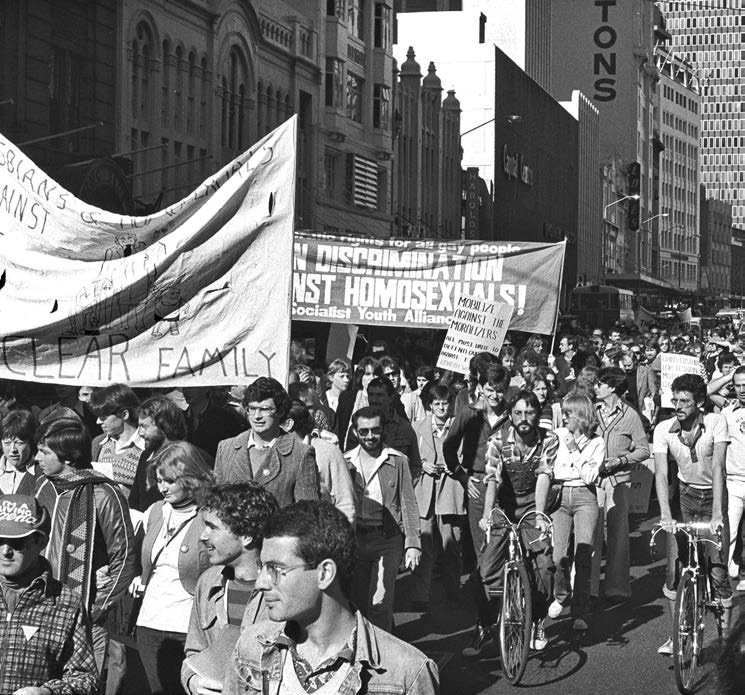
    It’s been 47 years since Sydney’s inaugural Mardi Gras parade. On the 24th of June 1978, thousands marched down Oxford Street, demanding the recognition of gay rights and an end to the country’s long and violent legacy of homophobia. What began as a peaceful morning protest later became a street party, but simmering tensions eventually erupted into violent clashes between protesters and the authorities. The police would justify their infamously brutal response behind the repressive Summary Offences Act, which criminalised public assembly and ‘offensive’ conduct.

    A lesser-known aspect of Mardi Gras’ legacy is that the parade was imagined in the heart of Glebe. Throughout the 1970s, in the years leading up to that historic night, Radical Glebe became a hub for queer activism, home to several pivotal organisations whose ideas and actions often took shape along the politically charged stretch of Glebe Point Road.

    Pride History Group is a Glebe-based organisation working to preserve Sydney’s LGBTQ+ history. In November 2024, the group celebrated its 20th anniversary, marking two decades of communityled archival work and intergenerational storytelling.

    Run entirely by volunteers, Pride History Group has collected more than 100 interviews with LGBTQ+ people, covering topics such as early activism, Mardi Gras, community diversity and the HIV/AIDS epidemic. Dr Shirleene Robinson, President of the Pride History Group, says preserving queer history is deeply personal and politically important.

    “I think it has been very easy for a lot of our history to feel as though you’re alone,” she says. “People need to understand that homosexuality, transgender people, gender diversity more broadly and people with intersex status – they have long histories, and we should talk about them.”

    “People need to understand that homosexuality, transgender people, gender diversity more broadly and people with intersex status – they have long histories, and we should talk about them.”

    The organisation has received inquiries and messages of support from people around the world, a reminder of how meaningful LGBTQ+ history can be in places where queer communities remain under threat.

    “Just seeing that and connecting with that history, that resistance and hearing people’s voices is very special to them,” says Shirleene. “I think it’s really important to talk about our history.”

    The Campaign Against Moral Persecution (CAMP) Inc was first established in 1970 in Balmain by John Ware, Christabel Poll and their partners. The group formed in the wake of similar gay rights movements in the United States, drawing particular inspiration from New York’s Stonewall Uprising. In the early hours of June 28, 1969, police raided the Stonewall Inn, a well-known gay bar. After years of discrimination and mistreatment by authorities, the patrons fought back. With growing support, they resisted six days of brutal police violence in a defiant stand for gay rights. The uprising marked the beginning of a global movement for LGBTQ+ rights.

    CAMP Inc was the first gay rights organisation to be established in Australia and would slowly grow to include branches all around the country. In 1973, the organisation moved to Glebe, where they established the ‘Phone-a-Friend’ service. On the 13th of April, a core group of activists met in the living room of 33a Glebe Point Road to christen a black rotary phone “in the name of Jesus Christ SuperStar” (as told in the Phone-a-friend newsletter from April, 1973). The phone was thereby named Paf. Over the next few years Paf would receive around 5000 calls from queer people experiencing the pressures and pains inflicted by a society weighed against them; looking for some friendly, “amateur” counselling and important information about safety and support systems. The ‘Phone-a-Friend’ service continues to operate to this day.

    Eventually, it was renamed to the Gay and Lesbian Counselling Service and now operates through Newtown-based LGBTQ+ organisation Twenty10.

    Just 150 metres down Glebe Point Road, the house at number 67 was originally home to Sydney Women’s Liberation, a feminist collective that campaigned on issues like reproductive rights, equal pay, and protection from gendered violence. In 1972, the group relocated elsewhere in Glebe, yet the site became home to another activist movement: Gay Liberation, which had emerged out of CAMP Inc. Gay Liberation represented a generational break from CAMP by younger queer activists who considered the former organisation somewhat conservative compared to their own politics.

    One of Gay Lib’s methods of protest were actions known as ‘Zaps’. Originating in the queer activist movements in the United States, Zaps were a form of spontaneous and surprising protest, designed to disturb the status quo. They’re marked by creativity, often resulting in cheers and chuckles from members of the public, or creating shock through sudden confrontation.

    In an interview with the State Library of NSW, Terry Batterham reflects upon the Zap ethos within the protests of Gay Lib during the 1970s. He recalls one instance when a group of activists scaled the busy escalators of David Jones on Sydney’s Elizabeth Street, chanting “Ho! Ho! Homosexuals!” to the shock and amusement of the large crowds carrying out their annual christmas shopping. So how did these queer organisations in Glebe come to start Sydney’s Mardi Gras?

    In 1978, Ron Austin proposed holding a night-time street party along Oxford Street to celebrate queer culture and activism. Fellow CAMP member, Margaret McMann embraced the idea.

    “Ron, we’ll call it a Mardi Gras!” she declared.

    As retold on the 78ers website, First Mardi Gras, a small group of activists, known as the Gay Solidarity Group, “sprang into action” to prepare the event, creating banners and posters, organising police protests and hiring a truck.

    On the morning of June 24, 1978, a peaceful protest took place at Sydney Town Hall, demanding action against discrimination faced by queer people. Meredith Bergmann, a Glebe resident for over 50 years, remembers attending the march.

    “It was about trying to stop the police attacks, and particularly the police were trying to stop the reasonably new elected Labor government from abolishing the Summary Offences Act,” says Meredith.

    “Our slogan as we marched up the street was ‘stop police attacks on gays, women and black people’ and so it was about the fact that the gay and lesbian community and that Aboriginal Australians were being hassled and often attacked by police.”

    But it was later in the evening where the crowd came together, with 2,000 participants taking part in the first Mardi Gras, the first time members of the LGBTQ+ community in Sydney had gathered together on the streets to celebrate their queer identities.

    While the morning protest was peaceful, the second gathering along Oxford Street rapidly escalated when police intervened. Officers began making arrests under the Summary Offences Act, and the night turned violent as participants were beaten and dragged into police vans. The brutality shocked many and marked a turning point in Sydney’s queer rights movement.

    “I’d gone home and I was rung up and rushed out, I ended up bailing out a lot of the people who had been arrested on that day and particularly Peter Murphy had been very badly bashed,” Meredith recalls.

    Peter Murphy was one of 53 First Mardi Gras protestors to be arrested that night in June. Following his arrest, Peter was brutally bashed and assaulted by officers, suffering bruising to the skull, ribs and kidneys, and a concussion.

    “He [Peter] was a friend of mine, so I took him to St. Vincent’s Hospital and then to a doctor friend of mine in Glebe, Paul Torzillo. And then this was all early in the morning by this stage,” says Meredith.

    “And then I took him to another friend because he wanted legal advice about what to [do]. He wanted to sue them. And that was also in Glebe. It was Pat O’Shane, who later became the first Aboriginal magistrate.”

    Today, much work is being done to preserve the queer history in Glebe. Meredith recalls living in Glebe during the 1970s, alongside Heather Goodall, and Helen Randerson.

    “It was very exciting. There was lots of squatting, because there were two great expressways that were going to bisect Glebe. So a lot of the houses that were in the way of the expressway were left to become run down by their owners and were being rented out for very, very low rent. The expressway didn’t come through in the end, but because of the squatting and the cheap rent for students, it allowed lots of radical activity to happen.”

    The three women are now writing a book titled ‘Radical Glebe’, which will be published later this year.

    “We moved in ‘68,” Meredith says, “and we had a sharehouse for a while before we went off and had babies and everything. So the three of us have lived in Glebe for 50 years, and we remember the radical Glebe of the 60s and 70s.”

    “So we wanted to write about it because it was extraordinary.”

    For Shirleene, much of Pride History’s work involves recognising the efforts of those who came before. “These have been long fought battles, but recent battles,” she says. “So I think that every younger person who interacts with an older person should be mindful that, in some ways, that history carries a weight, and it is something that people carry with them.”

    To mark Pride Month this year, Pride History Group is hosting ‘The Great Pride Debate’ on June 10 at Qtopia Sydney in Darlinghurst. Historians, academics, writers and activists will gather to discuss whether “LGBTIQA+ history will always be a niche subject.” Tickets are free via the group’s website.

    From Glebe’s radical past to its activist present, organisations like Pride History Group continue to ensure that queer history is not just remembered – it is lived, shared, and carried forward. Glebe’s legacy as a cradle of queer resistance lives on through the people and organisations still fighting to preserve its history, ensuring that the struggles, triumphs, and voices of the past continue to shape the future.

  • Building Community Ties at the Glebe Tree House

    Building Community Ties at the Glebe Tree House

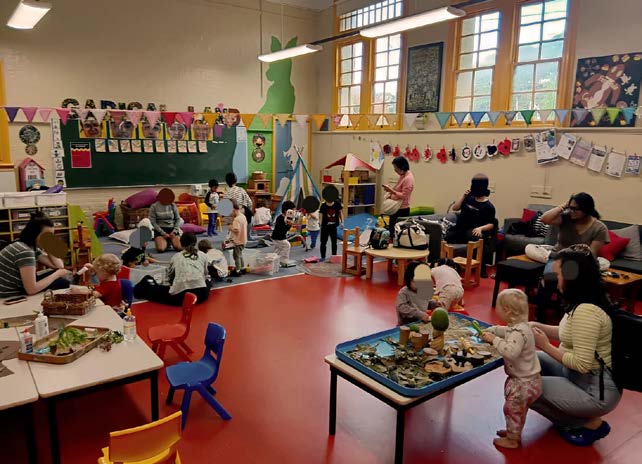
    It’s a Friday afternoon at Glebe Treehouse. About a dozen women are participating in a cooking course organised with OZ Harvest. They are whipping up different kinds of pancakes in a warm and easy going atmosphere. The Treehouse—although a metaphorical name—holds the coziness of an actual treehouse. It is located on the premises of Glebe Public School and is a space that parents and children alike can enjoy making friends, socialising and share learning experiences.[BL1] The cooking course is just one of many programs organised during the week. There is also a music program for toddlers, a baby play group for parents/carers and babies, career support and help with admin tasks for parents.

    Hellen is a community worker and has been a teacher for over 17 years in the Department of Education. She is managing the Treehouse today.

    “I started teaching teenagers with disabilities in high school. After doing that for about 10 years, I worked as a beginner learning and support teacher for kids with special needs as well, but in primary education.”

    After almost five years in primary education, she had the opportunity to start a similar role as educator in early education.

    “I said yes, and I never looked back. It’s been the best career change of my life to go from year 12, to year 7, to kindergarten, and now to pre-kindergarten. It’s like a backward journey, like the Benjamin Button movie.”

    When asked why she decided to embark on this journey, Hellen says that “to be honest, it was curiosity”.

    One question she asked herself during the first stage of her career was “why are they coming to the high school with barely any social skills, communication skills or low literacy skills? Yes, they might have a disability, but they also have capabilities”. She knew it wasn’t the school system’s fault, nor the family’s fault or the children’s fault. So she decided to make a career change driven by this big question.

    It is now widely understood that there is increasing social isolation within local communities. According to the Australian Institute of Health and Welfare, participation in neighbourhood-specific community groups has declined by approximately 35 per cent between 1990 and 2020. However, the increased visibility and conscience around this issue is opening a window of opportunity to bring back those cherished bonds between neighbours: providing the social net of support in forms of friendship, child growing advice, as well as key emotional support in moments of hardship.

    Hellen urges that nowadays, “the world is corporate; the world is clinical”. In addressing this dangerous trend of the – often unconscious – isolation of people and communities, she points to the importance of Indigenous cultures in bringing back practices around kinship and belonging, where connections with one’s neighbours are nurtured and valued. [BL3] [ID4]

    Wilma, who is looking after her grandchildren, also arrives at the conclusion that “life has become very mechanical”.

    She is glad to see how places like the Treehouse act like social nests, organising events ranging from cultural evenings, community lunches or volunteer-led food gathering events.

    Trisna, mother of two, moved to Dulwich Hill one year ago. She talks about the importance of a place like the Treehouse within this societal trend.

    “I don’t know anyone in my community in the Inner West. I always feel like home in here. Hellen and the other parents make [the Treehouse] an environment with an attitude and behaviour that’s from the heart. This is a place where I can share my feelings[BL5] ”.

    In the case of Fatma, it was her preschool aged daughter who encouraged her to come to the Treehouse.

    “My perception is that it’s as useful for the kids but also for the parents themselves to communicate with other parents”.

    Tina on the other hand, started getting involved in the Treehouse to support her son, and over time became increasingly active, “helping people with family Centrelink forms, apartment housing forms, finding them school options, teaching them techniques, linking them”.

    Places like the Glebe Treehouse, a community led by Hellen and supported by a group of committed parents, reminds us of the value of social learning and engagement once again.

    If you want to know more about the Treehouse and the most updated courses, you can follow them on their Facebook page or show up anytime Monday to Friday between 9am and 5pm.

  • A Life Before the Lens

    A Life Before the Lens

    Aboriginal and Torres Strait Islander readers are cautioned that this article contains images and names of people who have since passed away.

    I

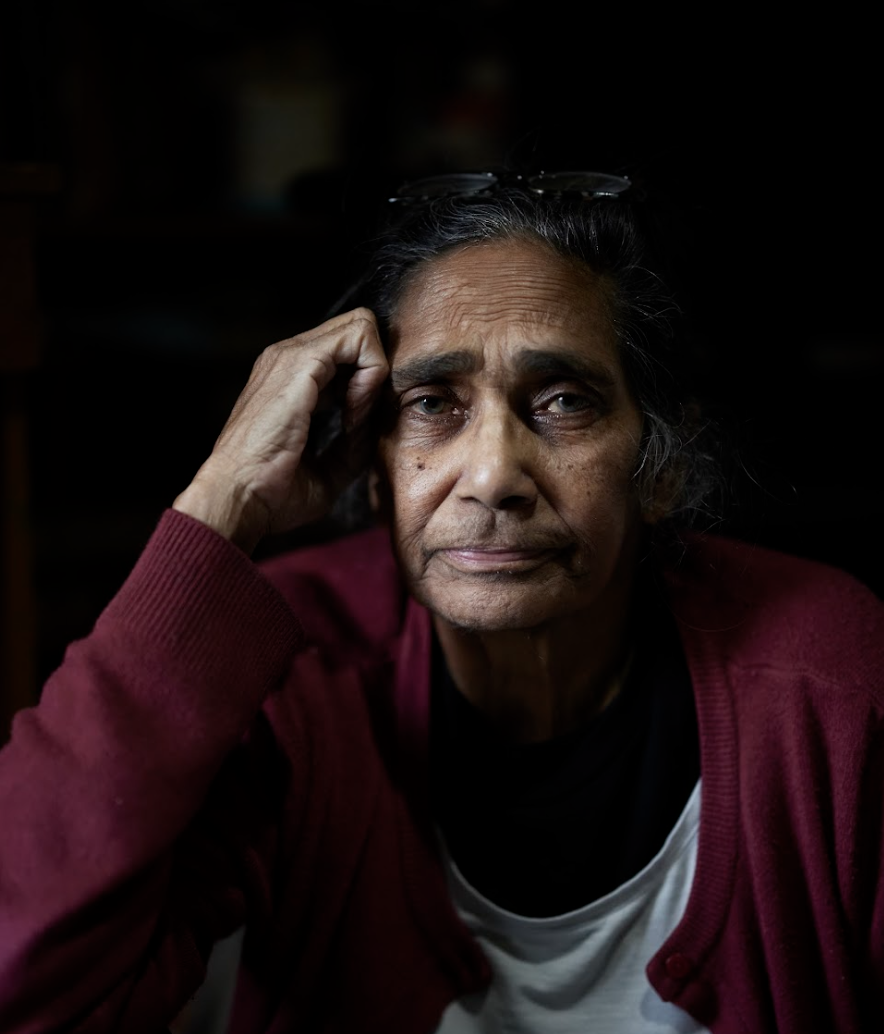
    “I am a Gomeroi/Gamilaraay Murri Yina from the northwest of New South Wales and Southern Queensland,” Aunty Barb says one rainy morning in late January. In the Gamilaraay language, “Yina means woman”. She has just made her way down the wet footpaths of Glebe, a suburb she’s called home for over at over four decades.

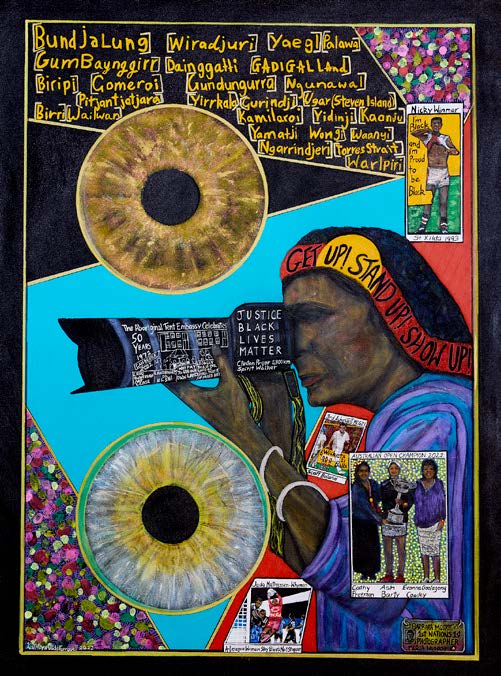
    Born on Gomeroi Country in 1950, Aunty Barbara McGrady has since become renowned as this country’s most influential female Indigenous photojournalist. Her work has projected and celebrated the strength and flourishing of Aboriginal and Torres Strait Islander Peoples throughout her life, with an intense focus on influential sporting figures, and the plight of her Peoples against the ongoing systems of colonial injustice. Whilst she has long called this suburb home, she says, “my family life, where I grew up, and my language group, that’s me. Before any of this, before Glebe, before anything.”

    Artwork painted by Aunty Kath Dodd Farrawell in honoring her friend Aunty Barbara McGrady
    Artwork painted by Aunty Kath Dodd Farrawell in honoring her friend Aunty Barbara McGrady

    Aunty Barb describes Gomeroi Country as “a big, big area—second only to the mighty Wiradjuri group (in the central and western slopes of New South Wales)”. The Land stretches across a vast landscape of about 50,000 kilometres—up from The Hunter Valley in NSW to a northern peak of Nindigully in Queensland, with its western fringe spread across the Warrumbungle Mountains. The Gomeroi woodlands were long populated with Eucalyptus, Forest Oaks, Pines and a variety of Acacia trees. Its pristine waters ran through three major river systems— the Namoi, Gwydir and Barwon—before resting within their many catchments, all of which held an intrinsic source of spiritual and nutritional life for the near fifteen thousand Gomeroi People.

    Their food supply was largely attained through sophisticated agricultural methods, long developed over 60,000 years. Nutritional life was sustained by a dependence on the vast amounts of Goolah Grass; its seeds grounded into flour and baked upon coals into round cakes of bread. Food was also acquired through masterful hunting techniques, and intricate fishing practices which included the construction of stone-walled catchments, capturing the many fish directed by increased river-currents after rainfall. The stone contraptions left the fish exposed in the shallow creek beds for convenient spearing or even to be caught by hand.

    Gomeroi Country was heavily impacted by long and harsh droughts that continue to trouble European agricultural methods. Yet the arid lands could be transformed overnight by even moderate rains. The dry grasses would quickly return to life. The many herb species resurrected in thick green lots. Luscious waterways flowed again for the vast animal life that would soon drink to good health and breed plentifully. When the rains were overwhelming, the Gomeroi People would relocate to higher grounds. The nomadic lifestyle of the Gameroi Clan responded to a deeply ingrained knowledge of the earth, of its soils from which life would always grow, and of the weather systems dictating all. Contrary to the beliefs of European settlers (that often persist today), population movements were rigorously calculated. As anthropologist Roger Millis writes, “particular places were inhabited at favourable times of the year, often with a permanency that belied the conventional European image of the Aborigines (sic) as primitive nomads on perpetual walkabout.” The Gomeroi People were at one with Mother Earth in a spiritual dance that allowed both to thrive for many thousands of years.

    The land’s nutritional value was perceived by European settlers, such as Alexander Paterson who wrote of the “luxuriant pasture”. They saw capital within the healthy soils, the undiluted waters, and flourishing woodlands. This opportunistic lens resulted in devastating consequences, upon the harsh, murderous methods of British colonisers in the Nineteenth Century—and in the years since.

    One particular episode remains a horrific red stain upon this nation’s criminal record. It was in the shallows of a remote stream named Waterloo Creek that one of the most violent atrocities suffered by the Gomeroi people took place. On the 26th of January, 1838—the fiftieth anniversary of Captain James Cook’s arrival—Major James Winniett Nunn directed a group of mounted police and convict stockmen to the banks of a remote billabong. On the opposite side of the creek, a large Gomeroi group (estimates suggest as many as 1000) prepared themselves for the worst. The men dispersed their weapons and spread into defensive positions, allowing the women and children to flee. Initial clashes resulted in some of the horsemen being wounded by Gomeroi spears. In response, Major Nunn declared open fire. By nightfall, Nunn’s men would massacre up to three hundred victims—upon the very creek beds that had long nourished their existence. The events were mythologised in the years after, within a legacy of violent massacres across the country, yet have since become mostly deleted from the national memory. Such historical erasures have deeply altered the moral nature of this country ever since.

    II

    Aunty Barb was born over one century later in Mungindi, “a little town smack bang on the Queensland border … It’s been said it’s the only town in the Southern Hemisphere that’s on two sides of a state border,’ she says. “The majority is on the New South Wales side. There were two police stations, on either side… but I didn’t see any divide…. It was just on paper. A town grew on my land. On my Country.”

    “I always had my say. Always knew what I wanted to say. Always stood up for the underdog, whether you were black or white. That was my mindset. Because I thought, who are you? It’s my land, my country. You built your little town here, but on my land. So, I always made that known. My mother would say: you can’t say all that stuff. Those white people will come and take you away. You can’t say things like that in public. You can’t say, ‘this is my land’ … I said that as a kid. I was a bit of a weirdo like that …”

    Aunty Barb grew up within a large and supportive family, which included her six brothers and one sister. “I had great parents who looked after us, who looked after their own children, plus their nieces, nephews. My cousins came to my part of the country to work. It was a good home, you know, where everyone was looked after. Sometimes white people think we come from these disruptive, violent, horrible families with no love or no care or that there was just drinking, violence. I didn’t come from a family like that …They worked on the land. Everyone did. That was the only work going. We had nothing, you know…compared to white Australia. When we weren’t out on a property where my father worked, we lived in tin houses that my father and uncles built. And those little tin houses had to be a long way out of town. I grew up running everywhere. Because we lived three-quarters of a mile out of town. So, my brothers and father had to go to the local football grounds and tennis courts, and there was a tap there where you could get fresh water. They had to carry it in a yoke, with two pails hanging down on either side— full of fresh water.”

    This was in the 1950s—before Indigenous Australians were legally recognised as citizens, and racism was far from veiled behind some of the social subtleties it wears today.

    “You had to be out of town after six o’clock,” she says, “You couldn’t sit in any seat in a local picture show. You had to sit down the front in the hard seats. You couldn’t, of course, speak your language.”

    Yet this did nothing to prevent her parents from passing the Gamilaraay dialect down to their children, nephews and nieces. The language proved to be a precious pathway into the past, igniting ancient connections to the Land, and strengthening powerful ties to the culture of their ancestors.

    A viscous sense of self and Gomeroi identity was obvious in how Aunty Barb navigated the minefield of white oppression throughout those early years. She had a strong, and noticably loud streak of rebellion—a fire in her heart that raged upon the burning coals of racial injustice.

    “I was very mouthy,” she says, “I always had my say. Always knew what I wanted to say. Always stood up for the underdog, whether you were black or white. That was my mindset. Because I thought, who are you? It’s my land, my country. You built your little town here, but on my land. So, I always made that known. My mother would say: you can’t say all that stuff. Those white people will come and take you away. You can’t say things like that in public. You can’t say, this is my land … I said that as a kid. I was a bit of a weirdo like that … My mother was sick on and off and in hospital quite a lot when I was growing up. My father was out working, and my aunties had to come and look after us. So, I had to—not fend for myself—but grow up quick, look after myself.”

    Her mother’s concerns were undoubtedly rooted in her own lived experience, after a lifetime of internalising the violence enacted upon her family, her People, and the Land they had long held sacred. But deep down she knew that the strength and intelligence of young Barbara would carry her through the dangers: “My mother always said, ‘I’m not worried about you. You’re all right.’ Because I was that kind of kid, that kind of person with that mindset. I knew who I was, where I came from, so anything else didn’t matter.”

    III

    During these formative years Aunty Barb began to see people within the pages of magazines and newspaper who appeared more like her own: larger-than-life figures erupting into the public sphere before the civil-rights movement would inevitably explode across the Western World in the following decade.

    “The big landowner, well known in the district, would give my father magazines, Life Magazine, Time magazine, Paris Review. So, I taught myself to read when I was about four or five. And I’d look through these great magazines and see these incredible photographs of black people doing incredible things. And I thought, wow. So, I was interested in Black people, Indigenous people from all over the world. Not just my own.”

    At the age of 15, Aunty Barb’s mother handed her the tool which would frame how she expressed herself throughout most of her life.

    “We had a Vox Brownie,” she says “I don’t know how or where we got it from. It’s like a little box and it’s got a real big lens”. This camera, she says, “opened up the world, opened up everything … There’s an old saying: a photograph tells a thousand words. I realised that people can read what they want to in photographs.”

    Upon this epiphany of a greater world— through holding her many new heroes, printed black and white in the palm of her hands— Aunty Barb became determined to venture out and beyond the little town that was raised upon the land from which she grew.

    “I knew for a fact I didn’t want to stay in my little hometown,” she says.

    There was also of course a desire to remove herself from the discriminatory attitudes and conditions that became particularly infamous in the country’s north.

    “It was oppressive, racist, insular, closed.”

    After graduating high school, she became a nurse and moved south to Gadigal Land, finding work across the broader Eora Nation. She practiced nursing in both Paddington and Royal Prince Alfred Hospitals. Yet, she says, “I always knew that I’d be a photographer. I knew I would always tell our story, mainly through photographs. And whether I’d do it in a good way, a great way, or whether I connected with our people or mainstream society is another thing.”

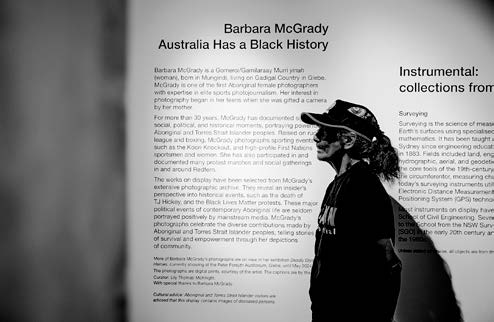
    Aunty Barb standing at her exhibition ‘Australia has a Black History’ Photograph: Tom Psomotragos
    Aunty Barb standing at her exhibition ‘Australia has a Black History’ Photograph: Tom Psomotragos

    Aunty Barb’s career is certainly best portrayed through her work, a selection of which is displayed across these pages. In becoming a true master of her craft over the years, she has wholeheartedly acted upon that seemingly destined ambition to celebrate the beauty and strength of her people. Along the way she completed a degree in sociology at the University of Sydney. Her work has been featured prominently throughout this country’s media and arts institutions. In 2017 she presented her own solo exhibition, Always Will Be at the Australian Centre for Photography in 2017 and was later featured at the Art Gallery of New South Wales in 2020 as part of the Biennale of Sydney. In recent years her work has been formally recognised by a number of prestigious awards, including the Anthony Mundine Courage Award as part of the inaugural National Indigenous Human Rights Awards in 2014. The following year she received the Solid Screen International Award for Indigenous Women in Film and Photography.

    All the while, she has fostered a strong connection to her community of Glebe and has long been a staple of the Youthy, with her children walking through its doors during their teenage years. She has also sustained fruitful ties to Redfern, Waterloo and Surry Hills, where she has been a vital figure since venturing south from Gomeroi Country all those years ago.

    IV

    Aunty Barb reflects on what advice she might give to at that rebellious young girl living under those tin roofs upon the sacred Lands of the Gameroi People—new camera in hand and the whole world in her eyes. After some thought, she says she would tell her to “go and tell a story … It started with my family, and then the people around me, my little town, animals, kangaroos, emus. Tell the story that’s in front of you. Because people will read into it what they want to, and it could be the opposite of what someone else thinks. We’re only three percent of the population, and we punch way, way, way above our weight. There’s still a long way to go, but we’ve gained so much, and of course, with white allies—good, good white people behind us and beside us. I just think we’re deadly. We shouldn’t even be here, they’ve tried to kill us off, and I’m glad they didn’t succeed. Look at our sports stars, Cathy Freeman, Lyle Rose, all these incredible football players, boxers. Evonne Goolagong Cawley came from a little town near Griffith, and to conquer the world stage is just more than amazing. It doesn’t matter if there’s no one else behind you. It doesn’t matter. There’s an old saying: if you don’t stand for something, you’ll fall for anything. And that’s so true. There’s just so many awesome, incredible people that I’ve spoken to and photographed, and their stories would make you cry and make you think, why? Why did this happen to us? But in saying all that, I had a relatively good childhood and family life growing up in the era that I did, and I think I was very lucky to have great parents who looked after us. I was very lucky not to be taken away.

    I can still hear my dear sweet mother saying, ‘stop saying that in front of white people, they’ll take you away, you can’t say things like that.’ And my father would say, ‘oh let it go, she’s all right.’”