Category: Issue 2

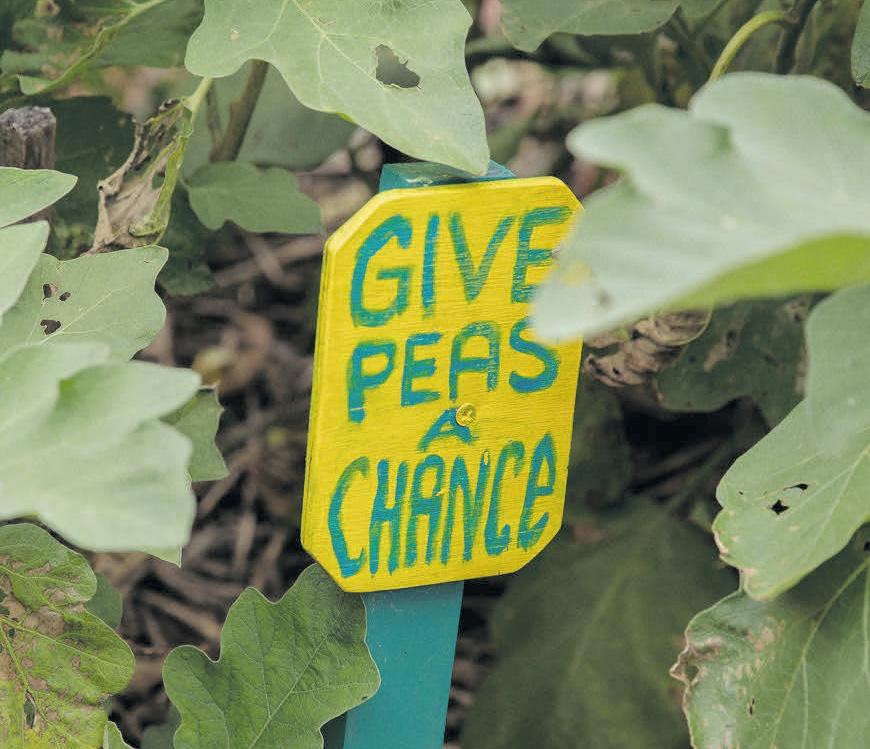
  • Growing through Glebe’s Green Spaces 

    Growing through Glebe’s Green Spaces 

    As urban environments continue to expand and evolve, a movement is taking root that brings a touch of nature back into communities. Across Glebe, residents are transforming vacant lots and alleyways into green spaces, demonstrating that you don’t need a house with a backyard to cultivate both crops and camaraderie. These grassroots initiatives not only provide fresh produce, but also foster connections among neighbours, promote sustainability, and enhance the overall quality of life.  

    The seeds of St Helen’s community garden were sown over coffee in 2012 – Jan Macindoe and her neighbour decided they were interested in growing vegetables, but needed to find a space to do so. The duo began the search for a central, vacant garden space, which was no small feat in Glebe’s densely populated streets.  

    They wandered through neighbourhoods, peering behind shops and down narrow lanes, hoping to uncover a hidden gem amid the many buildings. But in this inner-city suburb, vacant lots can be hard to find, and frustration began to creep in. Determined not to let the challenges deter them, they approached the local council to tell the story of a garden that would serve as a sanctuary for the community.  

    The eventual location for St Helen’s was discovered by accident, during one of these meetings when the councillor spotted a lawn right outside his window. Pretty as it was, the space was much better suited as a garden – and so, St Helen’s community garden was founded at 184 Glebe Point Road. 

    Unfortunately, the origin story does not tidily wrap up there. For two more years, the growing St Helen’s team faced a series of hurdles and delays. Some of these included the local council’s mandate for St Helen’s to be designed by a professional architect, whose work was excellent, but better suited to huge parks and apartment buildings. Only after various design revisions did the St Helen’s team feel that their vision could be realised.  

    By 2014, the garden was finally up-and-running and Jan had truly learnt the importance of patience in building this community initiative. Today, St Helen’s prides itself on organic garden produce. Volunteers meet every Saturday at 10am, and the gardening process is truly democratic; what is grown is determined by all members and – of course – the season. 

    For the past ten years, the team at St Helen’s have kept a running list of the crops they have grown each season, which is circulated twice a year in early autumn and early spring. This is a clever process, enabling them to identify what has worked in the past for the winter and summer crops. 

    There is also a compost and worm farming system, crucial for the health of the garden. This setup is located in the aptly titled ‘Secret Garden’, another space hidden around the side. Volunteers routinely collect coffee grounds and vegetable scraps from shops in the area to help the compost thrive.  

    Aside from providing an opportunity to garden and grow food, St Helen’s has become invaluable for the social health of people of all ages, particularly older residents. They come to work in the garden, but also to have a good chat and to share food they have made – sometimes using the very crops they’ve grown.

    “We tend to joke that we come here for the social contact, and we do a bit of gardening as well!” Jan remarks.   

    The garden has also served as an engaging outdoor classroom, where members with young children teach them where food actually comes from. Parents and caregivers take the opportunity to guide little hands as they explore the rows of vegetables and herbs, fostering a sense of curiosity and connection to the earth. The gardening crew has gone a step further by labelling each crop, transforming the garden into an interactive learning experience so that as people stroll through the garden, they can educate themselves on what is growing.

    “We tend to joke that we come here for the social contact, and we do a bit of gardening as well!”

    A similar story unfolded during the Covid-19 lockdown, when Glebe residents AJ Tennant, and his wife Jo, considered transforming their alleyway into a green space to combat social isolation.

    “We started thinking about how we’ve got this empty, bare laneway that’s a little bit of an eyesore, but that is otherwise such a beautiful section of Glebe. We thought – what can we do about it?”  

    Drawing inspiration from a French documentary about the guerrilla gardening movement, they started with a mismatched placement of six pot plants on the corner of Abbey Alley. 

    “Our neighbours saw it and they started adding to it, and within a week or two, we had gotten probably ten metres worth of plants lined up. We had a nice little garden and it looked quite pretty,” says AJ. 

    “Just having the community come out and clean up, water, prune, pull out some dead plants, add some new ones, doesn’t take too much work, which is great! People feel a little more joy, start to feel happier. It’s just that sense of a little bit of delight.” 
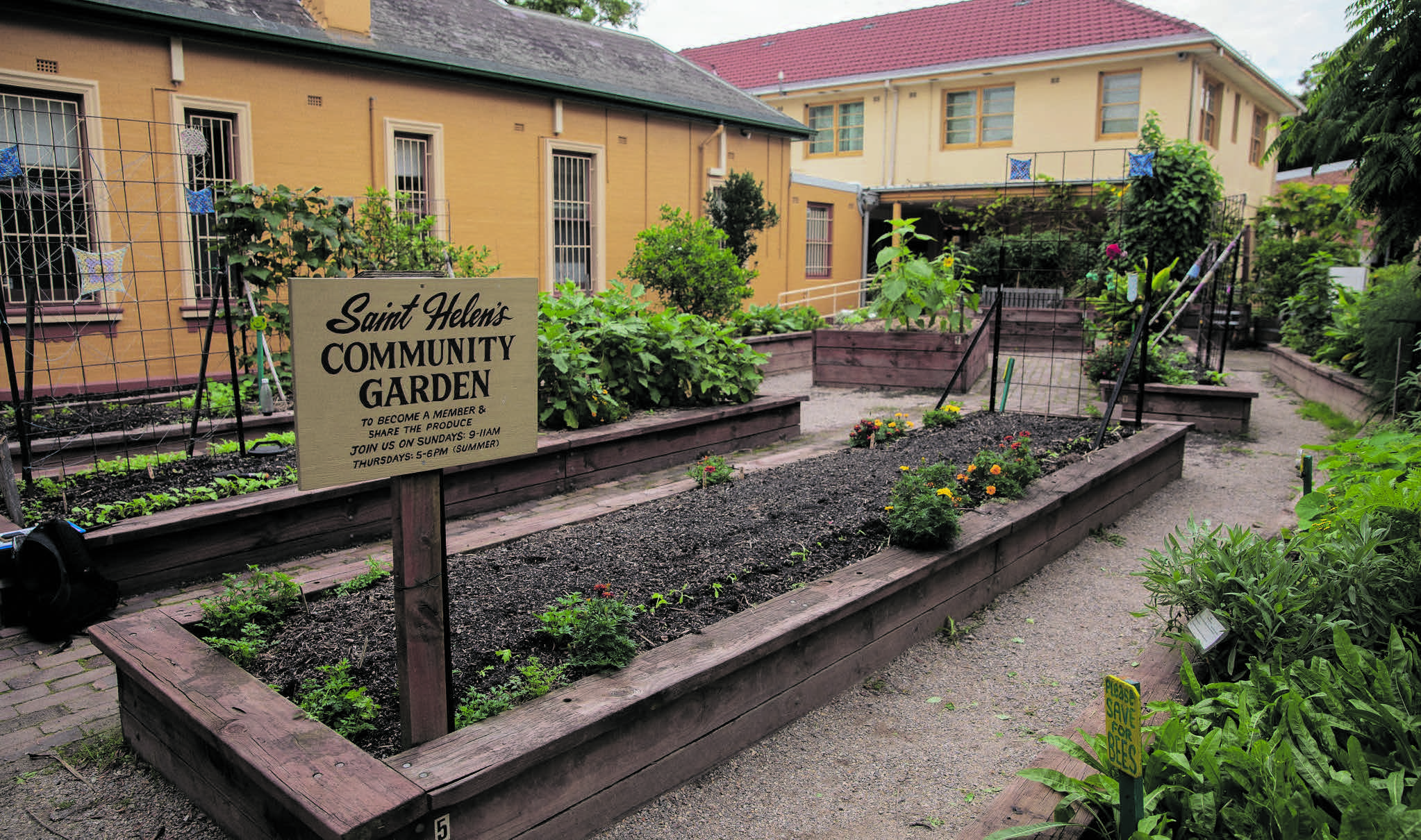
    Overview of St Helen’s community garden
    Overview of St Helen’s community garden

    Community gardening projects like St Helen’s and Abbey Alley play a vital role in fostering social cohesion and environmental sustainability. They provide a space for locals to connect, collaborate, and share knowledge while strengthening community bonds. 

    To support similar community gardening initiatives, the Forest Lodge and Glebe Coordination Group (FLAG) has partnered with the Glebe Computer Project to develop ‘The Green Plot’, a digital sustainability hub which encourages people to share knowledge, resources and experiences about gardening and sustainability.

    Recently, the Green Plot team has been inviting experts from the Royal Atlantic Gardens to run workshops for Glebe residents living in social housing.

    “Not everyone has a garden, and so they can only grow things in pots. We run little workshops, we’ve got these big pots and teach people how to plant in them. In the last workshop, it was summer vegetables,” says Megan Fletcher from FLAG.

    “We do this because it empowers people, it’s connecting. You know, you’re working together.”

    You can visit the Green Plot website on https://greenplot.com.au/ to learn more about current Glebe gardening initiatives and how to start your own project.
  • Glebe’s Warm Tones & The Denizens of the Inner-West

    Glebe’s Warm Tones & The Denizens of the Inner-West

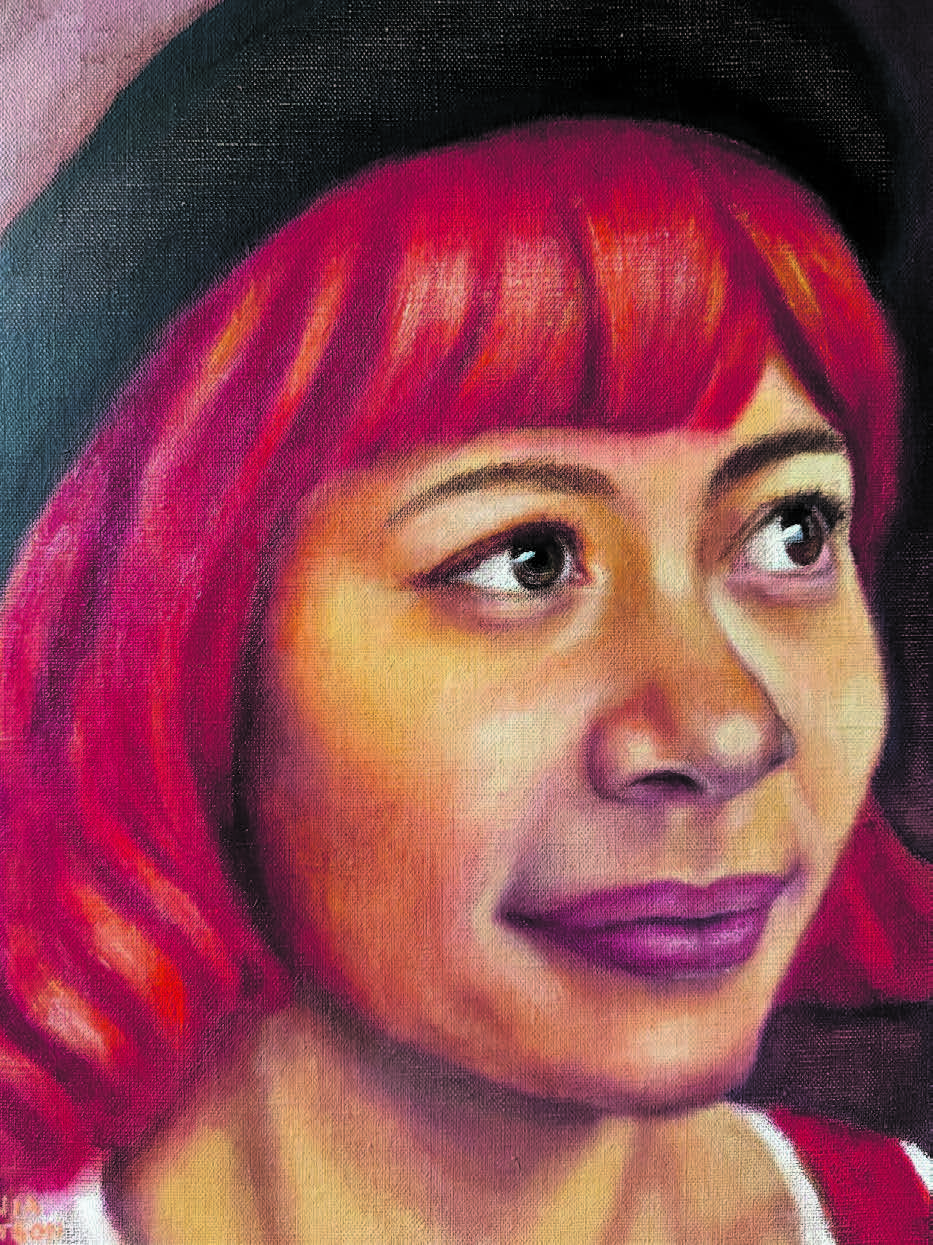
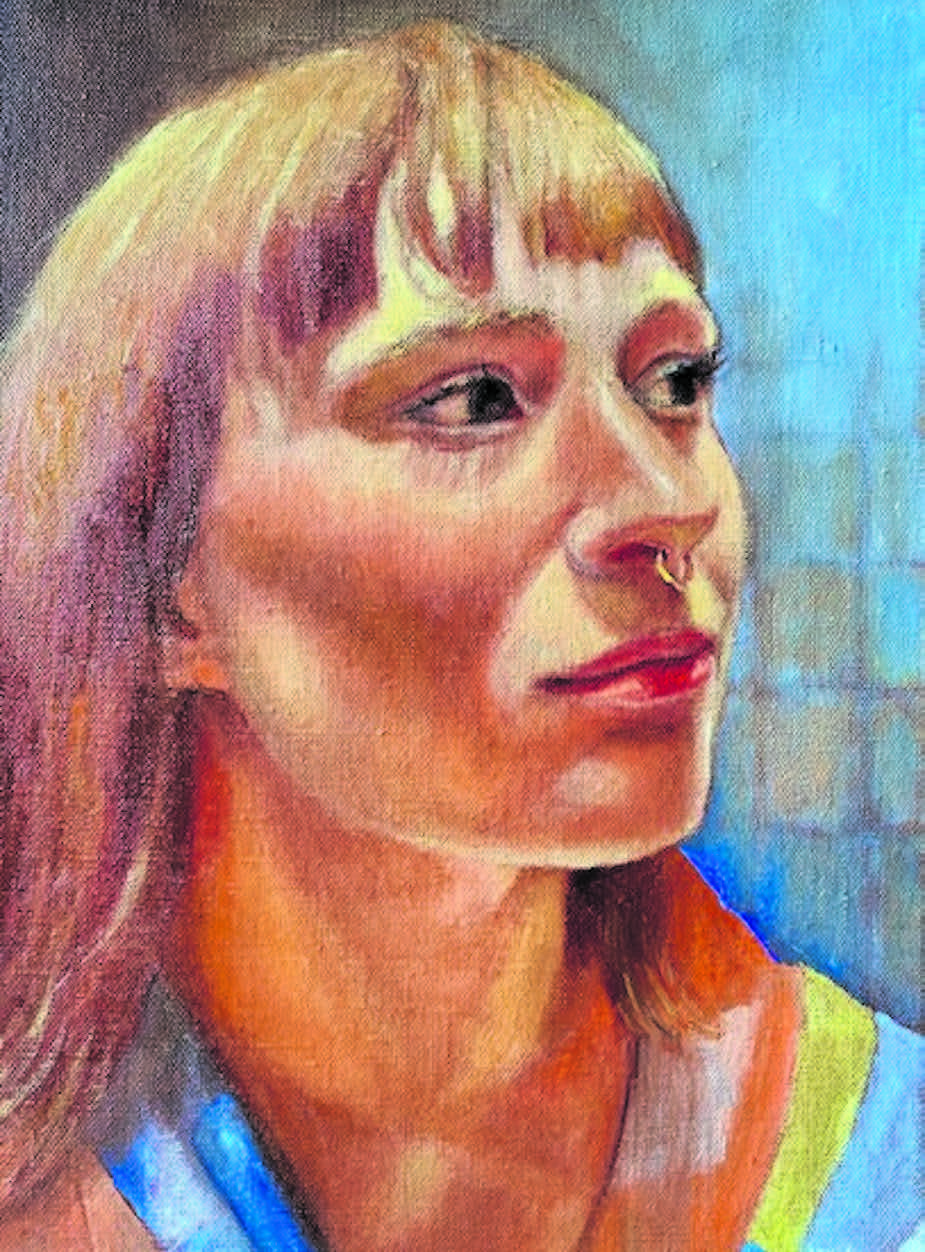
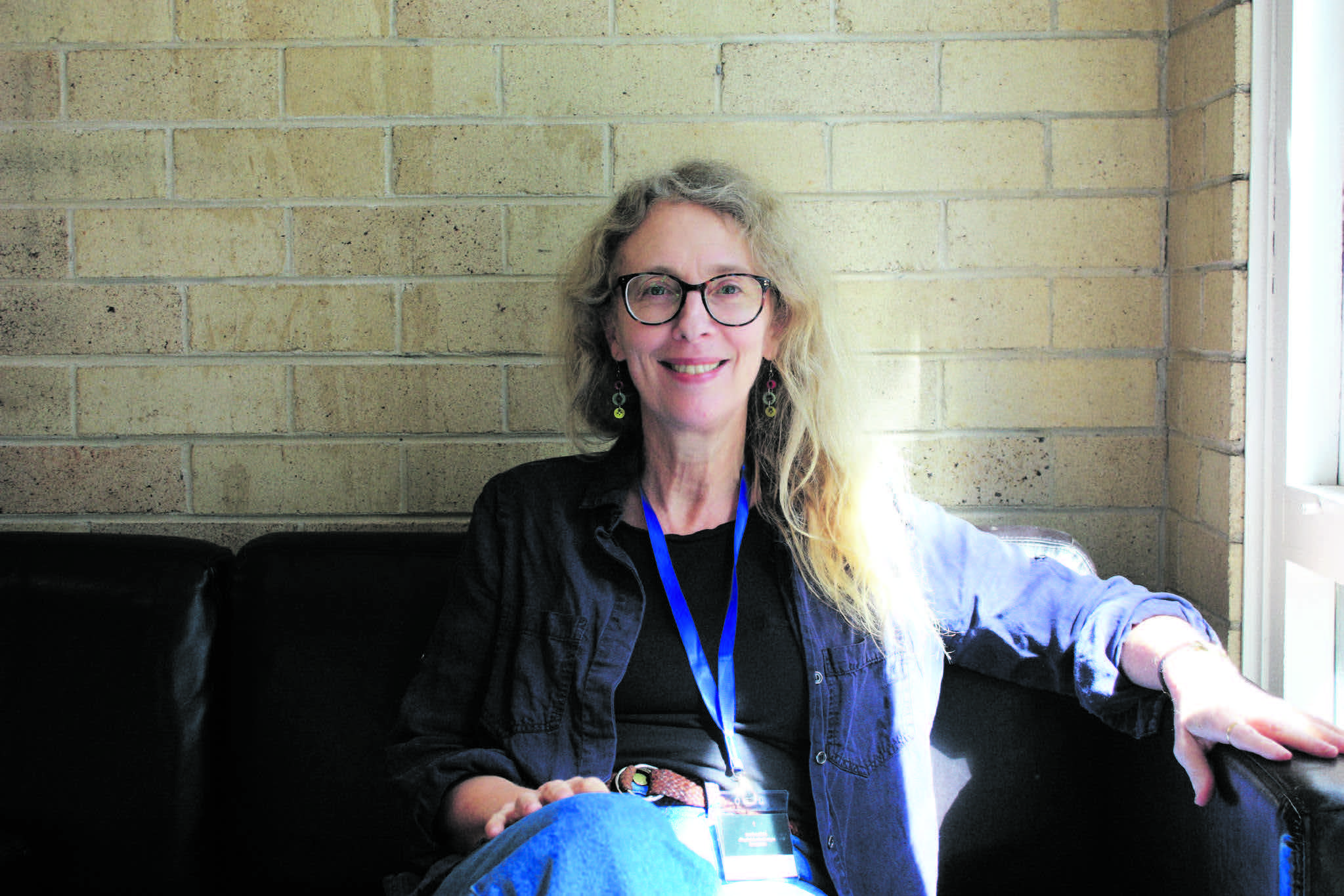
    “I use colour to express my feelings,” Sonia says. We’ve been chatting for a short while upon two opposite couches in the Youthy attic. It has been a relaxed and open conversation about her craft, the importance of art in today’s consumer society, and her creative process as a painter living in Glebe and its surrounding suburbs for decades. It’s a serendipitous occasion. She has just wrapped up a week-long exhibition a few doors up at The Shop Gallery on Glebe Point Road. We met one afternoon during its closing hours after her portraits—the Denizens of the Inner-West—drew me in from the roadside.

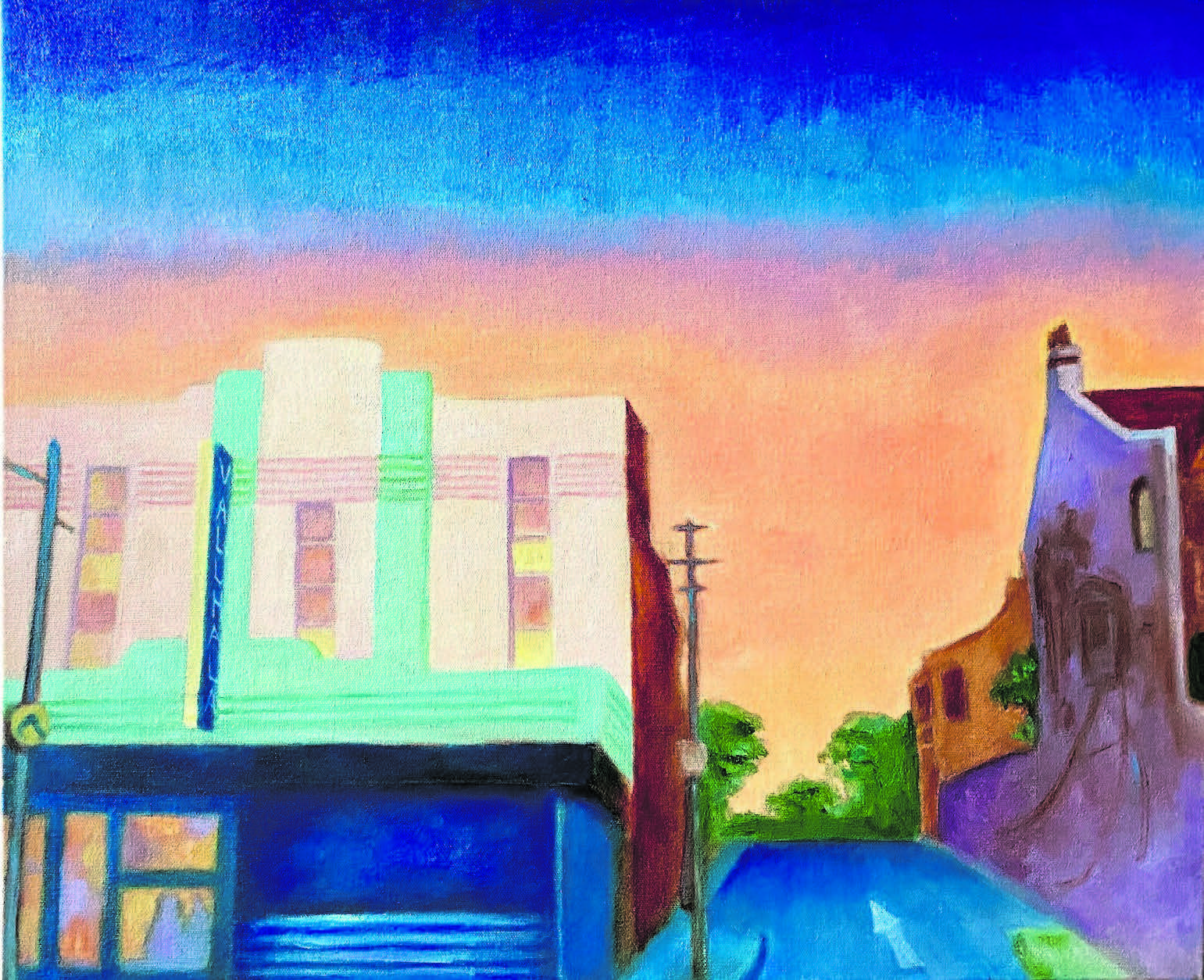
    We’re discussing some of her older works. Specifically, a painting of The Valhalla—the cover image of this quarterly issue. “The Valhalla’s always been a wonderful image,” she says of the old cinema as she recalls watching old arthouse films there in the 1980s. Sonia reproduced The Valhalla several years ago however, and through it, “felt a lot of hope, with the beautiful sky”. During this time she lived across the road: “I was in a boarding house on Glebe Point Road for a long time. Because of insecure work. Because I was very nomadic, you know, because of jobs and changing circumstances”. 

    Sonia’s paintings of Glebe were captured during those isolated years of the recent pandemic. She captures this suburb’s natural vibrancy, and historic architecture. You can feel the warm hugs of early morning sun, and cupped palms beneath the coffee houses.

    “They were taken very early in the morning on my way to work,” she says, “I felt this foolish sense of optimism”. 

    To produce her works, Sonia doesn’t use traditional oil: “I use water-mixable oil,” she says, “because there’s no solvent, it dries quickly, and it looks really good. It’s still considered oil. But it’s a great medium, and yeah, I really love it”. 

    “I love sitting in coffee shops,” she says, “ it’s just like a way of being alone or contemplating or something. But you’ve got people around you. So it’s very comforting.”

    Sonia says that Mark—the owner of Le Petit Tarte on 219 Glebe Point Road—is “a very nice man. And he’s a real community person. So he makes me and other people feel welcome. And he looks after older people too—like myself. And he seems to care about us. So, I feel a lot of warmth when I go there. And, he cares about us. And he also looks after us beyond just customers.”

    “When I had an art show, he just offered to help me. He brought customers along to the exhibition. He’s very kind.” 

    “One of the portraits—Amy—she worked there as a barista.”

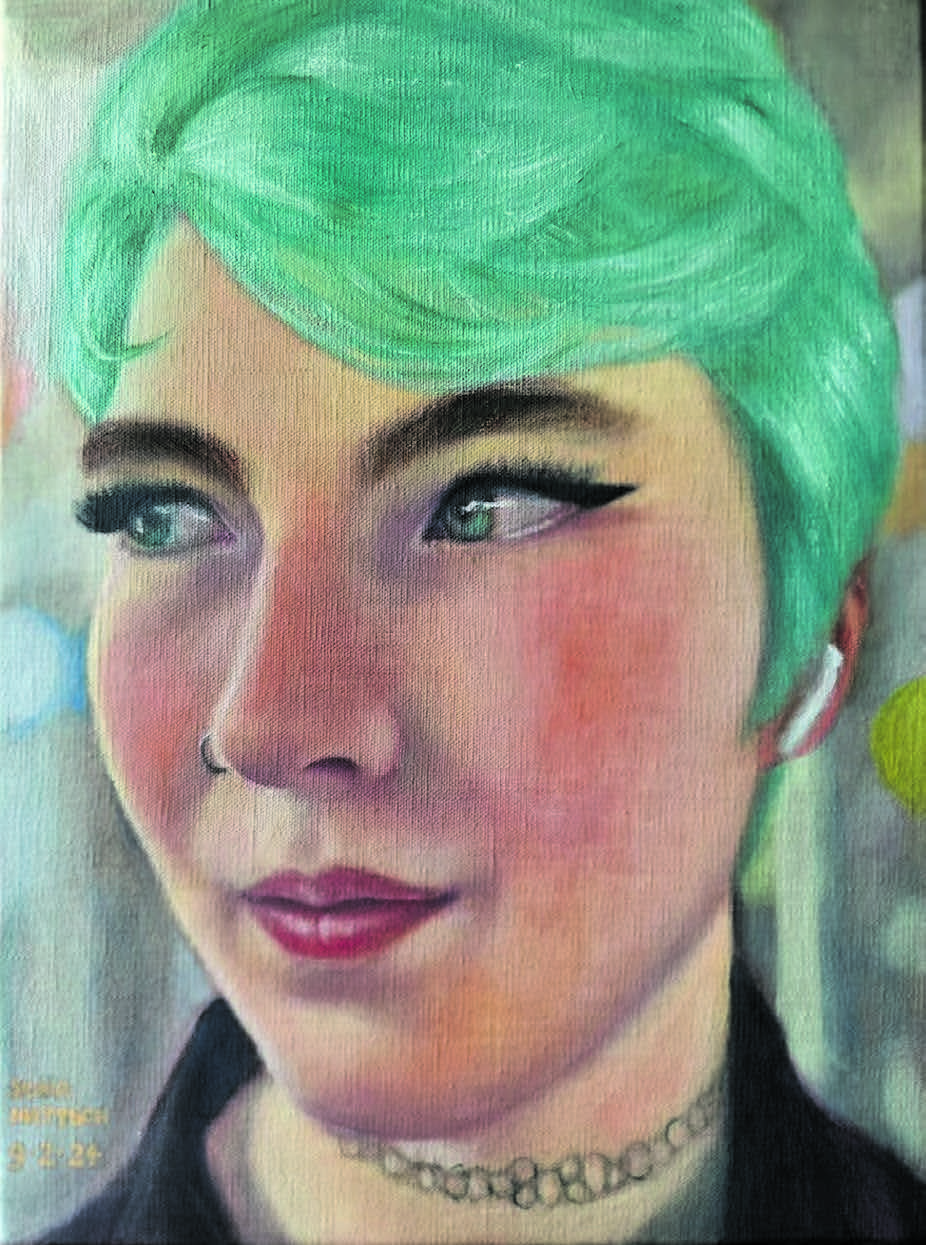
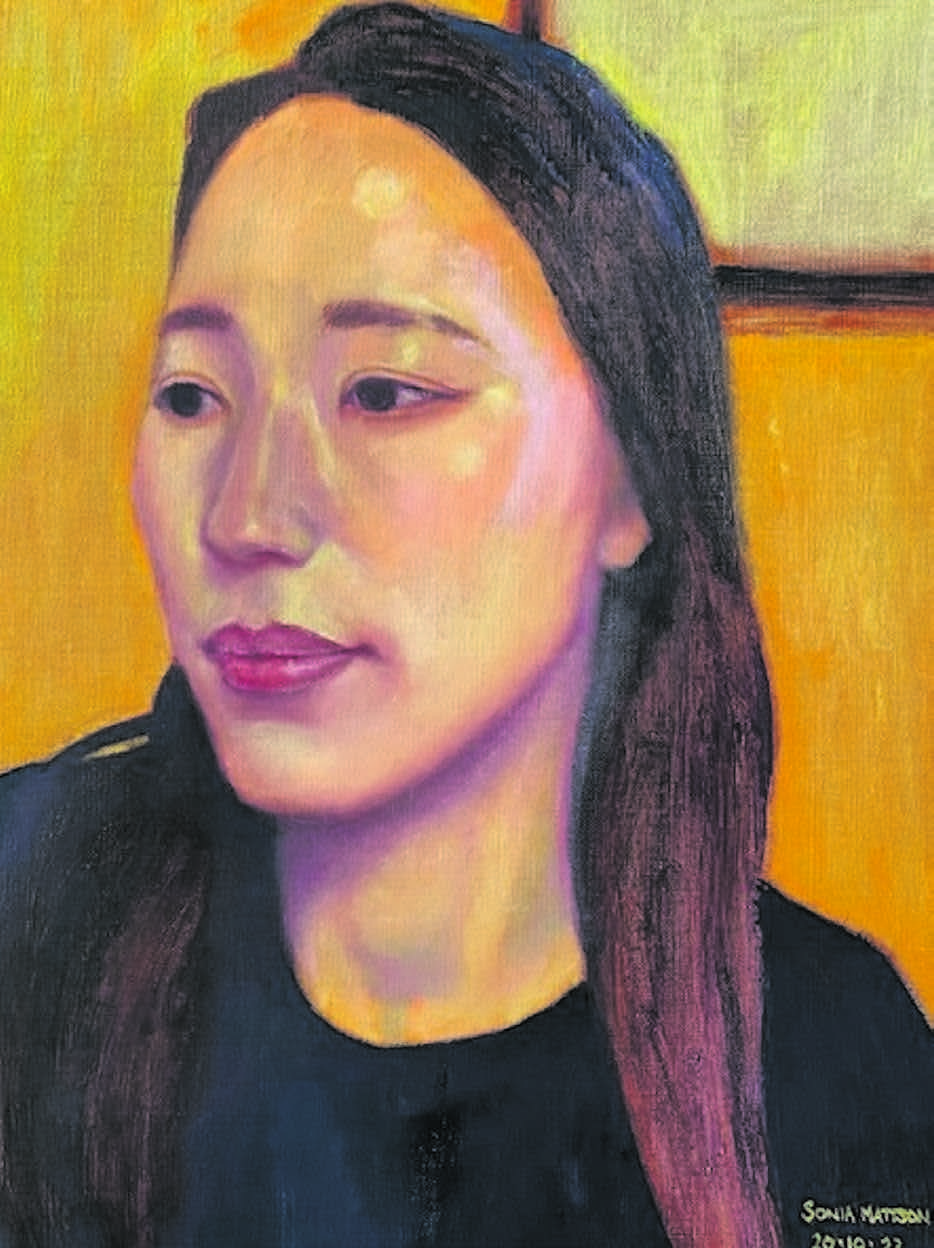
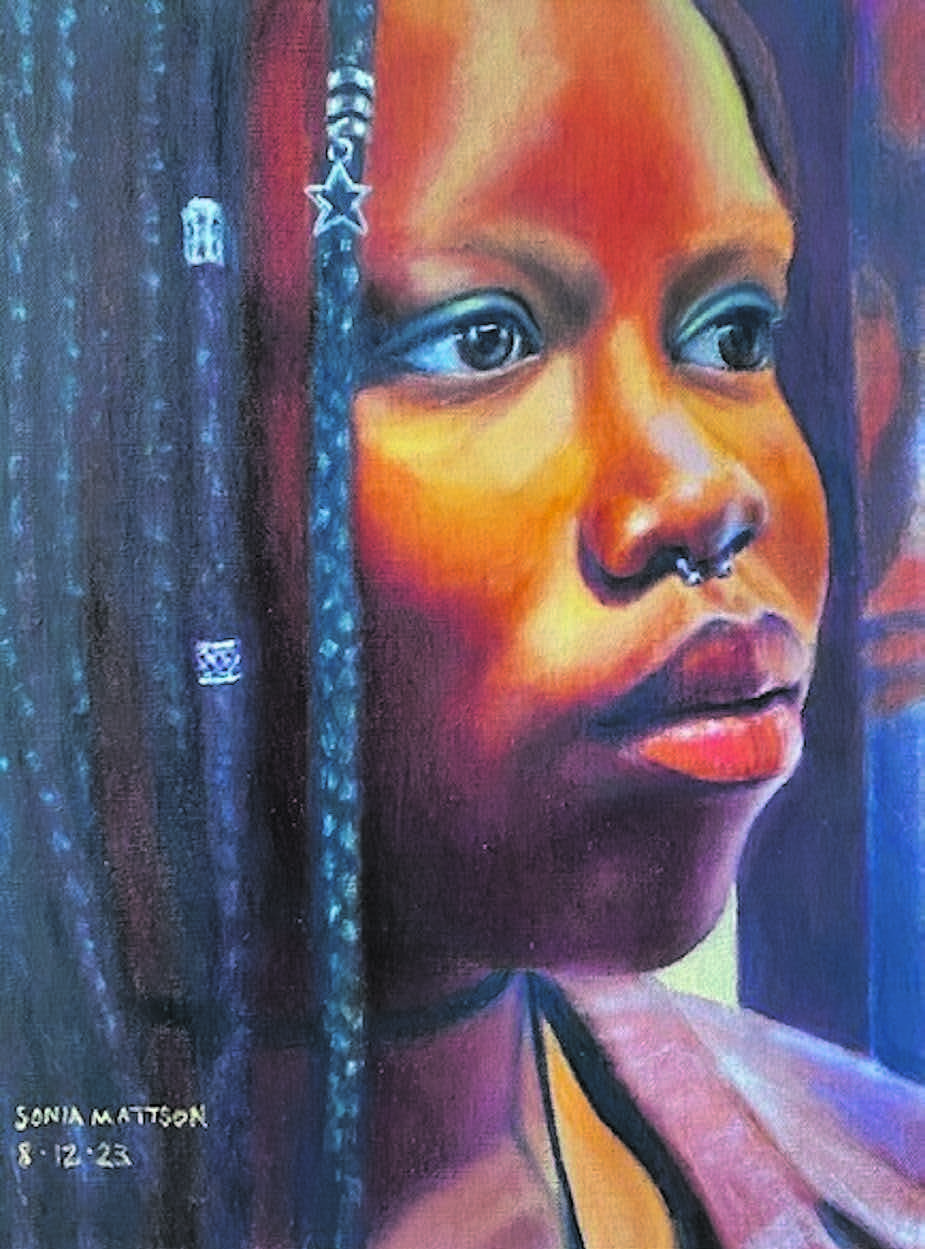
    Sonia feels a deeper bond with the portrait form—in capturing the beauty of individuality, innate to all, yet bursting through the young creative spirit of Sydney’s Inner-West. “I think urban areas have been a creative hub for young people,” she says, “and to find their people, find their tribe. But that’s why I found it interesting to paint those people. I was drawn to these people I just met in the street or at the cinema or in different jobs. I love the way they decorate themselves, express themselves through their clothing. And I wanted to convey what I felt about them, even though I didn’t know them.”

    “For example,” she says, “Rachel with the lovely green hair. I saw her at a bus stop in Newtown. Waiting to go to Glebe—waiting for the 370 bus. And I just said: ‘do you mind if I paint you?’ And she said, oh, ‘that sounds fun’. So, we did that project. And yeah, I’m very happy with the result, and she liked it too.”

    “I find it kind of warming as well that no one said no, everyone just said, ‘let’s do it’. I was just really touched. And it was like a little mutual project.”

    “And then I got to know them a little bit more. And some people shared music with me. I learned about Sudanese electronic synth music through Attu (shown below), which is very cool, beautiful music. There’s an artist called Jantra. They’re great, and she’s a fan.

    Of her recent portrait series—The Denizens of the Inner-West, she says, “They’re beautiful people. And I found they were really nice to talk to. And they were mostly creative people, actresses and acting students, art students.”

    “It’s so nice because they just came along at the right time.

    It made sense. It’s like the universe sends along a person.”

    But I really think creativity is very important—for everyone—as a way of expressing yourself and feeling. Yeah, I think it’s so important for everyone.

    Otherwise, we just get this commercial sense of the world, and it’s all about money. And yet, we really feel alive when we’re making stuff, whatever it is.

  • Food, connection, support:

    Food, connection, support:

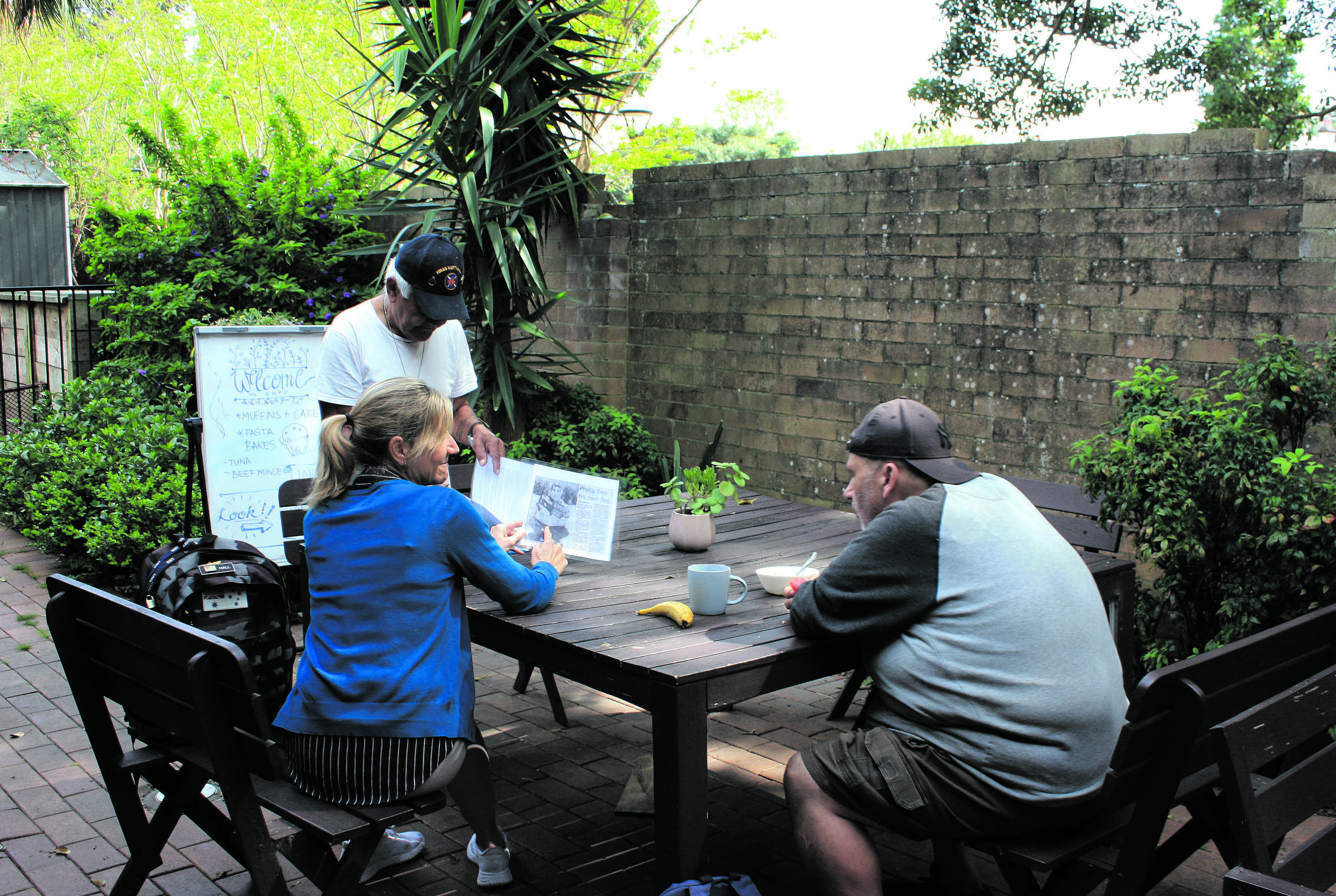
    On a sunny Wednesday morning at one of GAPP’s drop-in sessions, held twice a week between 10am and 12.30pm, the courtyard of St John’s House was bustling with Glebe locals, chatting over food and coffee, all provided by the church. They shared what this community means to them, in between sips of their coffees and bites of breakfast, and why GAPP plays such an important role in Glebe’s flourishing.

    The Heart of Glebe

    GAPP was founded back in 2004 by Geoff Broughton, the minister at St John’s Church at the time. After receiving many knocks on his door from the community for help, he decided to establish a permanent program for people in need of support. 

    Since then, GAPP has played a vital role in Glebe, providing community aid, through initiatives such as emergency food parcels, toiletry packs, and assistance with applying for state government Energy Accounts Payment Assistance At the heart of the program has always been a welcoming smile from our volunteers, and something to eat and drink, with the opportunity to get further assistance through their Community Workers. Most importantly though, GAPP creates a space for Glebe locals to connect with one another, through its twice-weekly drop-in sessions. 

    “Everyone’s welcome to come whenever they like,” says Katrina Knight, the current manager of GAPP. “It just gives that human connection — someone to chat to, someone to pass the time of day with, a friendly smile and getting something to eat.” Katrina believes St John’s Church, located on Glebe Point Road, is the perfect place to welcome the suburb’s diverse population. “Glebe is quite a unique suburb because we have people who are really struggling financially and with all sorts of things, and we’ve got some very wealthy people. So the church aims to be that place in the middle where those two things meet,” she explains.

    As the cost-of-living crisis continues to worsen, the GAPP team has noticed an increase in people reaching out for support. The drop-in sessions particularly have seen a surge in recent months, from an average of 20-25 people to up to 41 people in one session. 

    “So, you don’t have to belong to a club, you don’t have to believe in any particular religion, you just have to either need connection with people or want connection with people.”

    Kelly Parkins, the head chef of the program agreed, taking a step away from serving fresh fruit to GAPP’s visitors, to express the significance of having a place for community connection separated from home or work. “There’s becoming fewer and fewer, I call it ‘third spaces,’ … fewer and fewer places where it’s not home and it’s not work, it’s a place where you can actually meet and be a part of a community,” she says. 

    The idea of third spaces developed during the 1980s, describing spaces that are separate from the environments of home and work. They allow people from a variety of backgrounds and perspectives to come together, share experiences, and connect. However, Kelly believes such spaces have been on the decline. “We used to have a lot more of those, now we don’t have very many, but GAPP is definitely one,” she says. “So, you don’t have to belong to a club, you don’t have to believe in any particular religion, you just have to either need connection with people or want connection with people.”

    Continuing the Legacy

    This sense of connection is also central to the First Nations community in Glebe, on land of the Gadigal People. Larissa Minniecon, the Indigenous relief worker at GAPP,  inherited the role from her mother, Aunty Sharon Minniecon, after she retired from working with GAPP for 12 years. For Larissa, taking over the role “felt natural to do,” to continue her mother’s legacy of community care. “We have a huge Indigenous community here,” she said, “and I think them knowing that we’re here is a really, really good thing, and them accessing this service is a really good thing. But also feeling that they’ve been cared for is what we’re here for. It’s essential to what GAPP is all about,” Larrissa says. “lot of our work comes from off the street, off hours. So people say, ‘oh you know, Aunty I just need this help and I need this help’… So, for community to not have that frontline, conversation and feel like they’re gonna get the help, we knew that it was good to have sort of a succession in mind.”

    Bringing the Community Together

    Throughout the last two decades, GAPP has provided a space for everyone, whether that be those needing financial assistance, people looking for a friendly environment to socialise and make friends, or those who wish to give back to the community. The impact of the volunteers was unmistakable, as laughter and chatter echoed across the courtyard, right through to the kitchen, where even washing up was completed with a smile. “I love how it’s a really practical way to help people,” Katrina says. “We do prioritise supporting this program because we feel it’s really important. We think it’s important to show our love and concern to the community of Glebe”. 

    Kelly shares the same feeling amongst the buzz of the volunteer kitchen staff in St John’s House. She says that volunteering with GAPP allows her to have a “genuinely important” impact on the community. “I’ve always admired the work they did at GAPP, so when I found myself with time on my hands, I thought ‘hey, this is something I’m passionate about’, and I really believe that food brings people together, so for me it was always a no brainer that if I was gonna be involved, I’d be doing food”. 

    Uncle Ben Harry is a Torres Strait Islander Elder who expresses a similar love for GAPP. He regularly stops by at the drop-in sessions to talk to anyone who may need to get something off their chest. “It’s good for everyone to come and say their stories or whatever they want to say,” he says. “That’s what it’s all about, you know. If you feel lonely at home just come here and communicate with other people here and enjoy the day out here, especially Monday and Wednesday. “I only come here to support people that need help, to talk about anything. You know, I’m here to talk to anyone…This will give them encouragement, you know, like someone to listen to…I’ll do anything, only for the community, that’s all.”

    Community visitors at GAPP
    Community visitors at GAPP

    A Time to Celebrate and Reflect

    To mark the 20th anniversary, community members were invited to afternoon tea festivities at the church, to celebrate and reflect on the program’s significance.

    “Part of our 20th anniversary celebration is obviously celebrating what we’ve done for 20 years,” Katrina says, “But also it’s the time to reflect and rethink how we’re going to keep going in a sustainable way,”. The future of GAPP remains uncertain, as funding from Anglicare is set to cease mid-next year. Katrina and the team have begun to apply for new grants, but the process has been challenging, with reliance on volunteers to complete applications. “Applying for grants is very time consuming and difficult,” she confesses.

    Regardless, Katrina is perseverant: “We’d like to keep doing it. So we might have to change the way we operate; we might have to limit the support that we can give.”

    She remains hopeful that the 20th anniversary will raise awareness to encourage people to donate to keep GAPP running. “It’s really a time to reach out… to let more people to know what we do do, and what we have been doing.”

  • “I feel happy faces here”

    “I feel happy faces here”

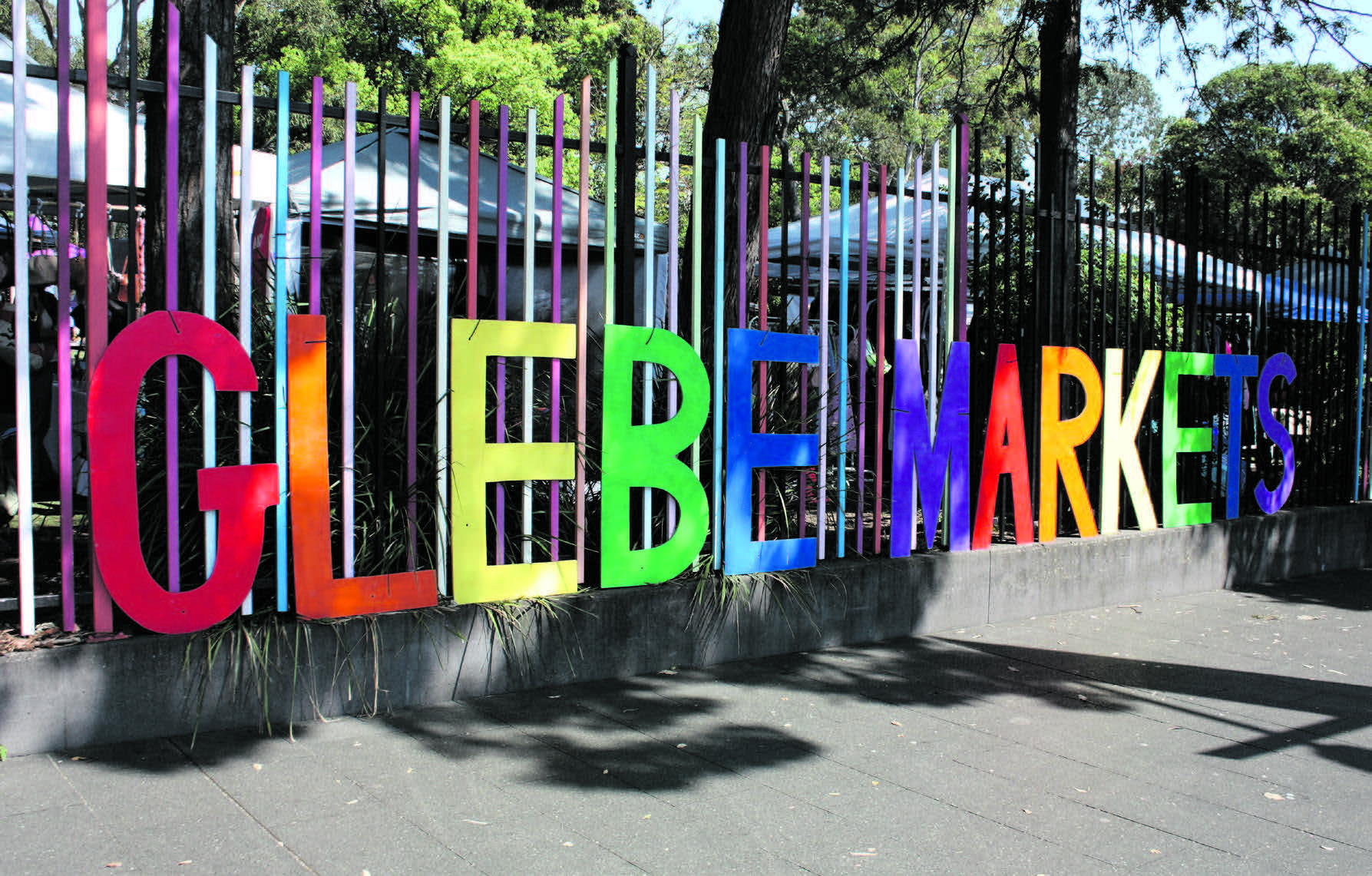
    Whenever Glebe is mentioned, one of the first things that springs to mind is the Glebe Markets. In 2023, the Glebe Markets announced it would be closing after 31 years of operation, shocking locals, who pleaded for the markets to continue in operation. New owners swept in to continue its legacy, and venturing through the market on Saturdays, it is easy to see what was at stake — and worth fighting for, with so many diverse offerings filling the market grounds.

    Upon arrival, the markets are filled with a flurry of stall holders gearing up for a big day. The spring sun shines bright over retailers wheeling clothes racks, unpacking goods and adjusting displays across the Glebe Public School grounds, unrecognisable amongst the gazebos, banners and food trucks. Around every twist and turn is something different: secondhand clothes, art, plants, jewellery, food, handmade gifts and more.

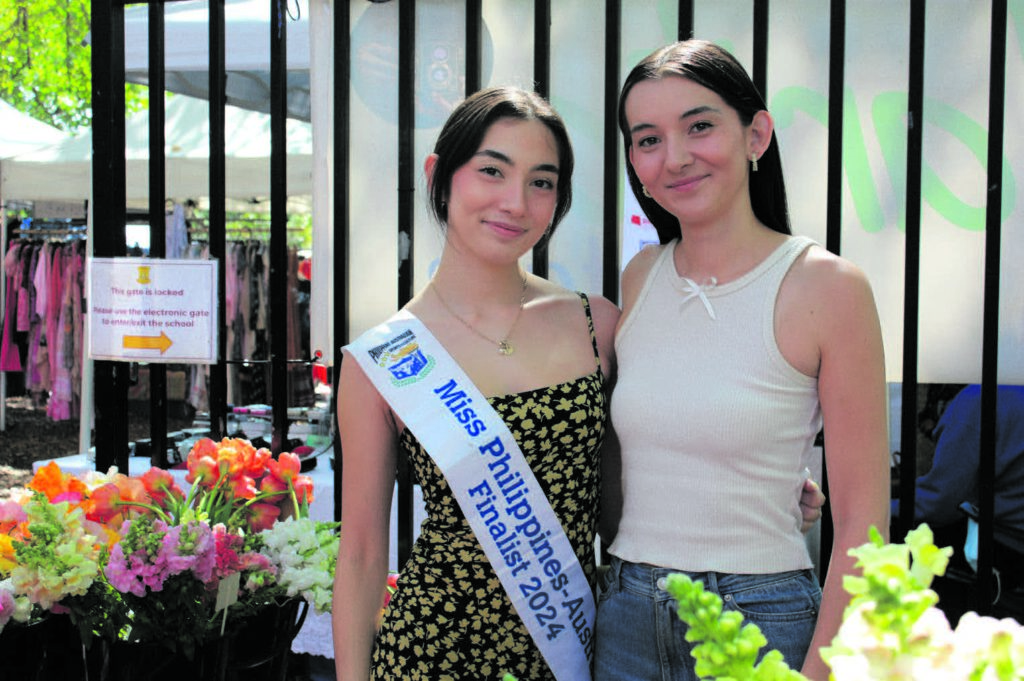
    Kiara and her sister Sasha, raising funds for various charities
    Kiara and her sister Sasha, raising funds for various charities

    Donato’s camera stall, which he has been running for the past four years, is set up earlier than the others. His face lights up with passion, as he eagerly shares his love for the market community. “People enjoy the social connection, and more human connection here,” he says. “I feel happy faces here.” Don believes these markets are “very important. This is not something new. This is a 3000- year old type of social connection. It’s the people. It’s connected with the past, you know, with natural things, normal things. More human interaction, yeah.”

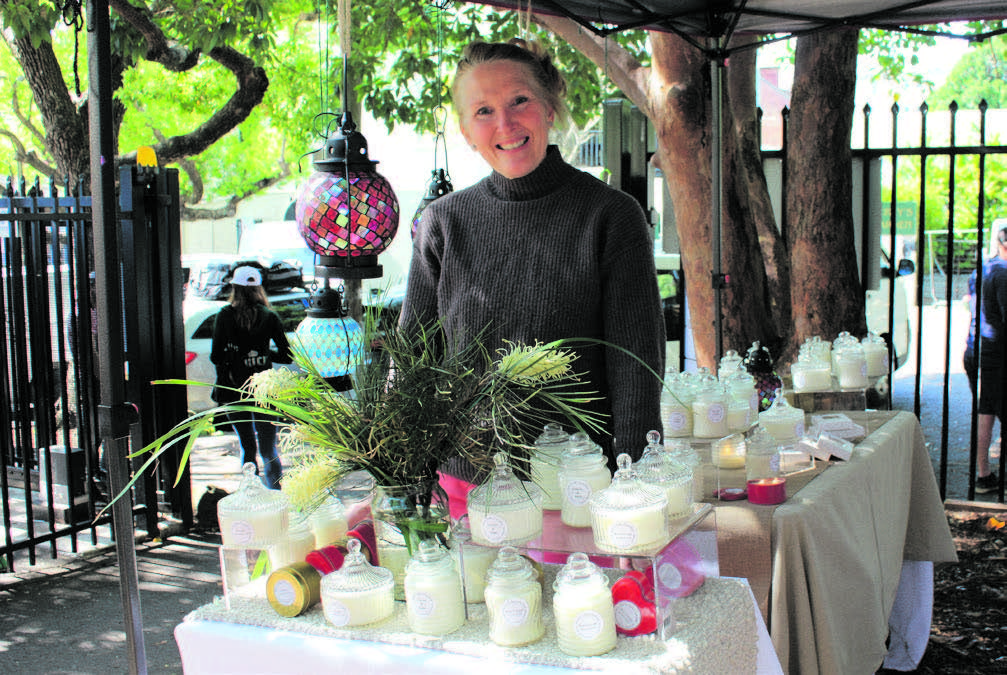
    Just two stalls over, Jo is selling handmade soy wax candles. She is happy to see the sun, after running the stall every Saturday since May through many rainy weekends. “It’s just really warm. Everyone has a great time,” says Jo. “It’s such a cross section, from your clothing, to your handmade goods, to food. So it suits everyone, all different ages.”

    Jo, a stall owner selling handmade soy wax candles
    Jo, a stall owner selling handmade soy wax candles

    As the clock strikes 10am, the markets come to life, with visitors starting to stream through the school’s front gates, ready to begin their journey through the 200 stalls on offer. Beside the entrance, jewellery stall Hey Frankie is busy greeting each customer walking through. Despite the growing crowds, Rebecca takes a step out to talk about their initiative helping women living rough. “We like to gift them some jewellery that they can either sell themselves or just feel pretty and beautiful,” Rebecca says. “We do that a lot, and that matters to us, to give back to those in need…It just makes you feel you do anything that you can to help others, really, that are doing it tough and there’s lots of women doing it tough right now.” As she’s talking, someone in the distance catches Rebecca’s eye, and she points and waves.

    Kiara, the girl Rebecca was waving to, is selling flowers alongside her sister Sasha, to raise money for college funds for orphaned children in the Philippines, as well as supporting the Ronald McDonald House, Red Kite and Food Bank. “So far, it’s been really positively received,” Kiara shares, “which we’re so grateful for. So many people love to see the fresh blooms around… Everyone’s so supportive here just amongst the owners and the customers. It’s been a really great day so far.”

    Today is Kiara’s first day as a seller at the Glebe Markets, but she is feeling encouraged to return. “I think it’s just great for people to get out of their habitat of a mall where it’s just a lot of franchises and big names. I think it’s nice that you can come and support local artisans and chefs and just find something new and unique to purchase.”

    Away from the bustle of vintage clothing and jewellery stores, the school’s field is transformed into a perfect picnic spot. Underneath the sun, the air is filled with the aroma of coffee beans and the soft strums of guitar guiding the gentle vocal melody of the performer.

    “I think markets are important for all communities everywhere, because there’s such a lack of human connection at the moment, and markets keep that alive.”

    Elise is one of the many visitors relaxing and enjoying the live music. “I love the art, all the creatives, the clothes, food, music, vibe, yeah community,” she laughs and adds “I think markets are important for all communities everywhere, because there’s such a lack of human connection at the moment, and markets keep that alive.”

    A group of international students from UTS are also enjoying a picnic. Their elected spokesperson, Antoine, says markets are a great spot for “chilling”. “We like the atmosphere, and I like the style of the market,” he says. “It allows us to interact with other people who are here to sell products and yeah, I think it’s more about sharing and giving second life also to some clothes.”

    Even after 30 years, it seems the markets are still attracting a new audience, with many people sharing that it is their first time visiting the suburb, journeying from all across Sydney. Glebe locals are still to be found though, such as Sophie, who browses the markets regularly. Today, she is just killing some time, she explains, although she loves bringing her grandchildren down to the Glebe Markets. “Well, it’s colourful and lots of people come. The cafes are always full and there’s an interesting display of things,” she shares.

    With midday approaching, the market atmosphere is roaring as it comes time to leave the stallholders to work their magic of the past three decades, and hopefully many more to come.

  • Reaching Out

    Reaching Out

    For a long time in this country, youth work was approached as a way of “saving” disadvantaged young people, imposing top-down assumptions of knowing what’s best onto unique communities—often against their will. The damages of these approaches have been vast—uprooting adolescents and detaching them from their own, personal stories. The historic injustices experienced by Aboriginal and Torres Strait Islander people have shown just how damaging institutional arrogance can be. Social work, especially for young people, has long failed to appreciate the unique potential of individuals within vibrant communities like Glebe, and in many state institutions—the damage continues. 

    The youth work sector has since changed its ethos to one of empowerment, participation, and human rights. Yet, these sentiments are mostly left to be upheld by non-government organisations—such as Glebe Youth Service—that are nevertheless dependent upon government funding to survive. But what does this approach look like in practice? How can these ideas be realised on the ground-level? And how can institutions recognise the diverse qualities of less privileged communities, with unique histories of struggle that have forged their very own particular strengths? The most fruitful approaches are likely to come from those who have experienced their own battles—the ones who grew up on the same streets, alongside the same families, who’s younger ones they’re now guiding through similar weeds of disadvantage.

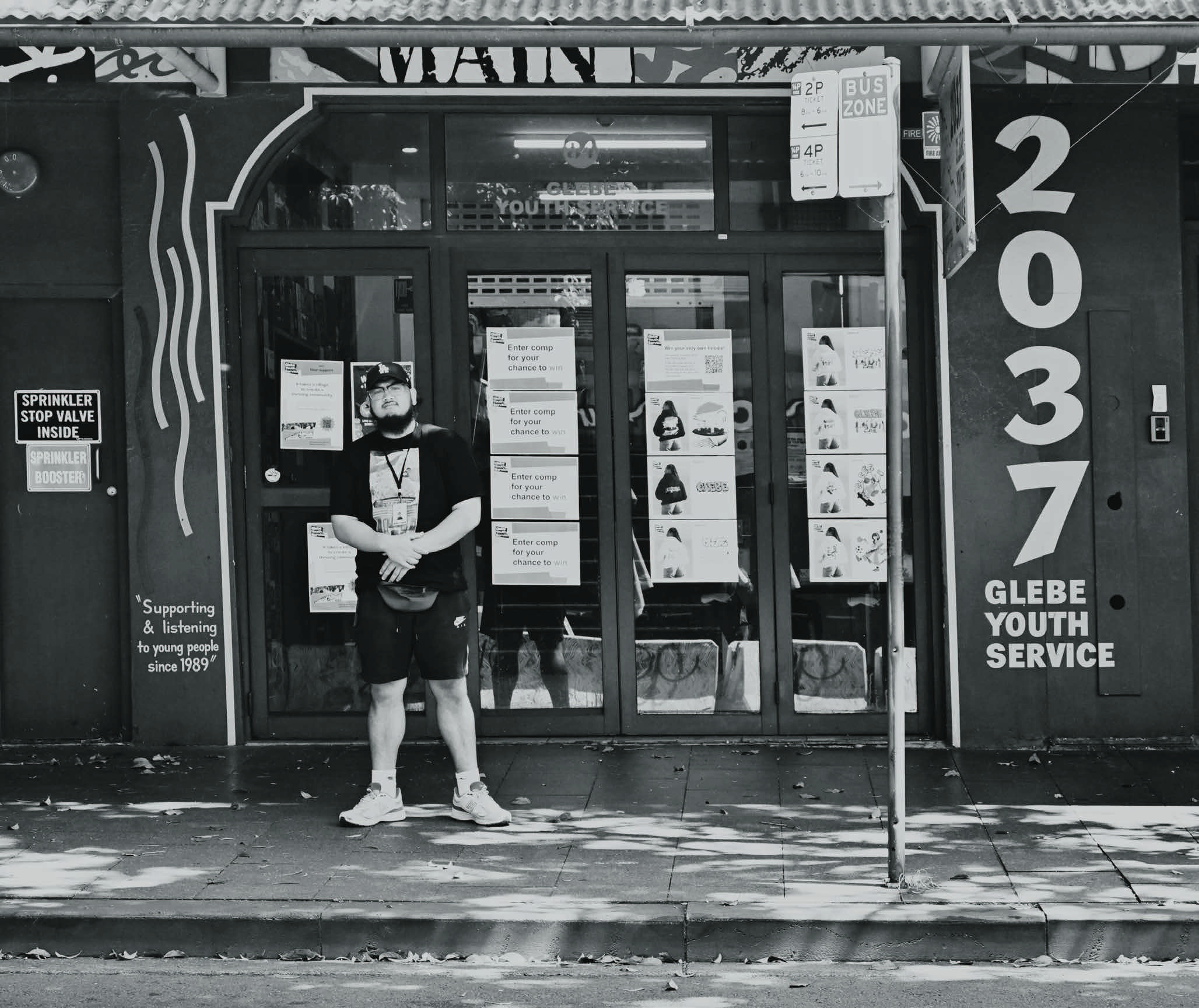
    Standing outside the double-doored entrance of Glebe Youth Service (GYS) is one such man—over six feet tall, wearing a yellow hoodie, football shorts, black Nike sneakers, and squared prescription glasses resting over a bearded grin. The streets are quiet for mid-Thursday—just a steady September drizzle hitting the concrete of the near-empty footpaths—and the odd bus growling up Glebe Point Road towards the northern harbourfront.

    Habil says he’s tired but doesn’t seem it—he’s cheerful and welcoming as usual. Rarely a sentence ends without a quip of sarcasm. This same energy springs across the road when a young man half his age shouts “Habil!” from outside the kebab shop. It’s a routine back-and-forth from the Youthy entrance out to the streets that he’s walked for most of his 30-year life.

    He moved to Glebe when he was 6 years old with his two older brothers, and parents who had migrated from Indonesia in the early 1980s. “My parents made sure that I had religion and culture embedded in my morals and values,” he says. “I keep my Indonesian culture close to my chest”. A lifelong devotee of the Islamic faith, he considers it “a rulebook for life”. 

    Habil began his time at GYS towards the end of primary school: “I came to some programs,” he says, “they used to have a Wednesday Oz-Tag program. I used to go to the Peter Forsyth Auditorium to play touch footy”. Looking back nearly twenty years, he says, “the older boys used to take care of the younger boys. We’d play footy on the road. They’d join in. I remember when it was a hot day, they’d buy water balloons for us and we’d have a water fight. The whole street. They used to have cookouts on the barbecue. Someone would buy meat, and the barbecue would be on Derwent Street, or Mitchell Street. Someone would be cooking up a storm. Everyone didn’t have anything. We all didn’t have anything together.”

    After high-school, Habil completed a 100-hour internship at Glebe Youth Service, before becoming an official employee in 2016. Since then, he has worked constantly with young people on the ground-floor. Yet, his mind seems often pointed upstairs, towards the broader system—on the processes of change…or lack-there-of. Habil has observed the system function from below; he’s watched the institutional wheels churn, become rusted and clammer to a halt—before a few drops of political oil can set them in motion again. He has himself grown out of this cycle—it’s given him a critical perspective as a youth worker for the last nine-years.

    “The Youthy has always been an integral part of the community,” he says. Though in order to really grasp why, he says that “people need to understand what Glebe is like. You know, it’s not sunshine and roses. It’s a low socio-economic area: trauma—intergenerational trauma.” For many locals of Glebe, he says the youth service “is their second home.” 

    Habil seems clear-minded about his responsibility, about what GYS needs to deliver, and what his community requires through the thick and (mostly) thin of government funding and support: “If you look at the Maslow Hierarchy,” Habil says, “the basic necessities of a human being are food, shelter, clothing. What do we offer? We offer food, we offer a safe place for them to come, safe humans to interact with. And then if they need, you know, necessities, we do as much as we can to give it to them. And that’s just the basics of what we try and do.”

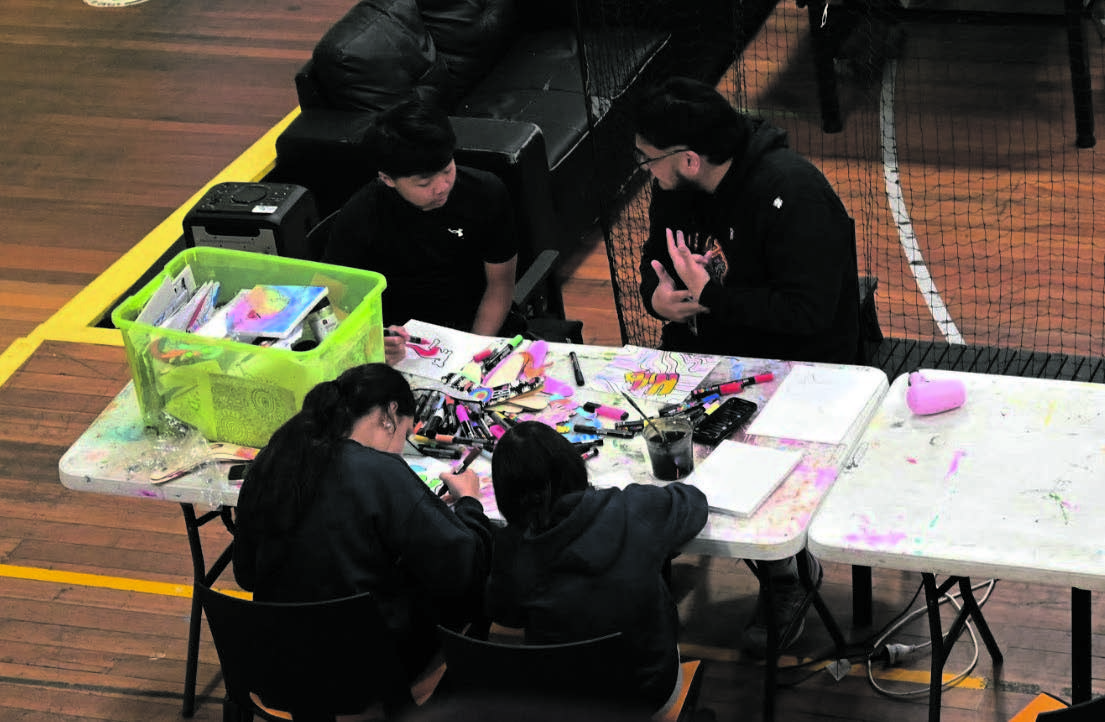
    GYS helps to address these basic needs through their open-door policy throughout the week, where locals can—and do—stroll in for a friendly chat, a word of advice, a kitchen prepared meal or a couch to rest on. Yet, a simple sign of welcome can often go unseen, and so Habil also co-runs the Youth Outreach program alongside Jeff Hockey. “That’s a new thing we rekindled just because of the higher crime rate during the holidays,” he says, “It was for us to go in the streets, pretty much walk around and see if there are any young people around, and then shift them back to the youth service.”

    Habil running the after-school drop-in session
    Habil running the after-school drop-in session

    It is a fitting responsibility for someone with such a detailed blueprint of the suburb—engrained through years of lived-experience sitting upon the very same curbsides. Habil knows every back alleyway; the peak hours for push-bike traffic; he could probably map out all the potholes for the kids to avoid, and every fresh trim thrown awry by the afterschool winds. “Everyone has a strength in what they do, like in life or at work,” Habil says, “my work is engagement, being connected to community helps me with that engagement,” Habil says. “That’s my bread and butter. I know your family, they know me, they feel a lot more comfortable.”

    On the Youth Outreach program, he says: “when we first started, it was a bit slow, but you just have to stay consistent. One of the nights we bumped into 24 young people, in one and a half hours. And police presence was high. And they just kept stopping everyone, asking for their names. Luckily, Jeff and I were just cruising through and doing our thing. We were able to talk to all those young people—because they were angry: ‘Why are police stopping us? Because we’re black?’ And that’s probably the case. But our role there is to interact with police, ask them what they want, ask ‘is this necessary?’ So as an adult there, that the kids trust, there’s more respect there—that’s how it is. We’re able to shift the police that way and the kids back to the youth service. So, the interaction isn’t a negative interaction. And the police can talk with me and the kids can talk through me as well. Police don’t understand the intergenerational trauma.”

    Habil draws constantly from his own lived experience and uses it to inform his everyday decisions as a youth worker. Yet, he sits all of this within a broader picture of systemic failure and its consequences: “Police are part of the system and it’s been like that with the Aboriginal community for so long in such a negative way. So that’s why we try and diffuse the situation as much as we can, but also show the young people that we can interact with the police in a positive way at the same time. So, I’m trying to do two birds, one stone. We try to have a better relationship with the youth liaison (police) officers. We might not agree with how they work, but we have to find a middle ground just to make it work,” he says.

    Habil considers his job a “necessity” more than anything. “You don’t enjoy all aspects, but everyone doesn’t like their job all the time. I love the job. I hate the job. I do it out of necessity. And this is my community. I love this place to death. This is where I grew up. This area made me who I am. But you don’t realise how much bullshit First Nations people cop,” he says.

    Born out of negative assumptions of police (as Habil explains above), distance continues to evolve between state-institutions and First Nations youth, producing lifelong resentments between both, and deep-rooted discrimination from the top-down. As of June 2023, Aboriginal and Torres Strait Islander people account for 33% of all incarcerated people in Australia. The absurdity of this statistic was heart-breakingly outlined within the Uluru Statement from the Heart in 2017:

    Proportionally, we are the most incarcerated people on the planet. We are not innately criminal people. Our children are alienated from their families at unprecedented rates. This cannot be because we have no love for them. And our youth languish in detention in obscene numbers. They should be our hope for the future.

    These dimensions of our crisis tell plainly the structural nature of our problem. This is the torment of our powerlessness.”

    “The thing is with intergenerational trauma,” Habil says, “you want to break that cycle. We give them the tools that they don’t have, and then they pick up the tools and use them when they need it, or when they’re ready. And that’s how change begins. We want change, but we’re not superhumans. If a youth worker or social worker comes into this industry and says they want to change the world, then they’re not going to change it. They’re going to get burnt out. You do what you can control. So, my duty is to give the young people and the community the tools so they can build it themselves. Whether it be tools of emotions, tools of physicality, tools of work, tools of financial literacy. That to me is how you break a cycle. Because some of these kids don’t have the opportunity. They might have an opportunity one way, but everything else, nothing.”

    As Habil shows, there’s no easy fix to system level problems. Yet, in his time of encouraging change from below, it’s through seeing the positive outcomes that Habil’s flame stays alight: 

    “I’ve been here for nine years. So, to see the young people that I work with grow up, and they’ve got jobs, and they have careers … that’s the beauty of this place.”