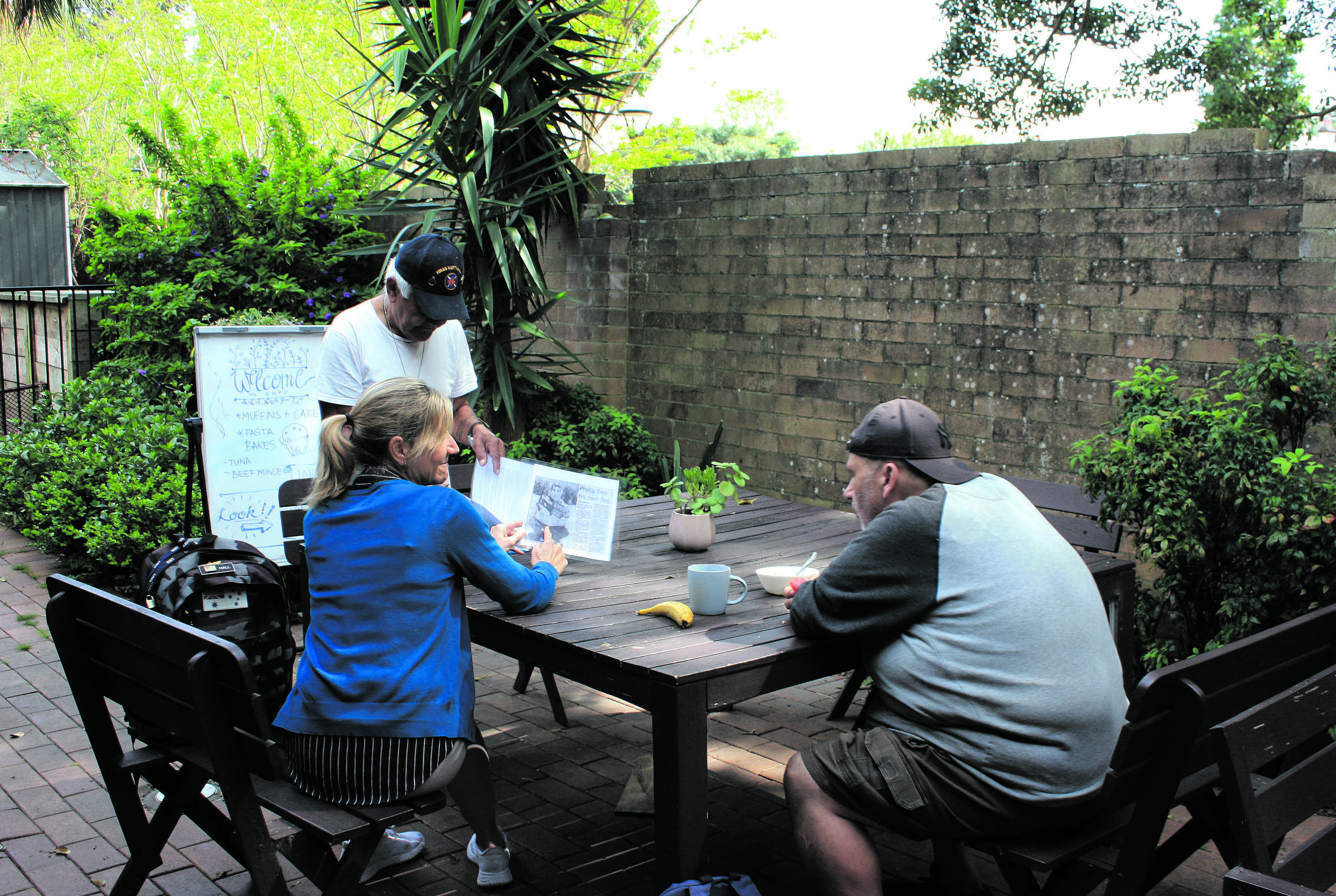
On a sunny Wednesday morning at one of GAPP’s drop-in sessions, held twice a week between 10am and 12.30pm, the courtyard of St John’s House was bustling with Glebe locals, chatting over food and coffee, all provided by the church. They shared what this community means to them, in between sips of their coffees and bites of breakfast, and why GAPP plays such an important role in Glebe’s flourishing.
The Heart of Glebe
GAPP was founded back in 2004 by Geoff Broughton, the minister at St John’s Church at the time. After receiving many knocks on his door from the community for help, he decided to establish a permanent program for people in need of support.
Since then, GAPP has played a vital role in Glebe, providing community aid, through initiatives such as emergency food parcels, toiletry packs, and assistance with applying for state government Energy Accounts Payment Assistance At the heart of the program has always been a welcoming smile from our volunteers, and something to eat and drink, with the opportunity to get further assistance through their Community Workers. Most importantly though, GAPP creates a space for Glebe locals to connect with one another, through its twice-weekly drop-in sessions.
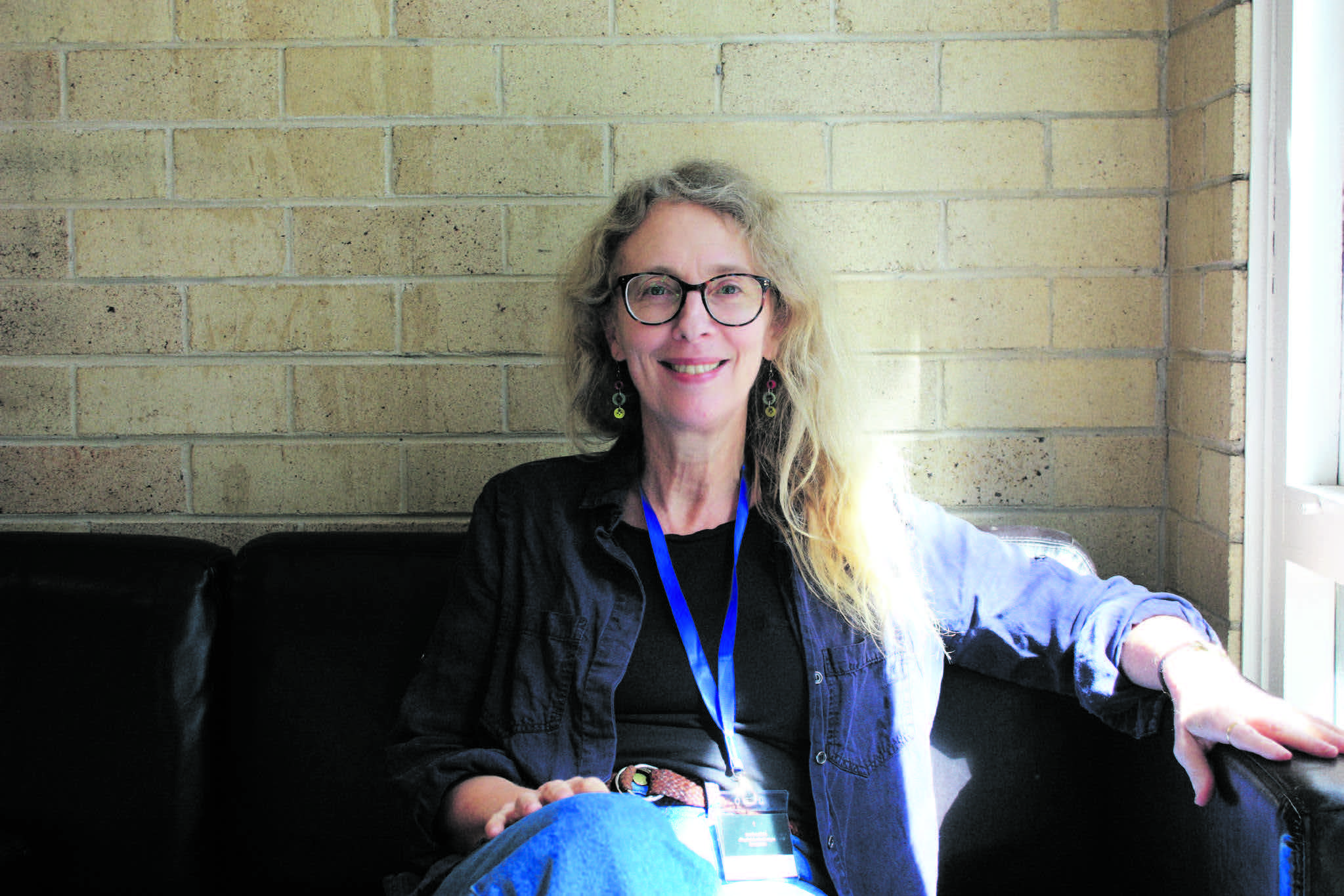
“Everyone’s welcome to come whenever they like,” says Katrina Knight, the current manager of GAPP. “It just gives that human connection — someone to chat to, someone to pass the time of day with, a friendly smile and getting something to eat.” Katrina believes St John’s Church, located on Glebe Point Road, is the perfect place to welcome the suburb’s diverse population. “Glebe is quite a unique suburb because we have people who are really struggling financially and with all sorts of things, and we’ve got some very wealthy people. So the church aims to be that place in the middle where those two things meet,” she explains.
As the cost-of-living crisis continues to worsen, the GAPP team has noticed an increase in people reaching out for support. The drop-in sessions particularly have seen a surge in recent months, from an average of 20-25 people to up to 41 people in one session.
“So, you don’t have to belong to a club, you don’t have to believe in any particular religion, you just have to either need connection with people or want connection with people.”
Kelly Parkins, the head chef of the program agreed, taking a step away from serving fresh fruit to GAPP’s visitors, to express the significance of having a place for community connection separated from home or work. “There’s becoming fewer and fewer, I call it ‘third spaces,’ … fewer and fewer places where it’s not home and it’s not work, it’s a place where you can actually meet and be a part of a community,” she says.
The idea of third spaces developed during the 1980s, describing spaces that are separate from the environments of home and work. They allow people from a variety of backgrounds and perspectives to come together, share experiences, and connect. However, Kelly believes such spaces have been on the decline. “We used to have a lot more of those, now we don’t have very many, but GAPP is definitely one,” she says. “So, you don’t have to belong to a club, you don’t have to believe in any particular religion, you just have to either need connection with people or want connection with people.”
Continuing the Legacy
This sense of connection is also central to the First Nations community in Glebe, on land of the Gadigal People. Larissa Minniecon, the Indigenous relief worker at GAPP, inherited the role from her mother, Aunty Sharon Minniecon, after she retired from working with GAPP for 12 years. For Larissa, taking over the role “felt natural to do,” to continue her mother’s legacy of community care. “We have a huge Indigenous community here,” she said, “and I think them knowing that we’re here is a really, really good thing, and them accessing this service is a really good thing. But also feeling that they’ve been cared for is what we’re here for. It’s essential to what GAPP is all about,” Larrissa says. “lot of our work comes from off the street, off hours. So people say, ‘oh you know, Aunty I just need this help and I need this help’… So, for community to not have that frontline, conversation and feel like they’re gonna get the help, we knew that it was good to have sort of a succession in mind.”
Bringing the Community Together
Throughout the last two decades, GAPP has provided a space for everyone, whether that be those needing financial assistance, people looking for a friendly environment to socialise and make friends, or those who wish to give back to the community. The impact of the volunteers was unmistakable, as laughter and chatter echoed across the courtyard, right through to the kitchen, where even washing up was completed with a smile. “I love how it’s a really practical way to help people,” Katrina says. “We do prioritise supporting this program because we feel it’s really important. We think it’s important to show our love and concern to the community of Glebe”.
Kelly shares the same feeling amongst the buzz of the volunteer kitchen staff in St John’s House. She says that volunteering with GAPP allows her to have a “genuinely important” impact on the community. “I’ve always admired the work they did at GAPP, so when I found myself with time on my hands, I thought ‘hey, this is something I’m passionate about’, and I really believe that food brings people together, so for me it was always a no brainer that if I was gonna be involved, I’d be doing food”.
Uncle Ben Harry is a Torres Strait Islander Elder who expresses a similar love for GAPP. He regularly stops by at the drop-in sessions to talk to anyone who may need to get something off their chest. “It’s good for everyone to come and say their stories or whatever they want to say,” he says. “That’s what it’s all about, you know. If you feel lonely at home just come here and communicate with other people here and enjoy the day out here, especially Monday and Wednesday. “I only come here to support people that need help, to talk about anything. You know, I’m here to talk to anyone…This will give them encouragement, you know, like someone to listen to…I’ll do anything, only for the community, that’s all.”
A Time to Celebrate and Reflect
To mark the 20th anniversary, community members were invited to afternoon tea festivities at the church, to celebrate and reflect on the program’s significance.
“Part of our 20th anniversary celebration is obviously celebrating what we’ve done for 20 years,” Katrina says, “But also it’s the time to reflect and rethink how we’re going to keep going in a sustainable way,”. The future of GAPP remains uncertain, as funding from Anglicare is set to cease mid-next year. Katrina and the team have begun to apply for new grants, but the process has been challenging, with reliance on volunteers to complete applications. “Applying for grants is very time consuming and difficult,” she confesses.
Regardless, Katrina is perseverant: “We’d like to keep doing it. So we might have to change the way we operate; we might have to limit the support that we can give.”
She remains hopeful that the 20th anniversary will raise awareness to encourage people to donate to keep GAPP running. “It’s really a time to reach out… to let more people to know what we do do, and what we have been doing.”