
As urban environments continue to expand and evolve, a movement is taking root that brings a touch of nature back into communities. Across Glebe, residents are transforming vacant lots and alleyways into green spaces, demonstrating that you don’t need a house with a backyard to cultivate both crops and camaraderie. These grassroots initiatives not only provide fresh produce, but also foster connections among neighbours, promote sustainability, and enhance the overall quality of life.
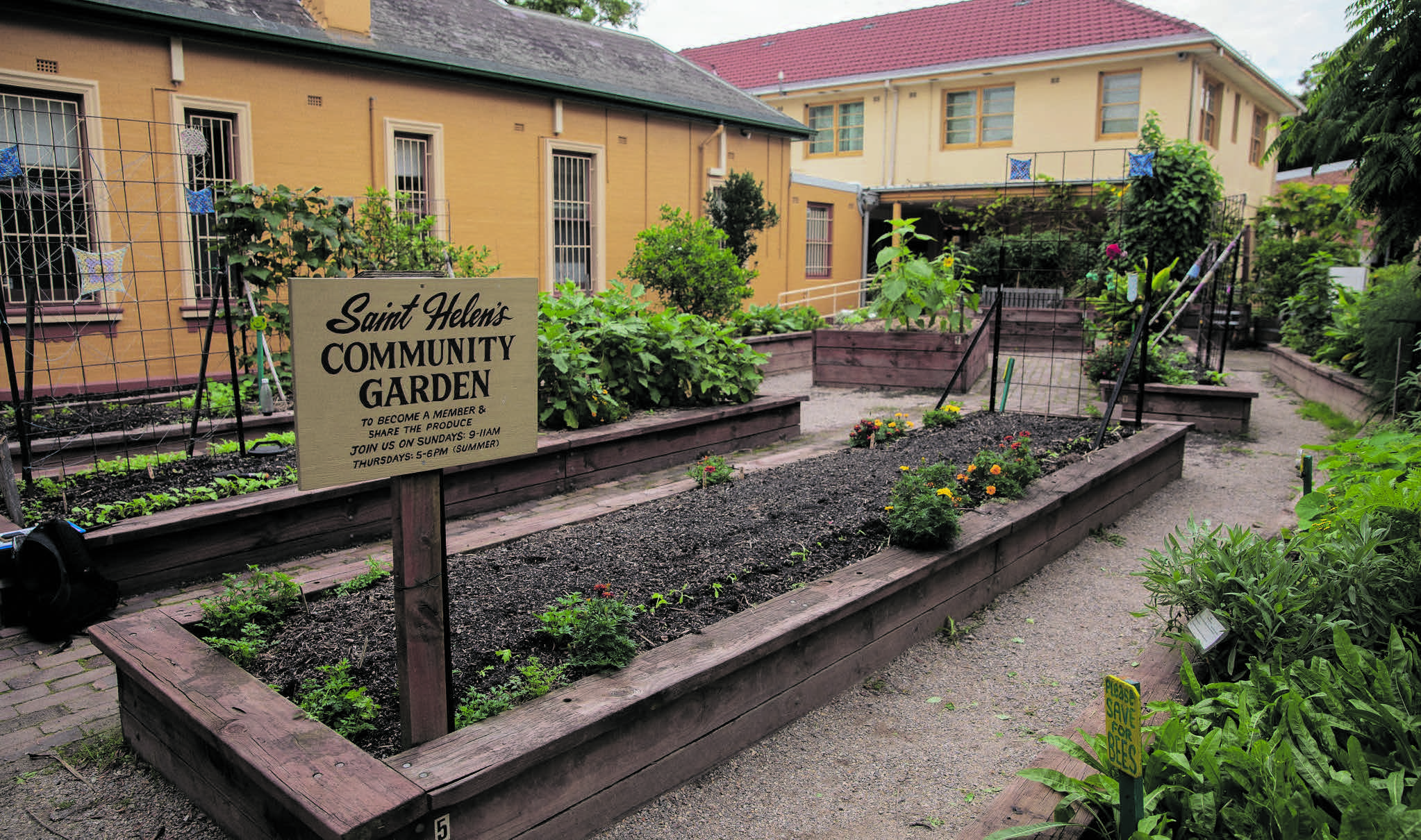
The seeds of St Helen’s community garden were sown over coffee in 2012 – Jan Macindoe and her neighbour decided they were interested in growing vegetables, but needed to find a space to do so. The duo began the search for a central, vacant garden space, which was no small feat in Glebe’s densely populated streets.
They wandered through neighbourhoods, peering behind shops and down narrow lanes, hoping to uncover a hidden gem amid the many buildings. But in this inner-city suburb, vacant lots can be hard to find, and frustration began to creep in. Determined not to let the challenges deter them, they approached the local council to tell the story of a garden that would serve as a sanctuary for the community.
The eventual location for St Helen’s was discovered by accident, during one of these meetings when the councillor spotted a lawn right outside his window. Pretty as it was, the space was much better suited as a garden – and so, St Helen’s community garden was founded at 184 Glebe Point Road.
Unfortunately, the origin story does not tidily wrap up there. For two more years, the growing St Helen’s team faced a series of hurdles and delays. Some of these included the local council’s mandate for St Helen’s to be designed by a professional architect, whose work was excellent, but better suited to huge parks and apartment buildings. Only after various design revisions did the St Helen’s team feel that their vision could be realised.
By 2014, the garden was finally up-and-running and Jan had truly learnt the importance of patience in building this community initiative. Today, St Helen’s prides itself on organic garden produce. Volunteers meet every Saturday at 10am, and the gardening process is truly democratic; what is grown is determined by all members and – of course – the season.
For the past ten years, the team at St Helen’s have kept a running list of the crops they have grown each season, which is circulated twice a year in early autumn and early spring. This is a clever process, enabling them to identify what has worked in the past for the winter and summer crops.
There is also a compost and worm farming system, crucial for the health of the garden. This setup is located in the aptly titled ‘Secret Garden’, another space hidden around the side. Volunteers routinely collect coffee grounds and vegetable scraps from shops in the area to help the compost thrive.
Aside from providing an opportunity to garden and grow food, St Helen’s has become invaluable for the social health of people of all ages, particularly older residents. They come to work in the garden, but also to have a good chat and to share food they have made – sometimes using the very crops they’ve grown.
“We tend to joke that we come here for the social contact, and we do a bit of gardening as well!” Jan remarks.
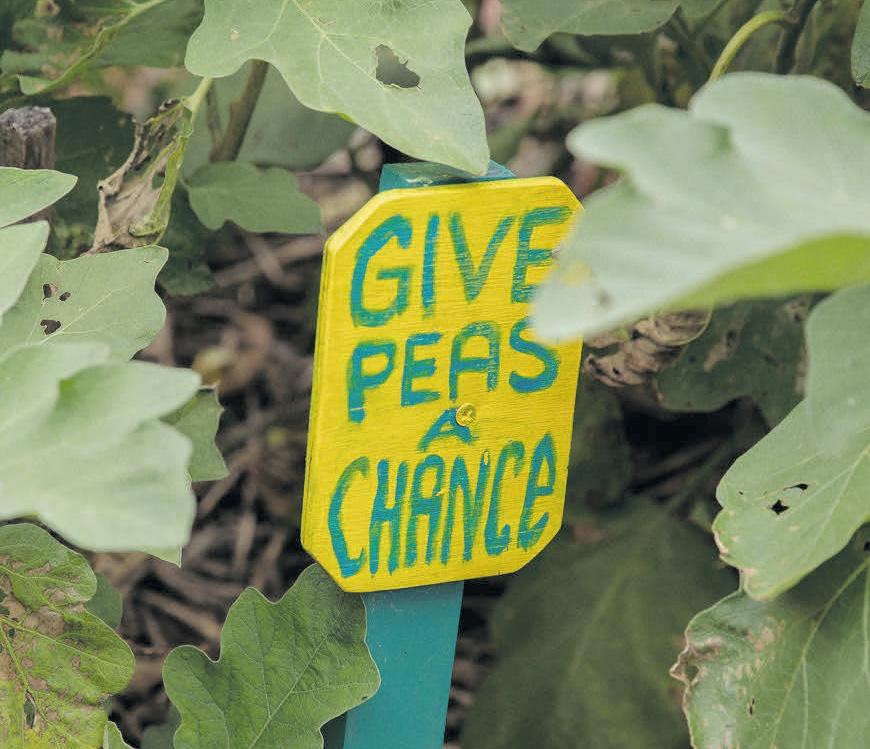
The garden has also served as an engaging outdoor classroom, where members with young children teach them where food actually comes from. Parents and caregivers take the opportunity to guide little hands as they explore the rows of vegetables and herbs, fostering a sense of curiosity and connection to the earth. The gardening crew has gone a step further by labelling each crop, transforming the garden into an interactive learning experience so that as people stroll through the garden, they can educate themselves on what is growing.
“We tend to joke that we come here for the social contact, and we do a bit of gardening as well!”
A similar story unfolded during the Covid-19 lockdown, when Glebe residents AJ Tennant, and his wife Jo, considered transforming their alleyway into a green space to combat social isolation.
“We started thinking about how we’ve got this empty, bare laneway that’s a little bit of an eyesore, but that is otherwise such a beautiful section of Glebe. We thought – what can we do about it?”
Drawing inspiration from a French documentary about the guerrilla gardening movement, they started with a mismatched placement of six pot plants on the corner of Abbey Alley.
“Our neighbours saw it and they started adding to it, and within a week or two, we had gotten probably ten metres worth of plants lined up. We had a nice little garden and it looked quite pretty,” says AJ.
“Just having the community come out and clean up, water, prune, pull out some dead plants, add some new ones, doesn’t take too much work, which is great! People feel a little more joy, start to feel happier. It’s just that sense of a little bit of delight.”
Community gardening projects like St Helen’s and Abbey Alley play a vital role in fostering social cohesion and environmental sustainability. They provide a space for locals to connect, collaborate, and share knowledge while strengthening community bonds.
To support similar community gardening initiatives, the Forest Lodge and Glebe Coordination Group (FLAG) has partnered with the Glebe Computer Project to develop ‘The Green Plot’, a digital sustainability hub which encourages people to share knowledge, resources and experiences about gardening and sustainability.
Recently, the Green Plot team has been inviting experts from the Royal Atlantic Gardens to run workshops for Glebe residents living in social housing.
“Not everyone has a garden, and so they can only grow things in pots. We run little workshops, we’ve got these big pots and teach people how to plant in them. In the last workshop, it was summer vegetables,” says Megan Fletcher from FLAG.
“We do this because it empowers people, it’s connecting. You know, you’re working together.”
You can visit the Green Plot website on https://greenplot.com.au/ to learn more about current Glebe gardening initiatives and how to start your own project.