Category: Issue 3

  • Under the Rainbow

    Under the Rainbow

    Content warning: This article discusses issues of drug addiction and domestic violence.

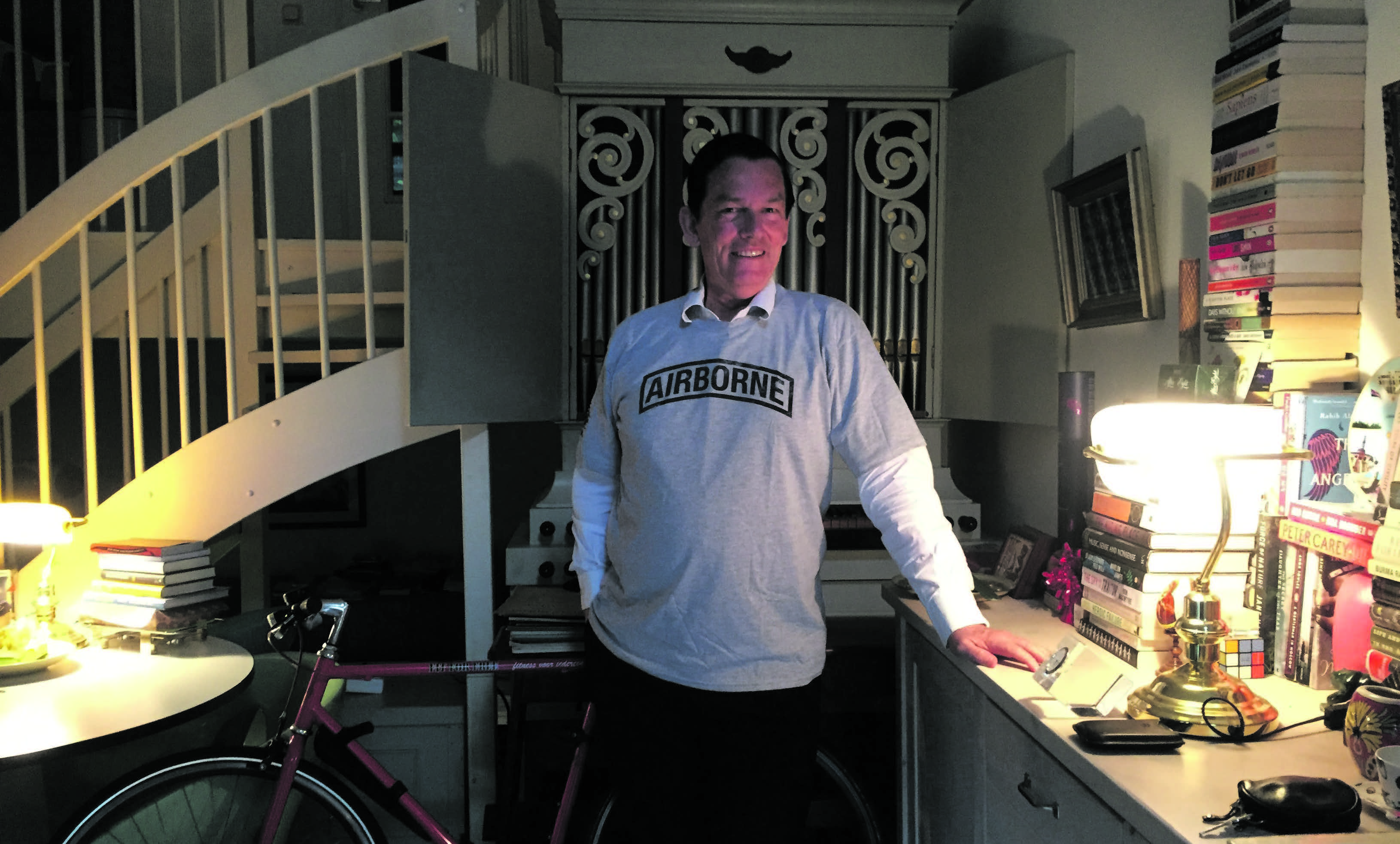
    Earlier this year, Claude Robinson received a phone call from the Premier’s Department telling him that he’d been nominated for an Australian of the Year Award. He was so shocked he thought it was a scam.

    Claude was selected as a NSW finalist for the Australian of the Year Local Hero Awards for his work with the Rainbow Lodge in Glebe, where he has been the manager for the past three years.

    “To say it wasn’t on my radar is an understatement,” Claude explains, “I said send me an email and I’ll call you back. And she sent me an email and I went ohh…”

    The Rainbow Lodge provides housing and rehabilitation for men coming out of incarceration. The program runs for 12 weeks, helping the men get back on their feet as they reintegrate into society, something not unfamiliar to Claude, who had his own 12safer is just wrong.” struggles with addiction and incarceration in the past.

    “I used drugs for just over 20 years, and had addiction issues in Victoria and NSW. I came here and ended up spending about seven and a half years in prison as a direct result, because we deal with that as a criminal issue and not a health issue, which is really sad,” he shares.

    Claude himself was a resident at the Rainbow Lodge back in 2006. He never knew that he’d one day be the manager.

    “I lasted six weeks, and ended up back in prison because I just kept using drugs and doing crime and all that sort of thing,” he says.

    The program looks very different now though, according to Claude, having grown from working with 50 men in a year to 270 in the current financial year.

    “Here, our ethos is that we try and help people heal from their trauma and give them some tools to make better decisions in their lives so they can participate in the community,” he says.

    The Rainbow Lodge is the third oldest continuously operating halfway house in the world, celebrating its 60th anniversary this year. The house is named after Judge Alfred Rainbow, who was a pioneer in campaigning for gaol reform and the establishment of halfway houses. After his death, the Judge Rainbow Memorial Fund was created in 1964 in his honour, devoted to the rehabilitation of ex-prisoners, and used to begin lodge accommodation in Glebe.

    Providing 32 places per year, the Rainbow Lodge is the largest provider of Transitional Supported Accommodation in NSW, despite over 19,000 people across the state leaving prison annually, which Claude calls “crazy”.

    “I think the government…the amount it spends on incarcerating people is disproportionate to the amount of money it spends trying to help them not to come back,” says Claude.

    He believes that ten per cent of the state government’s budget for prisons should be dedicated to post-custodial support if serious change is to occur.

    “There has been some change, but I don’t think it’s good enough, and we know that the evidence is everywhere that our current system is a failure, so we don’t need anymore PhDs or Royal Commissions,” he says. “We need the political will to actually fund it and change it, because I think one of the problems that we see is the political cycle, especially around crime… is this idea that punishing people will make the community safer is just wrong.”

    According to the Rainbow Lodge’s 2024 annual report, 93 per cent of the men that stay at the lodge grew up in households experiencing domestic violence.

    “You’re working with people who are highly traumatised and indoctrinated into the prison system, and you’re asking them to come out and reintegrate back into the community,” explains Claude.

    Still, this is no deterrent for Claude and the team. “I don’t have any fantasy about it. You know it’s a challenge, but it doesn’t mean we don’t do it, just ‘cause it’s difficult. If it was easy, we wouldn’t have to worry about it,” he says.

    The house has a simple rule that everyone must sit together at the table to have dinner at night, which creates a safe and healthy environment for the residents to talk about their day and experiences, according to Claude.

    “A lot of them say it feels like it’s my family, because a lot of them don’t have family anymore,” he says. “Most of these people haven’t grown up in those environments.”

    He believes that imprisonment breaks down a person’s ability to have relationships with their family or community, something we can’t live without. “For anyone who doesn’t go to prison, family and community are the safeguards. That’s where people thrive, when they have strong family connections, strong connections to their community.”

    Claude is passionate that education and rehabilitation are key to preventing crime. This follows evidence from the University of Melbourne in 2016 which highlighted that the rate of crime significantly decreases in 16-44 year olds when they have access to more affordable Vocational and Education Training.

    “The solution is education and supporting families way before they ever come to adult prison, because they’ve got decades of trauma and ingrained behaviours and negative experiences in the justice system or the out of home care system,” he stresses.

    “It’s the most basic thing to understand. People who are healthy, people who have opportunity, don’t engage in substance misuse and crime,” Claude says. “Unfortunately, community and society wants to simplify things and go ‘well you’ve done this so you’re bad, so you need to be punished. And we believe if you’re punished, you won’t do it again.’”

    He laughs, “If that was true, I wouldn’t be sitting here telling you.”

    “One of our board members here, Chris Duckett, he’s an elder. He said, ‘Mate, we want them to be taxpayers.’”

    Claude adds, “If you’re a taxpayer, everyone wins. It means you’ve got a job, you get to do stuff, you’re not costing the community, you’re participating. I love it. It’s a really simple way to look at it.”

    Much of the Rainbow Lodge’s focus is on working with First Nations people, including dedicated programs and a yarning garden at the house. Of its 270 clientele over the financial year, 80 per cent are First Nations people.

    According to NSW Bureau of Crime Statistics and Research, Aboriginal and Torres Strait Islander people make up only 3.4 per cent of the adult population in NSW, but over 30 per cent of the adult prison population.

    “We’ve always prioritised First Nations people because they’re so overrepresented in the criminal system in Australia and in NSW especially. We incarcerate them at the highest rate of any First Nations people in the world,” says Claude.

    In the 2023-24 financial year, the total number of prisoners in NSW increased by five per cent. For First Nations people, the total number of prisoners increased by 19 per cent.

    “It’s something that I have a lot of shame about. Yeah, we think it’s outrageous,” says Claude.

    One of the initiatives Claude has taken part in with the Rainbow Lodge is partnering with the Walama List Trial, a program in the District Court for First Nations offenders. The Walama Court was established in 2022 aiming to reduce the overrepresentation of First Nations people in custody and create a better understanding of underlying issues that could lead to re-offending. The court takes on 50 First Nations people at a time, who as part of the process, plead guilty and are adjourned from the District Court. Proceedings then take place in a more casual environment, with all parties sitting at a table, and the judge not wearing a wig.

    “Elders from the community are there and all the interested parties, including family, are considered at the table, because when we incarcerate one person, it affects a whole lot of other people,” explains Claude.

    The Rainbow Lodge takes the men from the Walama List, helping people that could Rainbow Lodge’s Yarning Circle creates a learning space for First Nations people, who are disproportionately represented in the incarceration system. Photo: Caitlin Maloney spend years in prison reintegrate back to the community. If they complete the program, they go back to get sentenced in the District Court and take everything they’ve done from Walama to the sentence.

    Claude believes the system should be established permanently and be accessible to anyone.

    “We all think that this should be justice to everyone, not just First Nations. If we really want to make communities safer, this is how we should deal with justice instead of in the current punitive way,” he says.

    Still, Claude stresses having specific programs for First Nations like the Walama List are crucial.

    “One of the things that we believe here at Rainbow is that all the healing for First Nations people is only within community and culture. Our job is to do everything we have within our systems to facilitate that,” says Claude.

    “All the First Nations organisations or staff that we employ say the same thing: the pathway out of the criminal system was their embracing and returning to their culture and their essence of who they are. And I’m a big believer in that. It doesn’t matter what culture you come from, until you have that connection to who you really are, it’s really difficult to thrive, and that’s what we want to see. We want to see them thriving.”

    Much of Claude’s passion for helping others stems from the memories of those who helped him in his darkest moments.

    “I remember all these pivotal moments of — and I’m sure all the people that I remember don’t remember me — but I remember their acts of kindness,” he shares.

    He recalls a night sleeping on the streets in Melbourne. “It’s freezing and we went to the Salvos place and they gave me two great blankets when every other policy said one, because it was so cold and he knew there was no beds”Once Claude was in the prison cycle, he found it difficult to get out, and didn’t think there was any future solution for him.

    “Until someone told me that it was possible to do it differently… I knew that I used drugs and did crime, and I went to prison, and that if I didn’t do something, that that was gonna be the rest of my life,” he says.

    Reflecting on those years, Claude has learnt the importance of talking to others when times are tough.

    “You can’t do it alone and you don’t need to,” Claude says. “And it’s funny because I say that to the guys here. I said, you don’t have to tell everyone or talk to everyone, but you gotta tell someone and talk.”

    Speaking with Claude, it is clear he holds a passion for his work that is rare to find.

    “I never wake up and go, I don’t want to go to work today. It’s not even like a job. You know, I’m really blessed,” he says. “Because it can be a really thankless, really hard job. You have more losses than wins. I go home and go that day’s over; we start again tomorrow.”

    He hopes his Australian of the Year nomination inspires the residents at Rainbow to know change is possible.

    “I know that for my journey, I didn’t wake up and change one day. When I look back, it was incremental,” says Claude.

    He laughs about the award nomination. “You know because I’m sure of all the people I was the only one when they sent the paperwork saying do you have any disclosable offences — I’m sure I was the only one who ticked yes.”

    “But the guys seeing me doing all this stuff, it makes it possible, and you know that we’re not monsters or that change is possible,” Claude says.

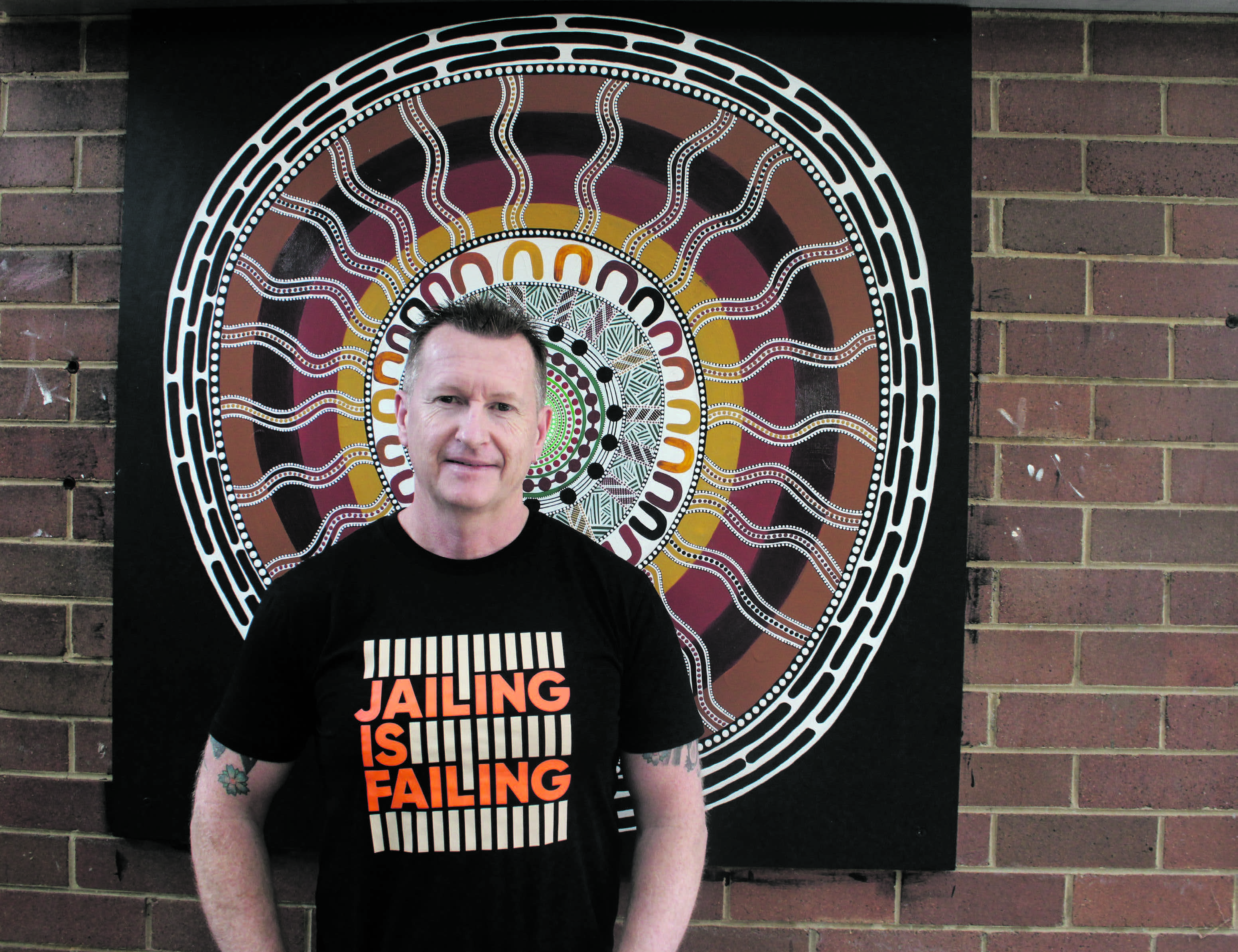
    Claude was honoured as an Australian of the Year finalist by NSW Premier Chris Minns in November 2023. Photo: supplied
    Claude was honoured as an Australian of the Year finalist by NSW Premier Chris Minns in November 2023. Photo: supplied

    “When you give people the resources and the opportunity that anything’s possible. I just feel privileged and love,” he shares.

    Claude believes the workings of Rainbow Lodge wouldn’t be possible without the support of the Glebe community.

    “We appreciate the Glebe community and how much they do for it. It is special, it’s a good place to come to work and I never have to get out of my car and walk down the street, like I’m never embarrassed,” he says.

    “We love Glebe, since 1971, and it’s been really important.”

    Claude is hopeful the exposure from the Australian of the Year Awards will bring more recognition to Rainbow Lodge, and the entire team working there.

    “Yeah, I’m really proud, personally and all that sort of thing. But I just go ‘oh, wow, how can I use it to help more people?’” Claude says.

    “I don’t do this work for the accolades. There’s too many sleepless nights for that. And I get nominated and get the exposure, but it’s only because I have all these amazing people at Rainbow Lodge working with me and supporting me,” he says.

    “I think it’s been healing and bigger than me, far bigger than me, to get nominated and make the final, to stand with all those amazing people. Yeah. I feel very privileged.”

    Claude has been in talk with the state government about expanding the Rainbow Lodge program to open more houses across NSW. Still, he believes it is important that the houses remain at a small intimate capacity, “We want everyone who comes to Rainbow to feel like they’re important and special and I think you can only do that if you keep that smaller model going and just have lots of them,” says Claude.

    “I’d love that one day the work we do starts to see prisons in NSW being closed, hopefully in my lifetime,” he says. “More prisoners and more police don’t make communities safer. They actually make them more dangerous. The evidence is everywhere that the safest communities have the fewest prisons and the fewest police. I would love to see those resources we waste on that reinvested back into our children.”

    Help is available. In an emergency, call 000.

    If you or someone you know has experience domestic, family and sexual violence, call 1800RESPECT on 1800 737 732, text 0458 737 732 or visit 1800RESPECT.org.au for online chat and video call services.

    If you or someone you know, are feeling worried or no good, we encourage you to connect with 13YARN on 13 92 76 (24 hours/7 days) and talk with an Aboriginal or Torres Strait Islander Crisis Supporter.
  • Thirty-Five Years of Music for Glebe

    Thirty-Five Years of Music for Glebe

    The Glebe Music Festival emerged from a time where there were already lots of concerts being held at Margaretta Cottage. David McIntosh, a medical doctor then working at the Royal Alexandra Hospital for Children, recalls that sometimes there would be so many music events in Glebe and so little organisation. With an enduring passion for music, David decided in 1990 to create the Glebe Music Festival.

    35 years later, McIntosh says “the general idea has not changed” with two guiding principles that underpin the annual festivities. First, to put international and local musical 16 artists on the programme together so audiences can see and hear both, and second; to keep the ticket prices very low. David subsidised and sponsored the concerts for the last 35 years, with the aim of making the Glebe Music Festival accessible to all people.

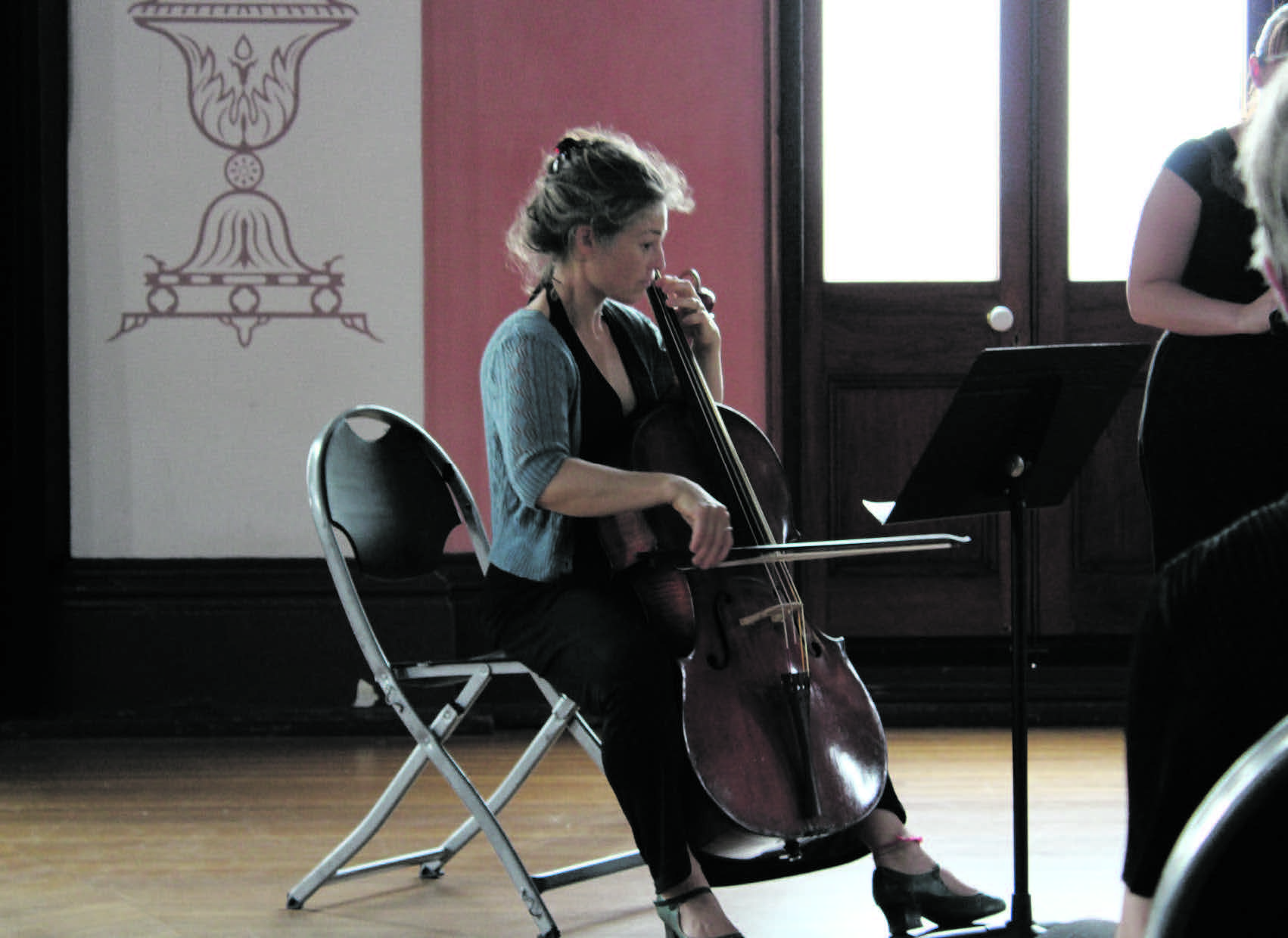
    he Glebe Music Festival has been a ritual of Glebe for decades, with people travelling from many places to see a series of concerts mostly held in November. This year, the festival invited a chamber music concert titled “Shimmering Pearls.” Chamber music was developed between 1400-1700 when people often gathered to play music as a social activity. It is written for small groups and was traditionally played in modest and intimate settings, such as homes and chambers, hence its name. The concert was performed by Australian baroque group, Austral Harmony, and included a trio of recorder, oboe and cello. The concert was on a gloomy sunday, with windows open allowing for a fresh breeze to fill the room. The audience was attentive and quiet throughout the performance, but often sharing a wave to a familiar face across the room.

    Concert attendees John Tang and John Neill had lived all over the world and were only back in Camperdown for a month. The pair were thrilled that they were able to attend the festival once again despite a busy schedule. When asked why he kept coming back to the festival, Neil explains, “it’s a very unique situation to hear music played in small circumstances, more like the circumstances for which it was originally written.”

    Attendees Ross and Ralph lived in Glebe for almost 40 years and had been to a number of concerts over the years, including “Shimmering Pearls” and were attending the final concert at Gleebooks the following Sunday. Ross shared that she continued to come back not only out of love for chamber music, but because of the different settings that bring the music to life. She recalled a gamelan which she attended many years ago, a traditional Indonesian percussion orchestra, in the garden at Henrietta Cottage, describing it eminently as a wonderful experience.

    While travelling the world for an important and demanding career, David has always found time for the festival, planning it a year in advance by himself. “I’ve been a musician all my life” David states. “It’s my second thing.” He’s also performed in the festival on a number of occasions, and holds his collection of keyboards at Margaretta Cottage. While David carries most of the responsibility, he expressed his gratitude for all the support from ‘neighbours, colleagues and friends’, including his 96 year old dad, who helped with ticketing for many years. “There are many locals and volunteers that really deserve thanks for keeping the whole thing going and their enthusiasm.”

    One volunteer, Eric, had met David while they were both living in Glebe after he moved from the USA eight years ago. Eric shared a love for Glebe’s tight-knit community and diverse demographic. He has been helping with the festival for three years. “It’s a way to give back to a lot of people in the community who couldn’t afford tickets to the Sydney Opera House or any of the major concerts; it still gives them exposure at a very great value and it enhances the cultural aspect of Glebe.” Another volunteer, Paul, argues that “these community groups are fascinating and they have really nice programs; unusual and interesting, key musicians and lots of local support.” David recalls many special moments over the years, explaining that “there have been some unusual highlights” differing from what he originally expected from the concert. He names different international groups that offered vibrant and diverse performances for the festival, including a Nepalese rock band, a Balinese gamelan and the Czech Philharmonic Children’ Choir, which was David’s personal favourite.

    Anita Gluyas performing in “Shimmering Pearls” for Glebe Music Festival. Photo: Gabrielle Ohmer
    Anita Gluyas performing in “Shimmering Pearls” for Glebe Music Festival. Photo: Gabrielle Ohmer

    But as mentioned by John and Ross, this festival is not just about the music, and a certain antique charm accompanies the songs as they come to life in some of Glebe’s oldest and most beautiful buildings. Over the years, the concerts have been held in a variety of places. Now, concerts happen in Margaretta Cottage, Glebe Town Hall and Gleebooks, in beautiful spaces carefully selected to make each concert an intimate experience. David explains how having the festival in these buildings was one of the really valuable uses, so people can go in and see how beautiful they are. At one point, there may have been more than 60 people in the audience, but now, David tries to keep the numbers much lower. He states; “It’s much more intimate and there’s a possibility of having a lot more interaction between the musicians and the audience.”

    David’s genuine love for music shines through the past 35 years of the festival, as he continues to keep musicians pristinely at the forefront of the festival. “Musicians deserve to be compensated for the amount of time they’ve put towards preparing the music, learning their instruments, maintaining their instruments and giving a performance,” he says. “There is great value in supporting live musicians, and that includes young and up-and-coming and student musicians as well as older and mature musicians.”

    When asked about the future of the festival, David was content with its current status. With little concern for the survival of the annual event, he argues that there is “no reason to change when the audiences are so full and enthusiastic.” We asked if he had any plans to take the festival all over Sydney given its continuous success, to which David seems to have little interest. “I think it’s important to stay in the area,” David says. “I think it’s important to make it something that the Glebe people can be proud of.”

  • The Housing of Glebe’s Beating Heart

    The Housing of Glebe’s Beating Heart

    “Few places in Australia are richer in history than the inner-Sydney suburb of Glebe” wrote Prime Minister Gough Whitlam in 1985. He was reflecting upon his government’s purchase of The Glebe Estate from the Church of England just over a decade prior. The Anglican Archbishop of Sydney attracted nation-wide attention in 1972 when expressing vocal concern for the severe poverty felt throughout Glebe— conditions that the church had no way (or no intention) of addressing themselves. In 1974, the Whitlam government’s $17.5 million purchase of The Estate marked a potential turning point for public housing in not only Glebe, but the entire country. Never before had the Commonwealth Government purchased a housing estate outside of the territories. Celebrated by many Glebe locals and the broader population alike, it was seen as a crucial step towards providing adequate living conditions at affordable prices. But only 12 months later, Whitlam was infamously kicked out of office, and the sense of hope had all but vanished beneath the asbestos of Australian politics. What followed was a return to business-as-usual profit-driven approaches by state and federal governments alike.

    Prior to Whitlam’s unprecedented intervention, The Church of England had possessed the lands since 1789—just one year 8after the Gadigal and Wangal People witnessed the First Fleet drift into the unspoiled waters of Port Jackson.

    The church was granted 400 acres by Governor Phillip under orders of the British authorities. In fact, the name Glebe is itself an artefact of this transaction, referring to “a piece of land serving as part of a clergyman’s benefice and providing income”. This land was mostly auctioned off in 1828, except for three lots which remained in the church’s possession—two of which were given to St Phillips Church (known henceforth as the St Phillips Estate), while the remaining lot was granted to the Archbishop of Sydney, and subsequently named Bishopthorpe.

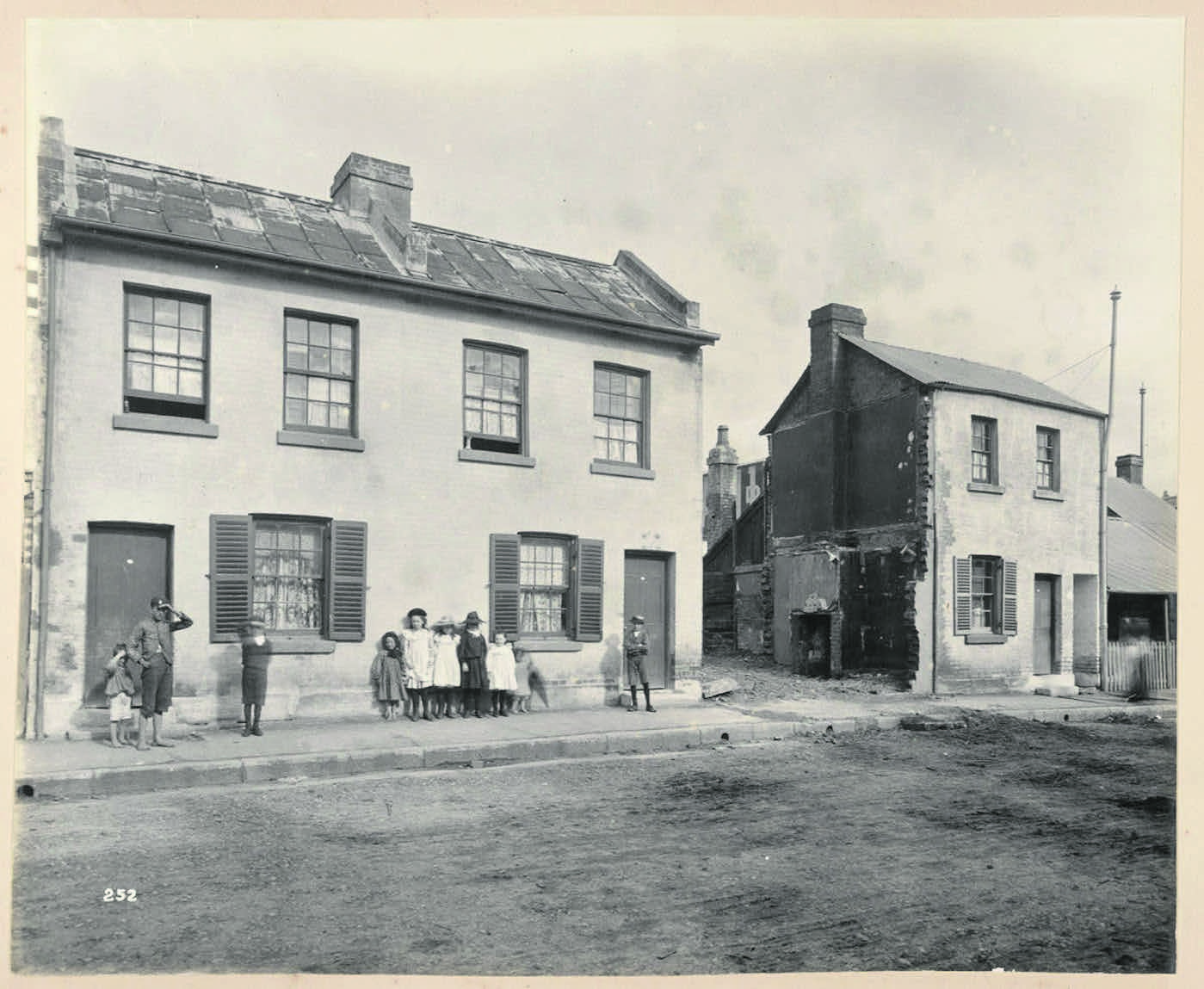
    The conditions of these areas were often decried in the decades after. In August of 1921, one journalist vividly described the severity of one home: “there is no bath, no copper, no washhouse, the bottom has fallen out of the tiny top stove…the plaster has fallen away from the walls in many places, leaving the lathes showing like gaunt ribs—as gaunt as the ribs on some of the uncannily old-looking children of this purlieu…the walls are a mass of mildew and damp”. The author finally reveals that “a father, mother and eight young children live in this apology of a home.”

    Children outside No. 248 Francis-street, Glebe. 1900 Source: Mitchell Library, State Library of New South Wales
    Children outside No. 248 Francis-street, Glebe. 1900 Source: Mitchell Library, State Library of New South Wales

    But the impoverished living conditions did little to dampen the community’s charisma during this time. The locals of the 1920s reflect the ensemble of a bustling Charles Dickens novel. There was Veronica Brolly—a resident of Mitchell Street who was known as the local gossip: “if you told her something, it was a guarantee the rest of the street would quickly know about it,” writes historian Max Solling. Over on Elger Street lived a man known as Professor Paddy “the street poet” Collins.

    Often donning a white lab-coat, Paddy would sell his poems and songs “for a penny a sheet” to audiences at Wentworth Park during the Saturday Rugby League games. He was both a product and ambassador of the working-class struggle and expressed the political injustices of the depression era— evident within the following excerpt from his poem, Political Black Crows.

    “Our politicians are black crows, They’d pick your eyes and bleed your nose, Indeed, they are the workers’ foes Without the slightest doubt. Old men of old who blazed the track O’er the mountains away back, These carrion crows, alas, alack, Are trying to make them starve.”

    Local woman Elsie Bullen was better known as “Jockey Pike”. Jockey earned her nickname and reputation by constantly walking to-and-from Circular Quay. It was rumoured that she went there each day to meet the ship carrying her husband home from the Great War; yet she would always return alone. These are just a few of the wellknown figures that brought life to Glebe’s slums during the early 20th century—laying the foundations for Glebe’s resilient character today.

    Gough Whitlam saw the unique qualities of Glebe that grew from the soil of its struggle. Despite the declining living conditions during this period (due to The Great Depression and poor oversight by the Church), Whitlam wrote that “the area retained a close and distinctive community”. The Glebe Estate stayed in Church hands until his government’s purchase in 1974. The houses were certainly nothing like they appeared fifty years prior, yet it is safe to say they remained far below the minimum living standards of the 1970s (let-alone today), leading to the Anglican Archbishop’s pledge for government intervention and his eagerness to forgo responsibilities towards Glebe’s impoverished residents.

    The Commonwealth Government’s plan was to renovate the 730 houses purchased over a five-year period in order to provide security for the lower classes, as they were increasingly being forced out of Glebe by rent increases and surging house prices. By July of 1974 many houses were re-roofed, re-painted and re-fenced—but the forces of history were again, not in Glebe’s favour. Due to the renovations, many residents were reallocated, but due to the political turbulence coming out of Canberra, these people would never to return to their homes. After Whitlam was infamously dismissed in 1975, the replacement Frasier government withdrew support for the project and 22 houses remained vacant. With Whitlam’s five-year plan now in disarray, “the new roofs were leaking more than the old ones…damp increased,” and money was now going towards patch-up renovations, rather than any significant improvements. Urgent housing needs shot up in NSW—from 9% in 1980, to 25% in 1984.

    In 1981, the Frasier government announced intentions to either sell off the estates to private developers, or to the NSW Government for the sum of $50 million. All the while, the conditions of these dwellings continued to decline ever since the Church of England had wiped its hand of the “financial and administrative burden”. The only difference was that now, about 135 of these houses were empty whilst homelessness continued to surge.

    On Saturday the 6th of October 1984, after 3 years of state and federal government haggling over The Estate’s transferral, the growing Squatters Union organised an historic display of collective action. Families, migrants, elderly people, many children, and “at least two cats” moved into about 40 of the vacant lots. Only a few weeks later, the Sydney Morning Herald reported that this number had more than doubled, with squatters now occupying over 100 of the vacant houses. The action caused a huge stir in the media and expressed the absurdity of so many empty dwellings while 54,000 names were listed in waiting for housing security. “While there are homeless people,” one squatter stated at the time, “houses should not be left empty”. Many of the rent-paying residents were frustrated by the prospect of their neighbours living rent-free and the ongoing disturbances the movement would bring. The squatters responded in the form of a letter which urged that they “were not queue jumping” and would “move into another house if any of the houses…(were) allocated to those members of the Glebe Estate who were there before”. It was found by some observers during the time that the squatters actually did more to maintain the conditions of the lots they inhabited, which were otherwise left to degrade when vacant.

    As the sun rose on Friday the 1st of March, 1985 an army of police officers and demolition workers entered the Estate and forcibly hollowed 19 houses of their inhabitants. By nightfall, the houses in question were “thoroughly smashed up” as a result. The majority of the squatters, however, remained. They further barricaded the windows and doors of their new homes, while protestors returned to the streets holding placards amplifying their common plight for the basic human right of a roof over their heads— “empty houses are the crime,” one read. “We need homes not gutters,” read another. Several representatives of the Squatters Union entered the office of federal MP Peter Baldwin, who attempted to calm their anxieties of a return to homelessness. Baldwin urged that the estate would soon be sold to the NSW State Government, under which the State Housing Commission would act in their best interest as it had “the framework to look at these people,” while the Commonwealth Government apparently did not. And so, The Glebe Estate and its inhabitants were again being tossed around and deflected in another sordid game of hot potato. As of November in the same year, a remaining four squatters—two women and two children—were faced with eviction, and there were no plans to renovate the house in which they lived. When the family was soon-later removed, a total of 182 empty dwellings remained vacant. Only 43 houses had been worked on since they first entered government hands.

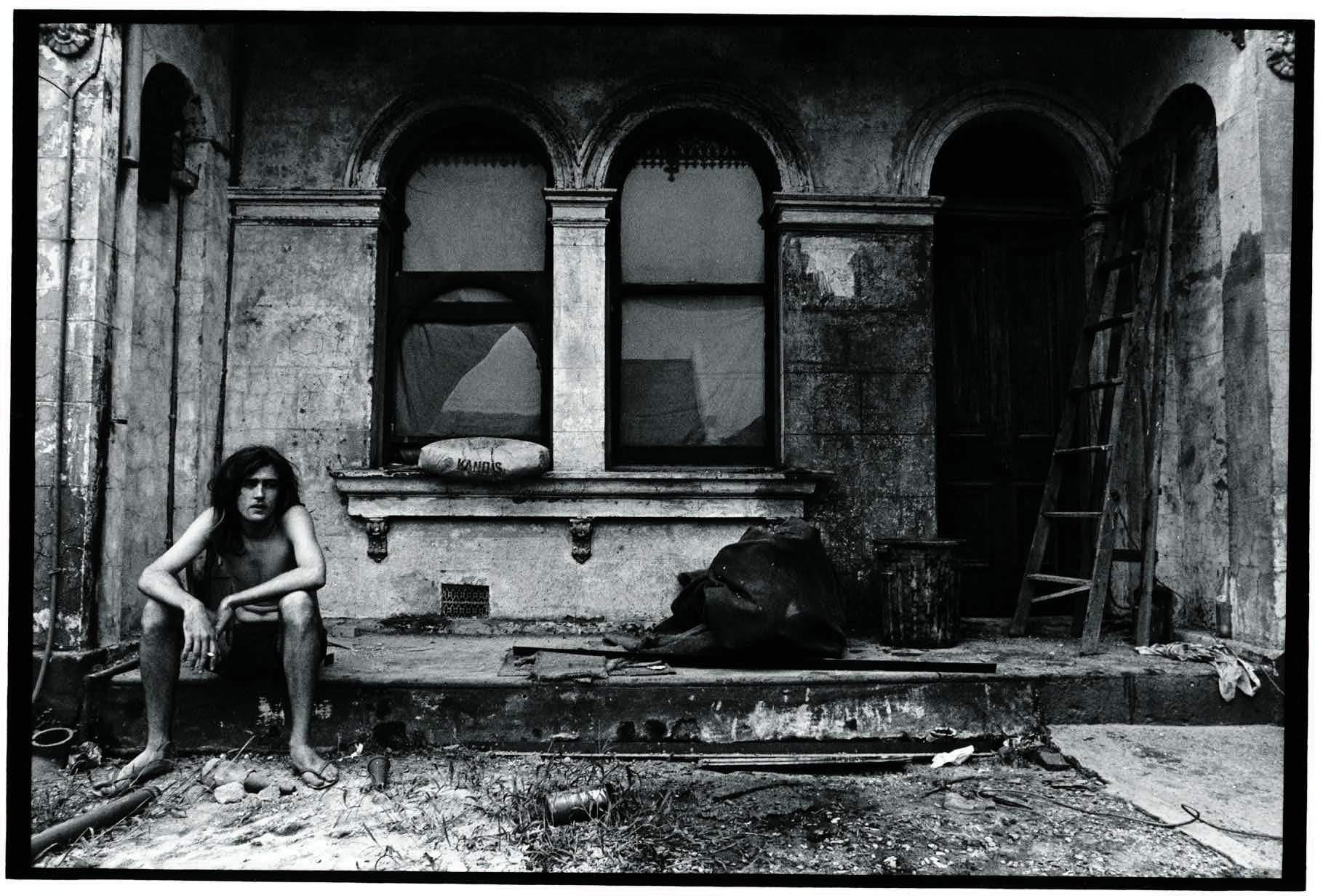
    Man on front porch of dilapidated house in Glebe, 1973. Source: City of Sydney Archives. Photographer: Leon Gregory
    Man on front porch of dilapidated house in Glebe, 1973. Source: City of Sydney Archives. Photographer: Leon Gregory

    The greatest achievement of the Glebe squatters movement was in bringing to the public eye what harsh consequences were felt by the lower classes, due to political mismanagement and ideological conflict. The intention of the squatters was to emphasise the severity of the housing crisis, and in this—they succeed. There were also other lasting positive outcomes such as The Elsie Women’s Refuge, which began when several women moved into a vacant lot at 73 Westmoreland Street in March of 1974. It was the first women’s refuge in the country and inspired the establishment of countless other organisations with a similar purpose of protecting women from domestic violence.

    After Whitlam was dismissed, the replacement Frasier Government leaned into a growing, neoliberal perspective that housing should be left to the “invisible hand” of the market, or otherwise strictly returned to the responsibility of State Governments. Rents within the Glebe Estate returned to market levels, contradicting the initial aims of The Project to provide accessible, affordable housing in the ongoing housing crisis. Yet Whitlam’s efforts and vision did not completely go to waste. Much of the Glebe Estate remains standing at present and is still owned by the NSW Government. This is—in part—thanks to his political foresight and ambition of the Whitlam government in projecting Glebe onto the national stage.

    The rhetoric surrounding the housing crisis in the mid-late 20th century eerily reflects the situation today, which only appears to be worsening. As of November 2024, the waiting list of those in NSW needing a home had risen to an astonishing 62,592 applications (over 10,000 more than in 1984). Simultaneously, governments have continued to privatise public housing under a scale of devious guises of community benefit. In the next issue of Glebe Connections, the current state of public housing in Glebe will be explored, as well as the continued spirit of resistance that has protected its most vulnerable people from the carnage of mere financial interest—one that has kept Glebe’s heart beating throughout its troubled yet vibrant history for centuries past.