
Content warning: This article discusses issues of drug addiction and domestic violence.
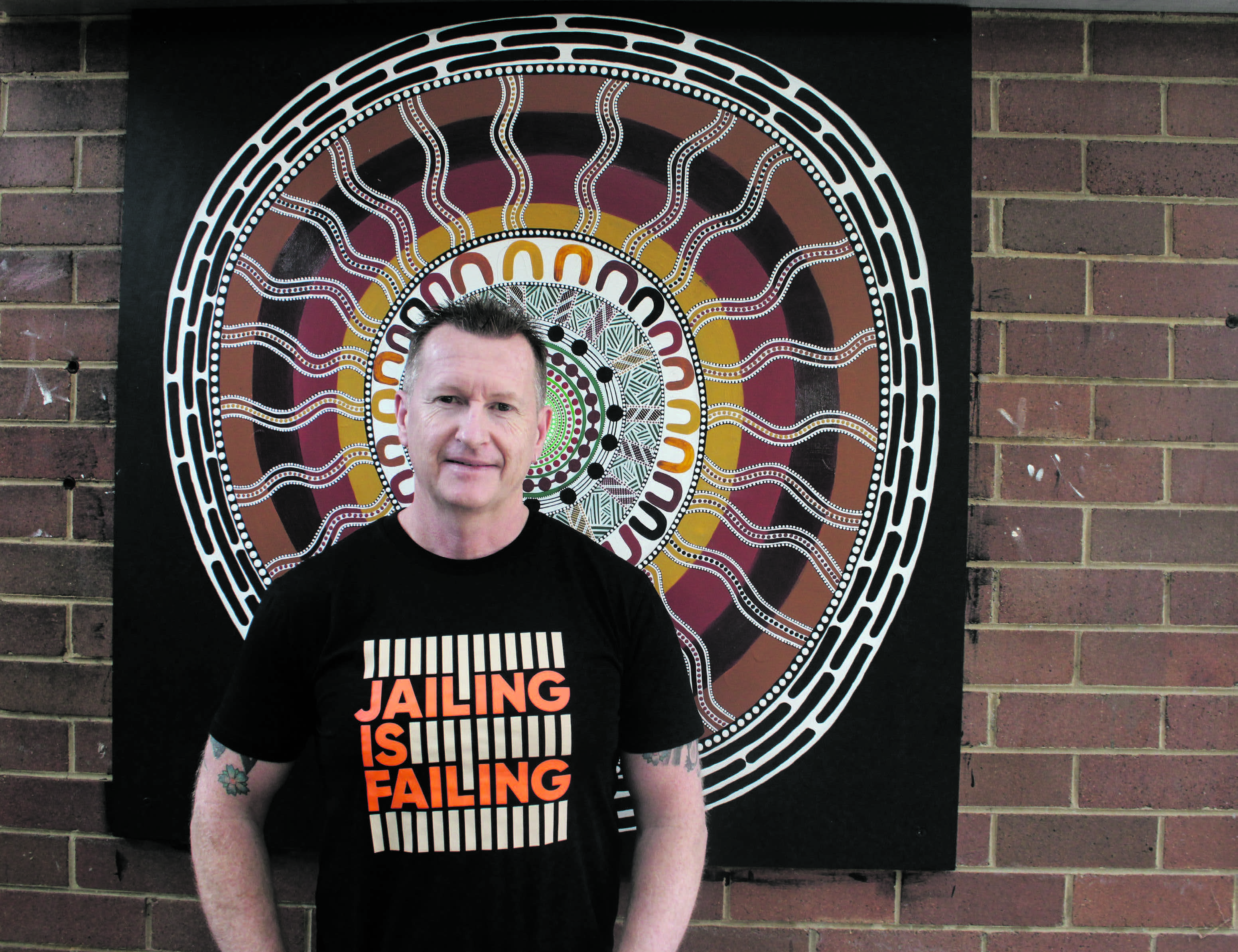
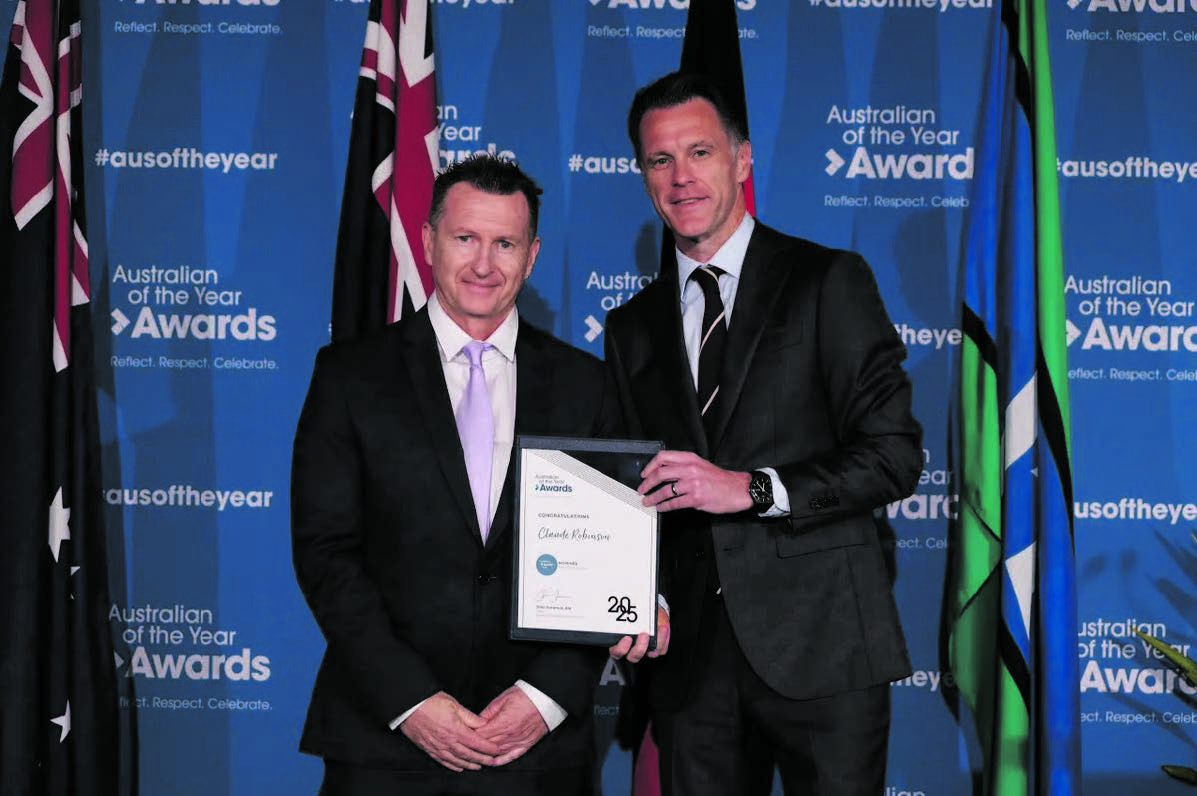
Earlier this year, Claude Robinson received a phone call from the Premier’s Department telling him that he’d been nominated for an Australian of the Year Award. He was so shocked he thought it was a scam.
Claude was selected as a NSW finalist for the Australian of the Year Local Hero Awards for his work with the Rainbow Lodge in Glebe, where he has been the manager for the past three years.
“To say it wasn’t on my radar is an understatement,” Claude explains, “I said send me an email and I’ll call you back. And she sent me an email and I went ohh…”
The Rainbow Lodge provides housing and rehabilitation for men coming out of incarceration. The program runs for 12 weeks, helping the men get back on their feet as they reintegrate into society, something not unfamiliar to Claude, who had his own 12safer is just wrong.” struggles with addiction and incarceration in the past.
“I used drugs for just over 20 years, and had addiction issues in Victoria and NSW. I came here and ended up spending about seven and a half years in prison as a direct result, because we deal with that as a criminal issue and not a health issue, which is really sad,” he shares.
Claude himself was a resident at the Rainbow Lodge back in 2006. He never knew that he’d one day be the manager.
“I lasted six weeks, and ended up back in prison because I just kept using drugs and doing crime and all that sort of thing,” he says.
The program looks very different now though, according to Claude, having grown from working with 50 men in a year to 270 in the current financial year.
“Here, our ethos is that we try and help people heal from their trauma and give them some tools to make better decisions in their lives so they can participate in the community,” he says.
The Rainbow Lodge is the third oldest continuously operating halfway house in the world, celebrating its 60th anniversary this year. The house is named after Judge Alfred Rainbow, who was a pioneer in campaigning for gaol reform and the establishment of halfway houses. After his death, the Judge Rainbow Memorial Fund was created in 1964 in his honour, devoted to the rehabilitation of ex-prisoners, and used to begin lodge accommodation in Glebe.
Providing 32 places per year, the Rainbow Lodge is the largest provider of Transitional Supported Accommodation in NSW, despite over 19,000 people across the state leaving prison annually, which Claude calls “crazy”.
“I think the government…the amount it spends on incarcerating people is disproportionate to the amount of money it spends trying to help them not to come back,” says Claude.
He believes that ten per cent of the state government’s budget for prisons should be dedicated to post-custodial support if serious change is to occur.
“There has been some change, but I don’t think it’s good enough, and we know that the evidence is everywhere that our current system is a failure, so we don’t need anymore PhDs or Royal Commissions,” he says. “We need the political will to actually fund it and change it, because I think one of the problems that we see is the political cycle, especially around crime… is this idea that punishing people will make the community safer is just wrong.”
According to the Rainbow Lodge’s 2024 annual report, 93 per cent of the men that stay at the lodge grew up in households experiencing domestic violence.
“You’re working with people who are highly traumatised and indoctrinated into the prison system, and you’re asking them to come out and reintegrate back into the community,” explains Claude.
Still, this is no deterrent for Claude and the team. “I don’t have any fantasy about it. You know it’s a challenge, but it doesn’t mean we don’t do it, just ‘cause it’s difficult. If it was easy, we wouldn’t have to worry about it,” he says.
The house has a simple rule that everyone must sit together at the table to have dinner at night, which creates a safe and healthy environment for the residents to talk about their day and experiences, according to Claude.
“A lot of them say it feels like it’s my family, because a lot of them don’t have family anymore,” he says. “Most of these people haven’t grown up in those environments.”
He believes that imprisonment breaks down a person’s ability to have relationships with their family or community, something we can’t live without. “For anyone who doesn’t go to prison, family and community are the safeguards. That’s where people thrive, when they have strong family connections, strong connections to their community.”
Claude is passionate that education and rehabilitation are key to preventing crime. This follows evidence from the University of Melbourne in 2016 which highlighted that the rate of crime significantly decreases in 16-44 year olds when they have access to more affordable Vocational and Education Training.
“The solution is education and supporting families way before they ever come to adult prison, because they’ve got decades of trauma and ingrained behaviours and negative experiences in the justice system or the out of home care system,” he stresses.
“It’s the most basic thing to understand. People who are healthy, people who have opportunity, don’t engage in substance misuse and crime,” Claude says. “Unfortunately, community and society wants to simplify things and go ‘well you’ve done this so you’re bad, so you need to be punished. And we believe if you’re punished, you won’t do it again.’”
He laughs, “If that was true, I wouldn’t be sitting here telling you.”
“One of our board members here, Chris Duckett, he’s an elder. He said, ‘Mate, we want them to be taxpayers.’”
Claude adds, “If you’re a taxpayer, everyone wins. It means you’ve got a job, you get to do stuff, you’re not costing the community, you’re participating. I love it. It’s a really simple way to look at it.”
Much of the Rainbow Lodge’s focus is on working with First Nations people, including dedicated programs and a yarning garden at the house. Of its 270 clientele over the financial year, 80 per cent are First Nations people.
According to NSW Bureau of Crime Statistics and Research, Aboriginal and Torres Strait Islander people make up only 3.4 per cent of the adult population in NSW, but over 30 per cent of the adult prison population.
“We’ve always prioritised First Nations people because they’re so overrepresented in the criminal system in Australia and in NSW especially. We incarcerate them at the highest rate of any First Nations people in the world,” says Claude.
In the 2023-24 financial year, the total number of prisoners in NSW increased by five per cent. For First Nations people, the total number of prisoners increased by 19 per cent.
“It’s something that I have a lot of shame about. Yeah, we think it’s outrageous,” says Claude.
One of the initiatives Claude has taken part in with the Rainbow Lodge is partnering with the Walama List Trial, a program in the District Court for First Nations offenders. The Walama Court was established in 2022 aiming to reduce the overrepresentation of First Nations people in custody and create a better understanding of underlying issues that could lead to re-offending. The court takes on 50 First Nations people at a time, who as part of the process, plead guilty and are adjourned from the District Court. Proceedings then take place in a more casual environment, with all parties sitting at a table, and the judge not wearing a wig.
“Elders from the community are there and all the interested parties, including family, are considered at the table, because when we incarcerate one person, it affects a whole lot of other people,” explains Claude.
The Rainbow Lodge takes the men from the Walama List, helping people that could Rainbow Lodge’s Yarning Circle creates a learning space for First Nations people, who are disproportionately represented in the incarceration system. Photo: Caitlin Maloney spend years in prison reintegrate back to the community. If they complete the program, they go back to get sentenced in the District Court and take everything they’ve done from Walama to the sentence.
Claude believes the system should be established permanently and be accessible to anyone.
“We all think that this should be justice to everyone, not just First Nations. If we really want to make communities safer, this is how we should deal with justice instead of in the current punitive way,” he says.
Still, Claude stresses having specific programs for First Nations like the Walama List are crucial.
“One of the things that we believe here at Rainbow is that all the healing for First Nations people is only within community and culture. Our job is to do everything we have within our systems to facilitate that,” says Claude.
“All the First Nations organisations or staff that we employ say the same thing: the pathway out of the criminal system was their embracing and returning to their culture and their essence of who they are. And I’m a big believer in that. It doesn’t matter what culture you come from, until you have that connection to who you really are, it’s really difficult to thrive, and that’s what we want to see. We want to see them thriving.”
Much of Claude’s passion for helping others stems from the memories of those who helped him in his darkest moments.
“I remember all these pivotal moments of — and I’m sure all the people that I remember don’t remember me — but I remember their acts of kindness,” he shares.
He recalls a night sleeping on the streets in Melbourne. “It’s freezing and we went to the Salvos place and they gave me two great blankets when every other policy said one, because it was so cold and he knew there was no beds”Once Claude was in the prison cycle, he found it difficult to get out, and didn’t think there was any future solution for him.
“Until someone told me that it was possible to do it differently… I knew that I used drugs and did crime, and I went to prison, and that if I didn’t do something, that that was gonna be the rest of my life,” he says.
Reflecting on those years, Claude has learnt the importance of talking to others when times are tough.
“You can’t do it alone and you don’t need to,” Claude says. “And it’s funny because I say that to the guys here. I said, you don’t have to tell everyone or talk to everyone, but you gotta tell someone and talk.”
Speaking with Claude, it is clear he holds a passion for his work that is rare to find.
“I never wake up and go, I don’t want to go to work today. It’s not even like a job. You know, I’m really blessed,” he says. “Because it can be a really thankless, really hard job. You have more losses than wins. I go home and go that day’s over; we start again tomorrow.”
He hopes his Australian of the Year nomination inspires the residents at Rainbow to know change is possible.
“I know that for my journey, I didn’t wake up and change one day. When I look back, it was incremental,” says Claude.
He laughs about the award nomination. “You know because I’m sure of all the people I was the only one when they sent the paperwork saying do you have any disclosable offences — I’m sure I was the only one who ticked yes.”
“But the guys seeing me doing all this stuff, it makes it possible, and you know that we’re not monsters or that change is possible,” Claude says.
“When you give people the resources and the opportunity that anything’s possible. I just feel privileged and love,” he shares.
Claude believes the workings of Rainbow Lodge wouldn’t be possible without the support of the Glebe community.
“We appreciate the Glebe community and how much they do for it. It is special, it’s a good place to come to work and I never have to get out of my car and walk down the street, like I’m never embarrassed,” he says.
“We love Glebe, since 1971, and it’s been really important.”
Claude is hopeful the exposure from the Australian of the Year Awards will bring more recognition to Rainbow Lodge, and the entire team working there.
“Yeah, I’m really proud, personally and all that sort of thing. But I just go ‘oh, wow, how can I use it to help more people?’” Claude says.
“I don’t do this work for the accolades. There’s too many sleepless nights for that. And I get nominated and get the exposure, but it’s only because I have all these amazing people at Rainbow Lodge working with me and supporting me,” he says.
“I think it’s been healing and bigger than me, far bigger than me, to get nominated and make the final, to stand with all those amazing people. Yeah. I feel very privileged.”
Claude has been in talk with the state government about expanding the Rainbow Lodge program to open more houses across NSW. Still, he believes it is important that the houses remain at a small intimate capacity, “We want everyone who comes to Rainbow to feel like they’re important and special and I think you can only do that if you keep that smaller model going and just have lots of them,” says Claude.
“I’d love that one day the work we do starts to see prisons in NSW being closed, hopefully in my lifetime,” he says. “More prisoners and more police don’t make communities safer. They actually make them more dangerous. The evidence is everywhere that the safest communities have the fewest prisons and the fewest police. I would love to see those resources we waste on that reinvested back into our children.”
Help is available. In an emergency, call 000.
If you or someone you know has experience domestic, family and sexual violence, call 1800RESPECT on 1800 737 732, text 0458 737 732 or visit 1800RESPECT.org.au for online chat and video call services.
If you or someone you know, are feeling worried or no good, we encourage you to connect with 13YARN on 13 92 76 (24 hours/7 days) and talk with an Aboriginal or Torres Strait Islander Crisis Supporter.