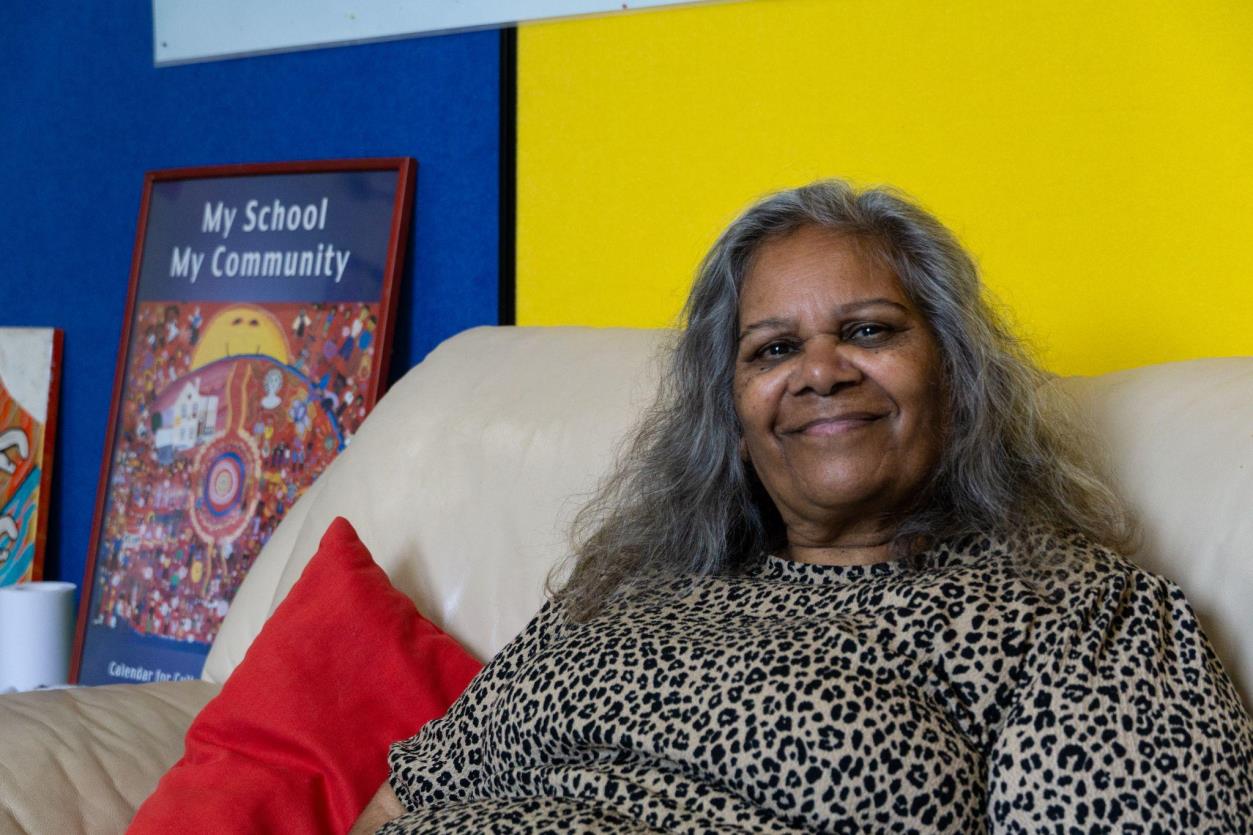
It’s one of the last days of the 2025 school year as Aunty Wendy Buchanan guides me up to the Winanggaay room at Glebe Public School. The Nugawal word the room has been named after, meaning to “look, listen and learn”, has become something of an ethos for the school and its Indigenous education programme is what first brought Aunty Wendy here in 2001.
Recalling in intricate detail the school’s past as we climb the stairs, Aunty Wendy points out the original dual desks used by students. It’s apparent just on entering the school that some of the biggest changes are a result of her work.
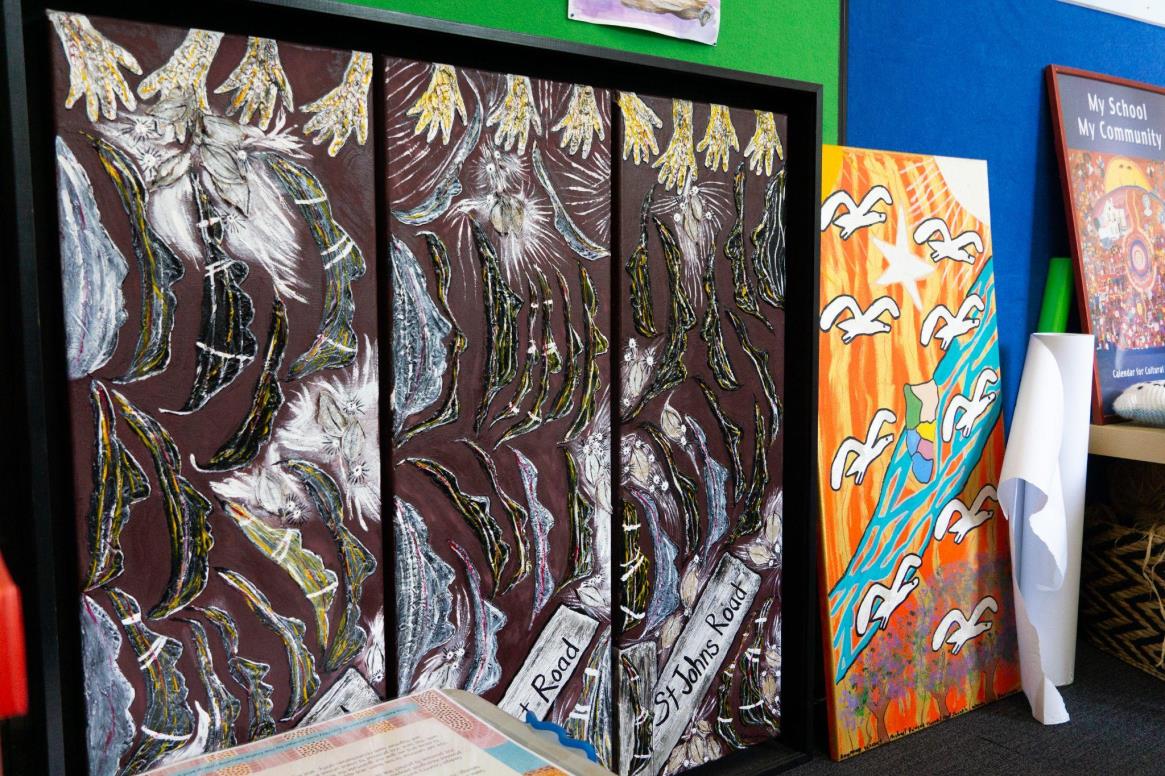
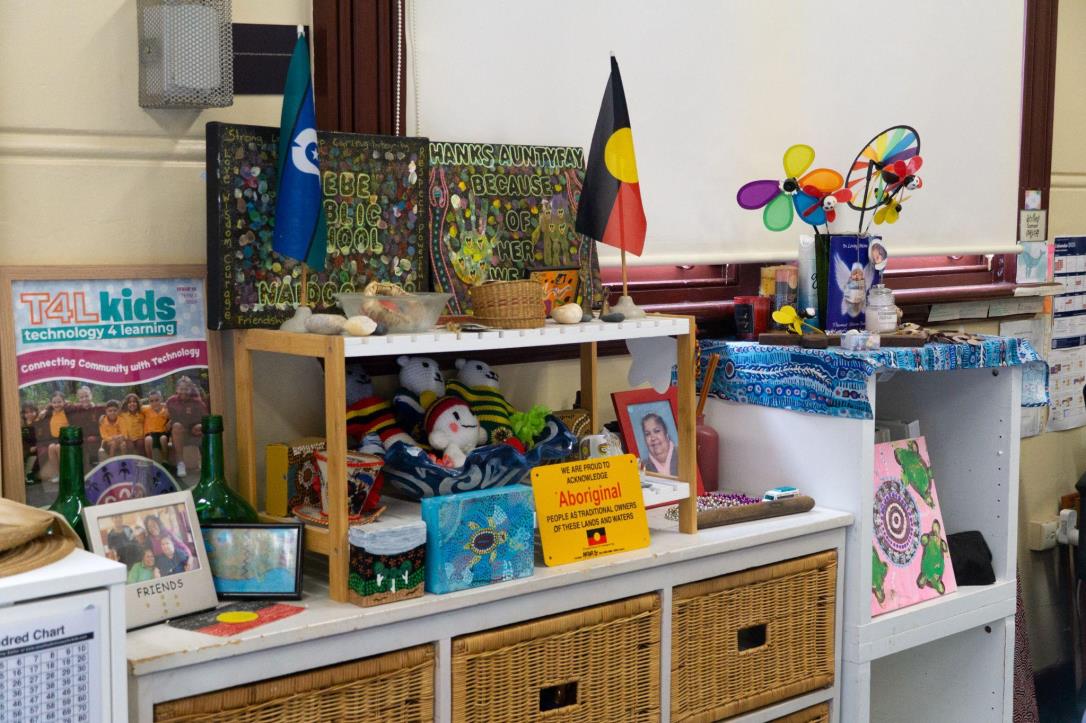
“I’m going to miss all this when I go,” she says, while admiring the artworks lining the walls of the Winanggaay room. It’s clear the place she has dedicated over 20 years to supporting the youth of Glebe has become her second home.
“First of all, I’ll probably be happy but then I reckon, give me about a month, not even that probably and I’ll start missing everyone,” Aunty Wendy says. “I know I’ll see them in the streets but it won’t be the same.”
At 60, after decades of community service, Aunty Wendy has made the decision to retire at the end of 2026.
“I just haven’t been well and I just want to relax now. I went through domestic violence, brought all my eight kids up on my own and I’ve got the grannies now, great nieces and nephews and I’m tired,” she says. “I just gotta get on with my life and look after myself.”
While a mother to eight children and as of now 30 grandchildren, Aunty Wendy has been influential in the lives of over two decades of families that have passed through Glebe Public School.
Aunty Wendy first stepped onto the grounds of Glebe Public school over two decades ago after she was asked by the then principal to take part in starting the Winanggaay program, designed to support Aboriginal and Torres Strait Islander parents in developing their children’s literacy skills and assist them during further education.
“I’ve been here ever since,” she says. Growing the Winanggaay program to become a staple for many students and parents, Aunty Wendy now holds the position of Aboriginal Education Officer at the school.
Winanggaay has flourished from a reading program to a lifeline connecting Indigenous parents to the school. “Before you wouldn’t get the parents to engage in any schoolwork with the kids,” she explains. “Today, they’re out there, they’re getting involved. They come in and they’re reading with the kids or they come in and help do anything with the school which is so good.”
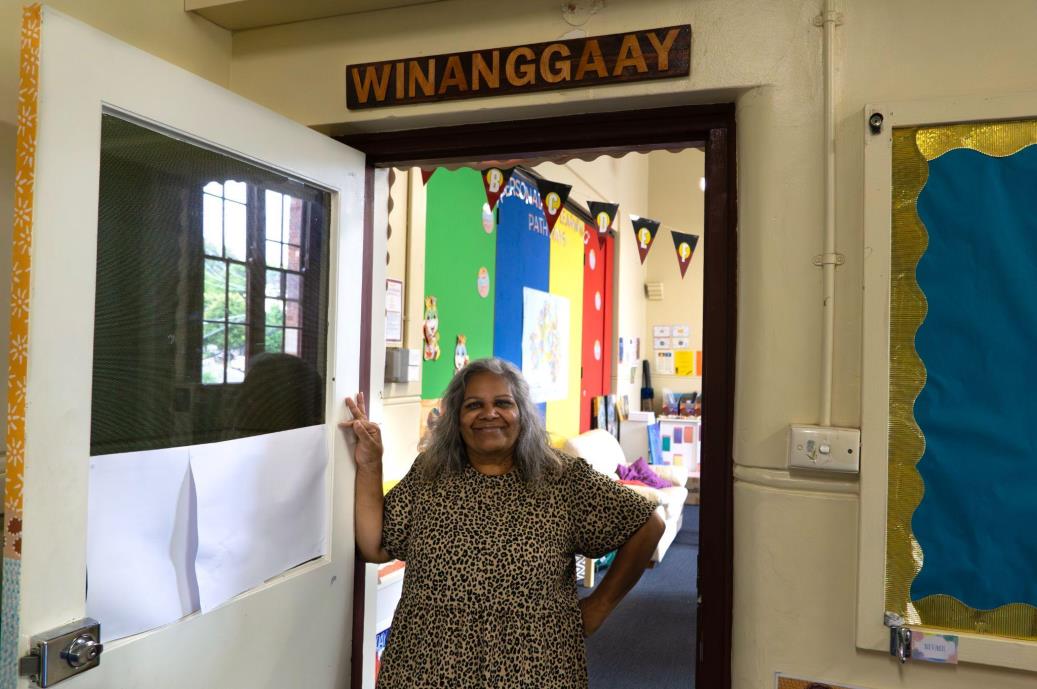
Now one of Glebe’s most revered locals, it’s not often Aunty Wendy is passed by someone along the school halls or the streets of Glebe that isn’t eager to say hello or have a chat.
“Ever since I’ve been working here, it’s not the Aboriginal community, it’s the non-Aboriginal community that knows me,” she chuckles. “They’ll say hello to me, kids that I taught years ago, and some of them have got their kids coming here now.”
A Dunghutti and Gumbaynggirr woman, Aunty Wendy’s childhood growing up in Glebe and later Redfern is starkly different from life today.
“On the Block, that childhood was deadly you know,” Aunty Wendy says of her upbringing. Along with her parents she became one of the first families to move into the Block in the early 1970s after the Aboriginal Housing Company (AHC) acquired funding from the Whitlam Government to provide housing for the Indigenous community in Redfern. In 1973 the first six houses were purchased by the AHC along Louis, Vine, Eveleigh and Caroline streets and by 1994 a total of 41 houses made up the Block.
On the surface, Aunty Wendy’s childhood sounds quintessential of 1970s suburban Sydney, playing hopscotch, marbles and exploring the streets of Redfern until the sun went down most days.
However, growing up on the Block she was often faced with a different reality, one where being surveilled by police was commonplace. “When they used to have new [police] recruits, they used to come around the Block in big buses, taking photos of all us and everything and showing them about our Aboriginal people,” Aunty Wendy recalls.
The looming presence of law enforcement in the area was intensified when the then Commonwealth Police took up residence in the TNT Towers during the late 1970s, with their new premise used to continue monitoring the Block. “That’s where the police used to eye it out up there and take photos of everyone on the Block or who came to the Block,” Aunty Wendy explains. “Every person, woman, man, child had a photo up in that building.”
Decades on Aunty Wendy has remained steadfast in ensuring that police conduct towards the Indigenous community continues to improve, where she is now a member of the Leichhardt Police Area Command’s Police Aboriginal Consultative Committee.
The advisory body which meets four times a year across 33 commands in New South Wales has become an essential reporting system that provides information and feedback from the community to the Commissioner of the NSW Police Force. “We go down there and have our say and everything which is good,” Aunty Wendy says. “Obviously we need that, we need more people, Elders, even the young ones who can come in and tell the police about the community.”
Just a short stroll from the Winanggaay room, the Glebe Treehouse located on the grounds of Glebe Public School is where Aunty Wendy spends most of her time outside of the classroom, lending a helping hand to local Indigenous families.
Each Thursday, Aunty Wendy helps run the Ngara Nanga First Nations playgroup, where local Aboriginal and Torres Strait Islander people are provided inclusive early childhood education and care. “When they first started it, I just got involved with them,” says Aunty Wendy. “They wanted the Aboriginal community to get involved more so they started the playgroup.
“A lot of them come here for the playgroups and they’ll end up coming to Glebe Public School which is good.”
First started by Aunty Tania Lever from Sydney Day Nursery Children Services, the playgroup has been connecting Indigenous preschool aged children and families for over the past decade.
In November last year, Aunty Wendy received the Glebe Treehouse’s award for community service, recognising her facilitation of the Ngara Nanga First Nations playgroup and service to the community for the past 25 years.
Aunty Wendy’s presence in Glebe rapidly grew after she began working with the Glebe Youth Service in the early 2000s.
Along with other volunteers, she facilitated After Dark, a program for local adolescents where each Friday night the youth service is transformed into a safe teen-only space with other community-wide events for teens offered each weekend.
The program has now been running for over 15 years and received the Youth Action Award for Outstanding Project or Service Working with Aboriginal Young People in 2014 and Best Program for Aboriginal Young People the following year.
“We could get the youth and all the young kids off the streets and feed them and have activities and all that there,” she says. “It’s a really good program for them because they’re bored and they’ve got nothing to do at night and they shouldn’t be out, they should be at home.”
Every Friday teens are welcomed with a meal and a range of activities to take part in, from basketball games to hip-hop classes and cultural workshops. Over the past decade, Aunty Wendy has witnessed the value of the program and the youth service as a whole for children growing up in Glebe. “We need it for these kids around here,” she says.
After 10 years, facilitating After Dark became too much for Aunty Wendy to keep up with. “It was just getting to me because I was working all week and then on the weekends,” she recalls. “I think as you get older everything just gets ya.”
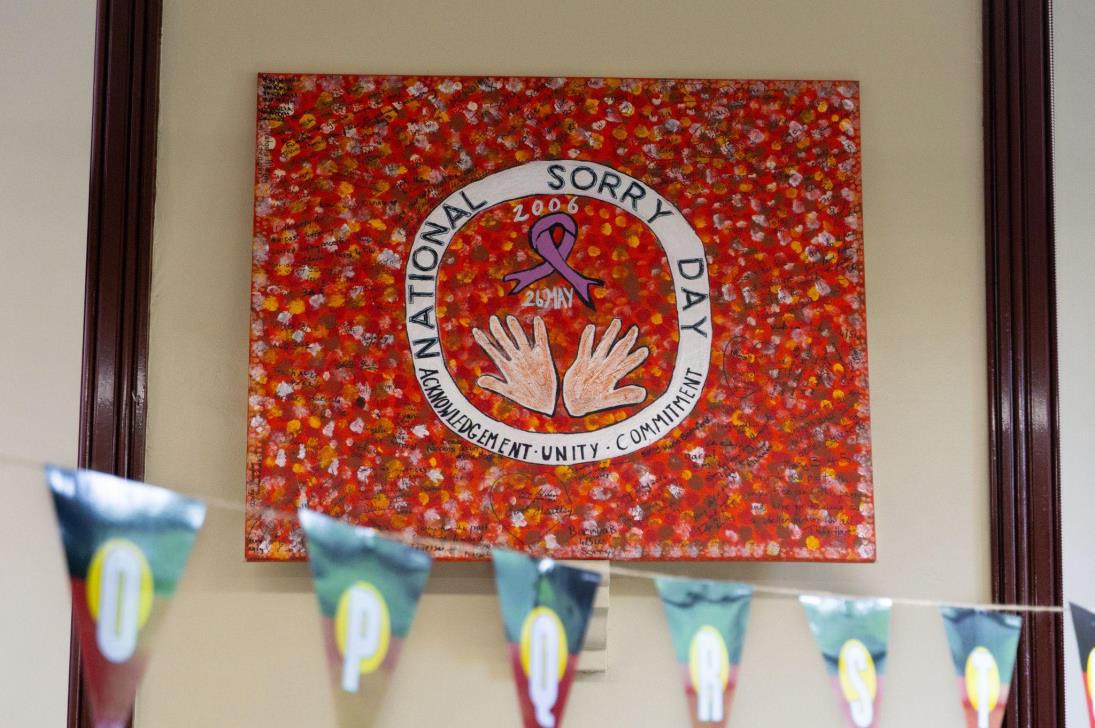
Over our conversation, it’s evident that finding a quiet moment is a rare occurrence for Aunty Wendy. Her unmistakable voice has the power to command attention and respect from any student, something I bear witness to during our interview as two of Aunty Wendy’s granddaughters dart into the Winanggaay room.
Curious to know if they can help their grandmother later that afternoon set up for a barbecue she is hosting for the school’s Indigenous families, Aunty Wendy tells them she’ll “think about it,” holding back a smile. “They can come and help me out,” she says once they’re out of earshot.
“All the teachers say, ‘Aunty, you just walk in and they’d sit straight up, does it feel good?,” she says as a grin tugs at her mouth. “I tell them straight out that they know not to muck around or be cheeky to me or anything.”
The barbeque that afternoon, Aunty Wendy says, is just one of many things that have been central to helping Indigenous parents become involved in the school community. “Years ago, the parents wouldn’t step a foot in the gate,” she says.
“I ring them up and tell them, ‘no you need to get up here’. I rang them up this morning telling them about the year sixes dinner this Thursday and to remember to pay for it, to do that permission note.
“If I can’t get on to them, I’ll ring them on Facebook. You find a way,” she explains.
Something Aunty Wendy remains resolute about imparting on her children, grandchildren and now students is the journey her family and all Aboriginal and Torres Strait Islander people have been on to achieve change.
“These young ones, they don’t realise what we went through to fight for our rights, for them to have a good education. I tell all my kids, I tell my grannies about what happened. They need to be told that,” she says.
“I tell them, even the non-Koori kids, about my story. I tell them I didn’t exist for two years. They didn’t recognise us until 1967, I was born in 1965. Now it’s up to us to tell them all about what happened.”
While retirement remains a bittersweet decision, Aunty Wendy has ensured that Winanggaay will continue long after her departure. “I said ‘you’re not going to take this room off the Aboriginal people, because this needs to be there for them,’” she told Glebe Public School’s principal Bryce Walker.
Aunty Wendy remains positive that more parents of students will feel encouraged to take part in Winanggaay after witnessing its success. “Hopefully in the years to come there’ll be more Aboriginal workers out here. If we get more Aboriginal workers in here, that’s better,” she says.
When I ask Aunty Wendy what her hope for the future of Winanggaay is, she offers a piece of advice for her successor. “Just keep it going, just keep talking to the kids, hand it down and whoever’s going to be AEO [Aboriginal Education Officer], keep that culture going.”