Vibrant abstracts, surrealist self-portraits and “divine” watercolours.
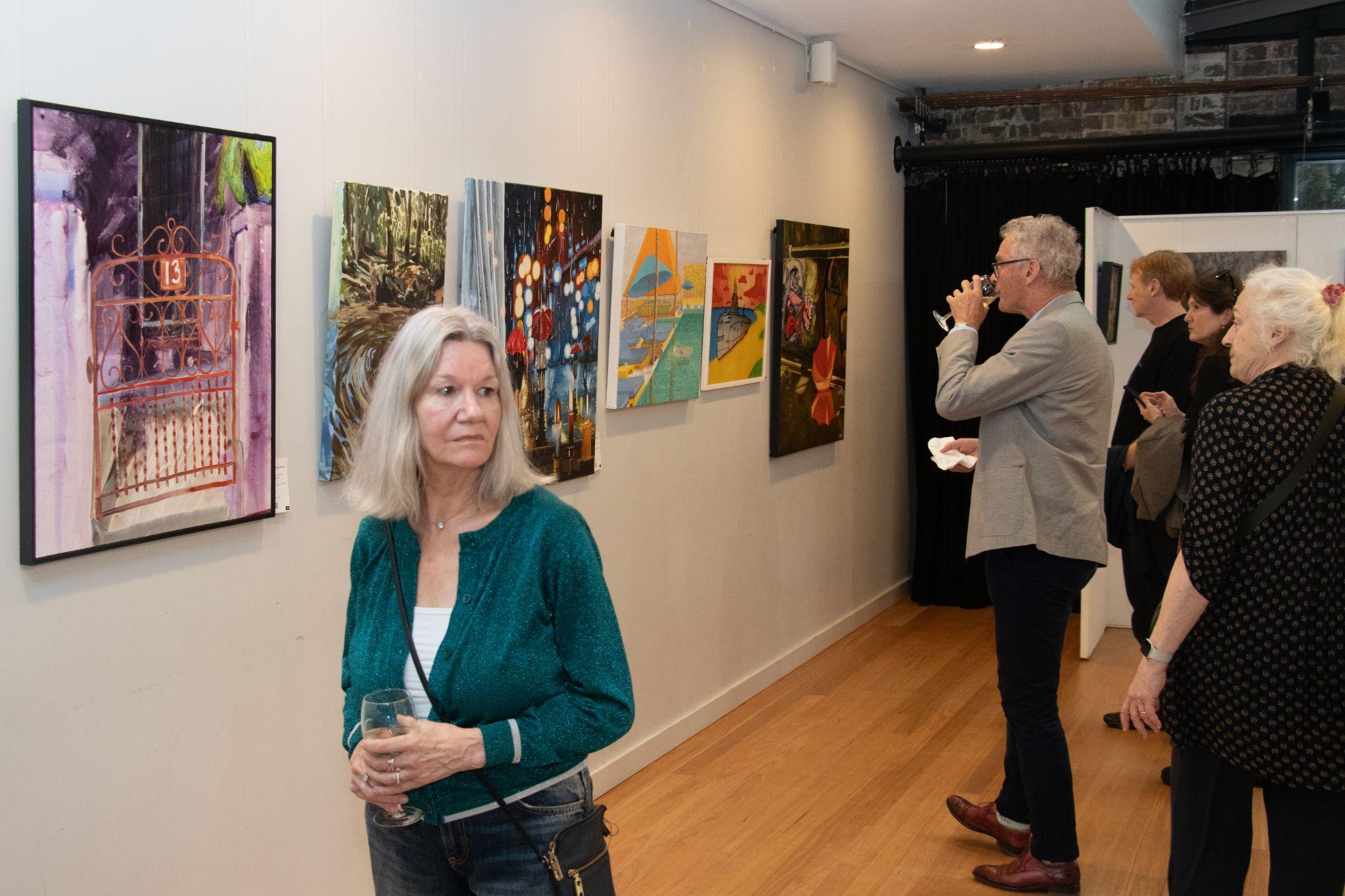
The Glebe Art Show opened its 18th annual exhibition at the Tramsheds Community Hall on a warm spring Tuesday evening last October, bustling with creators, eager art enthusiasts and local councillors. In between sips of wine, visitors and buyers marvelled over the quality of local art and its relevance to the Sydney art scene.
Founded by local artists James Barker and Robin Lawrence, the event began modestly in the newly refurbished Glebe Library and adjoining Benledi site in 1997. The pair were approached soon-after by the Glebe Chamber of Commerce to make it a yearly show in support of local artists.
Back then, it wasn’t an odd occurrence for the likes of Reg Mombassa to arrive late and with no space left to hang on the wall, his works would be placed on the mantel of the fireplace instead.
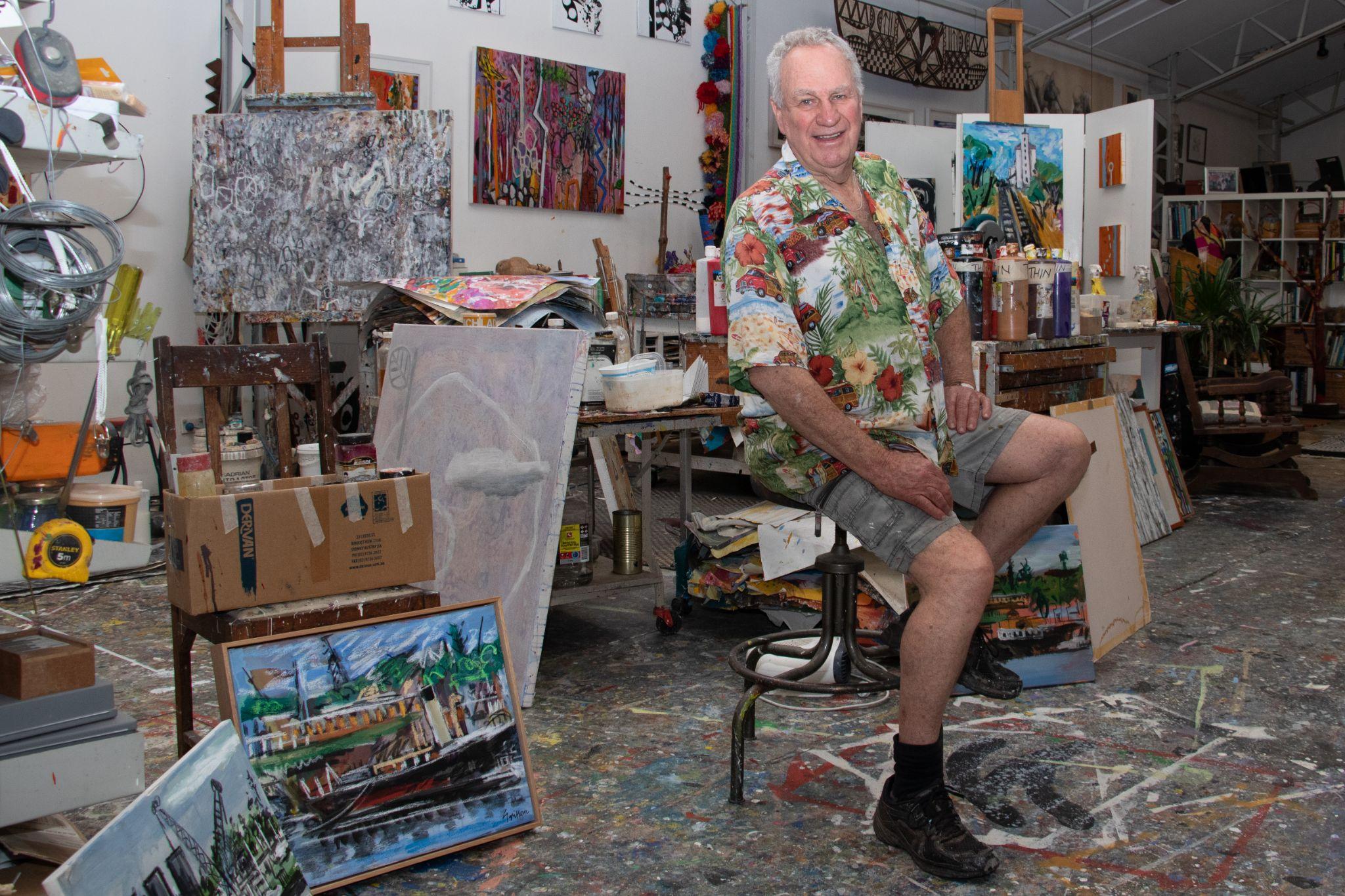
“Every now and then somebody would not be so happy about the way we hung their painting,” laughs Peter Griffen, artist and current President of the Glebe Art Show, recalling the makeshift nature of the old site.
“It was just doing the best you could in two buildings that weren’t designed for exhibiting art. I had to rig up all sorts of crazy lighting systems in the stairwell, you’d have paintings hanging behind doors or in front of fireplaces.”
Peter adored the show so much that the Glebe Art Show committee decided he should take over the presidency from Robin nearly a decade ago, just before its transformation and relocation to the Tramsheds in 2018.
Over the last two decades, the event has become a vital hub. It has provided a space for emerging and established artists to exhibit their work, with prizes given to winners in categories ranging from the Young Artist Prize to The Character of Glebe Prize.
“The whole idea was to serve the local artists and serve them as best we could by having a show that was not selective,” says Peter.
“We like the idea of it being a time for artists to be able to display their work and sell their work because we want to help them as best we can.”
The COVID-19 pandemic caused irreparable damage to the arts sector, with 58 per cent of art galleries in NSW reporting a loss of income 12 months after the first lockdown in 2020. Coupled with the cost-of-living crisis, artists are struggling more than ever to find steady revenue.
Deputy Lord Mayor of Sydney Jess Miller, who presented the Robin Lawrence Open Art Prize (now titled after the show’s founder and first president of the show), is noticing the rippling effects.
“We know that increasingly it’s really difficult for young people to carve out a livelihood as an artist. It’s cost of living, it’s cost of materials, and so the opportunity to be able to show here is really, really important,” says the deputy mayor.
“I love this prize because it basically is first in best dressed, which means everyone gets a turn to show their work and I think there’s a real magic in that; particularly for young people.”
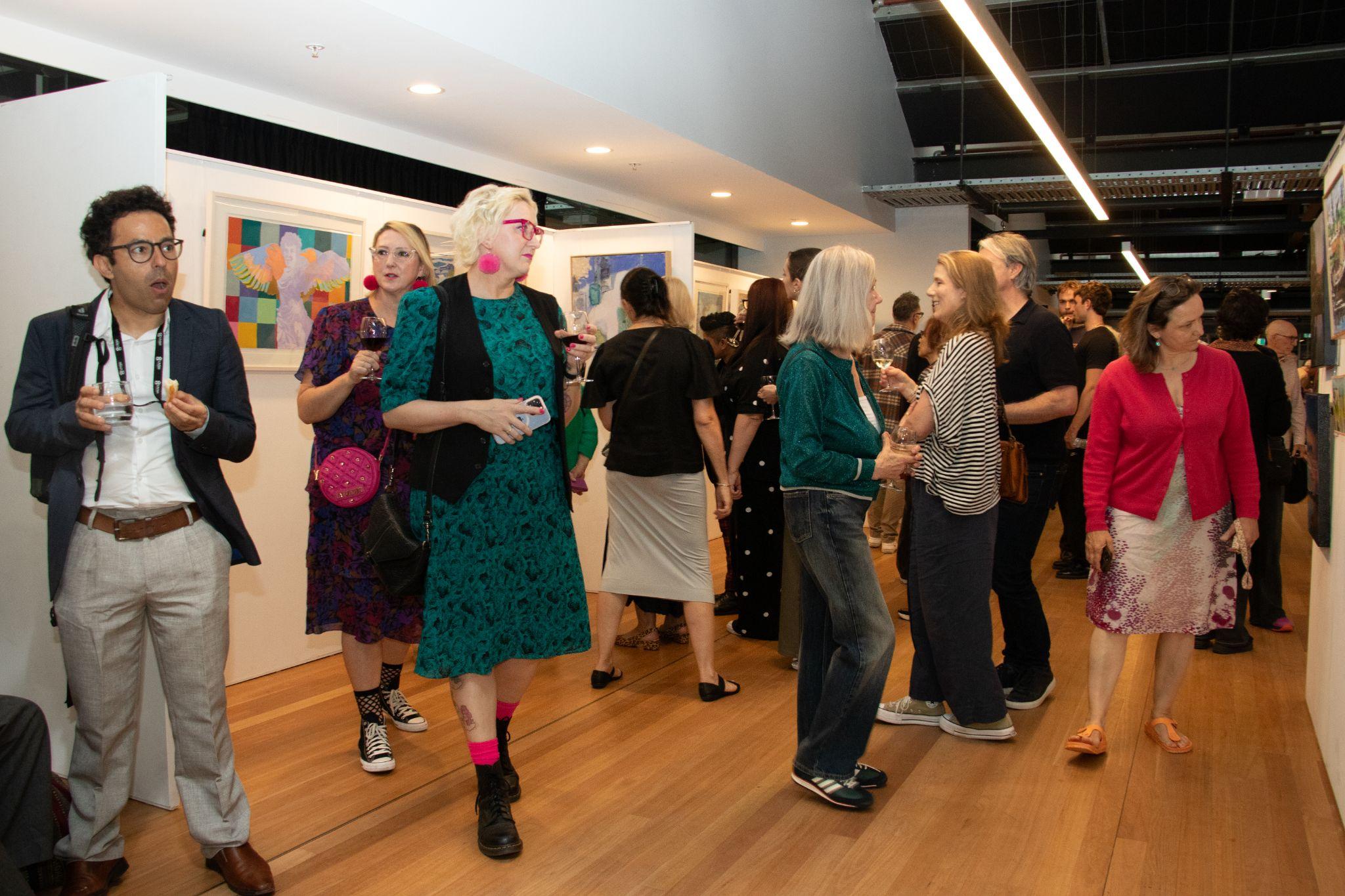
This year was no exception.
With only 200 spots available for artists, they scramble to enter their works to be hung on the walls, which are rendered from 80 repurposed Bunnings’ doors.
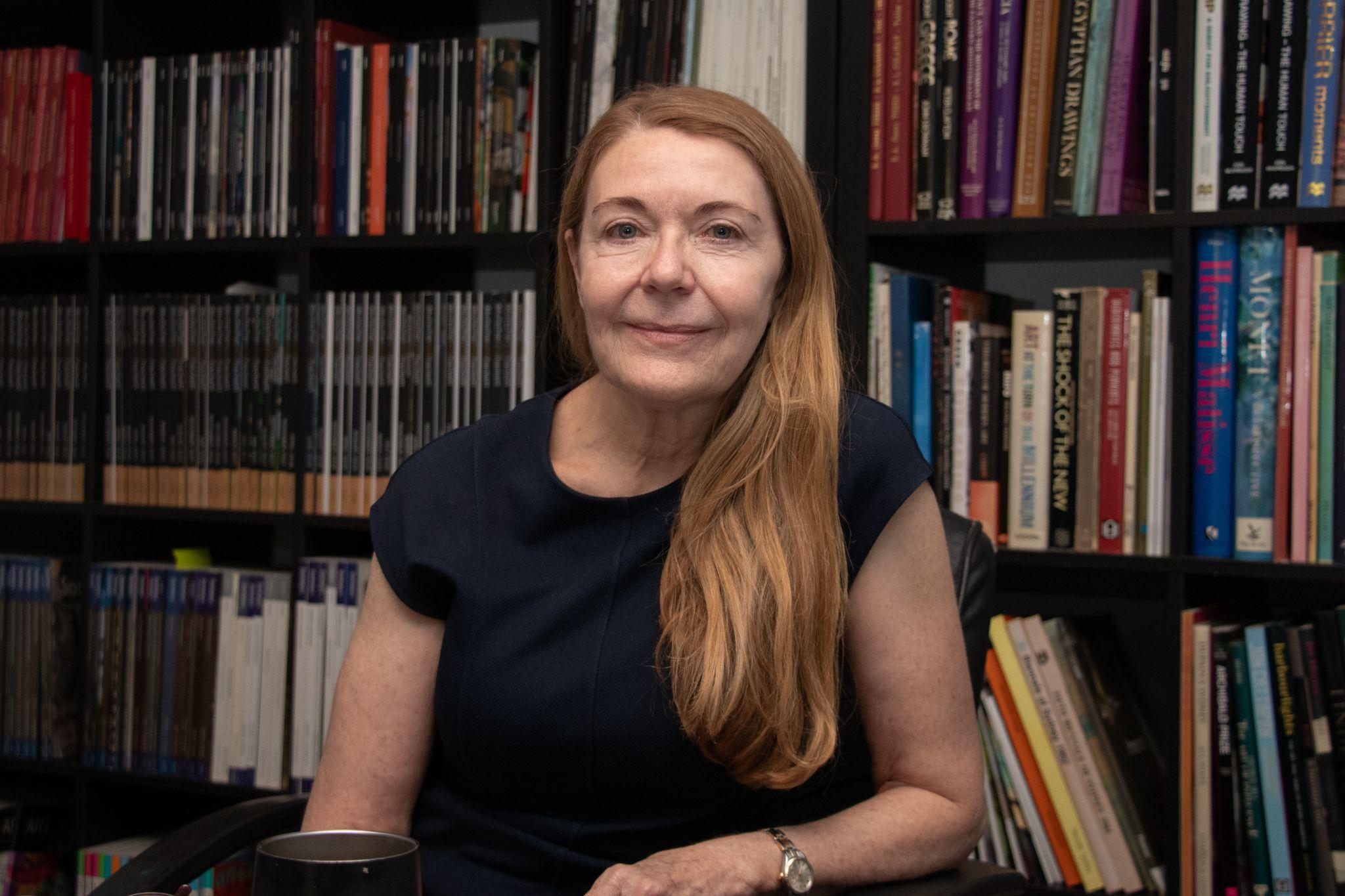
Leading judge Brenda Colahan, who calls the gallery “completely underrated” and believes it “should be one of the great prizes” in the Australian art scene, spent hours critiquing the different styles of works the week before opening night.
Although it was Brenda’s first time judging the show, she is no stranger to art valuation.
Brenda began her career as an archaeologist, spending much of her time in the Middle East on digs. She went on to become a valuer for the Cultural Gifts Program, appraising artifact donations, and has spent the last 27 years running her own business, Brenda Colahan Fine Art, which is now a gallery in Redfern.
“I’m looking at art all the time. If something stops me and arrests me visually after looking at hundreds of artworks every week, then something is there and I will go in for a closer look,” says Brenda.
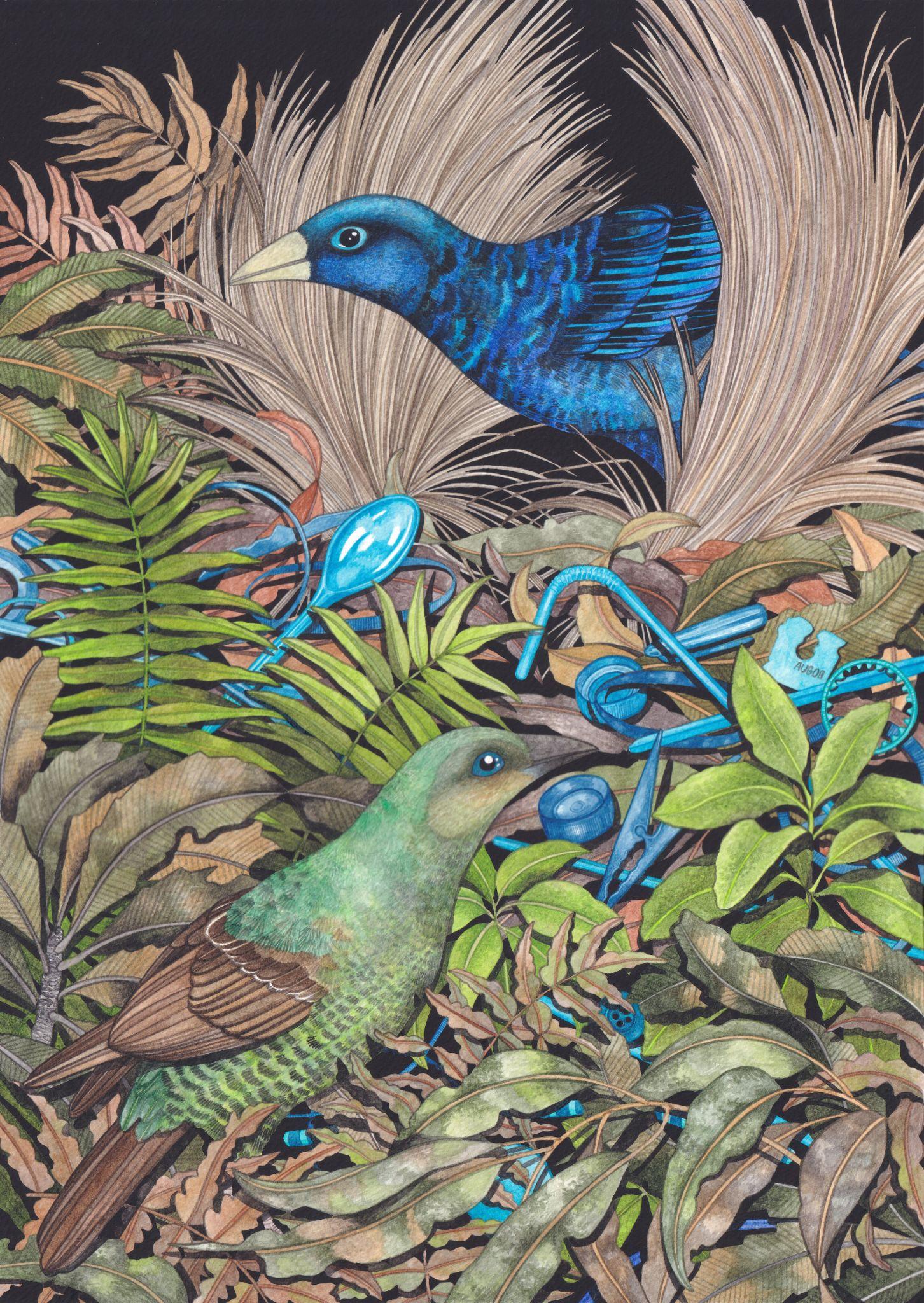
The winner of the main prize, selected by Brenda, was a water colour composition of two green and blue satin bowerbirds resting beside their nest. They are accompanied by a collection of found objects in bright cerulean blue and painted by Inner West artist Tahlia Henderson; which Brenda calls a “delicate, beautifully painted and beautifully finished”, immediately catching her attention.
Other than the yearly show, the Glebe Art Society started Glebe Art in the Park after the 2020 COVID-19 lockdown, which is held on the Sunday closest to equinox at the Glebe foreshore. For Peter, it’s a chance to get the locals joining in on community affairs in an outside space, where the government mandated lockdowns couldn’t stop the art.
“The whole idea is to get artists to come together and enjoy themselves on the foreshore of Glebe,” he says.
“We invite artists from around the world. Doesn’t matter where you’re from. You could be visiting from Japan for instance, and by coincidence you’re there you could come and join us.”
As the show draws closer to its 29th anniversary, Peter reflects on its continuation. For him, getting more visual and performing artists involved in the show is of the utmost importance.
“To be able to involve artists with their paintings and drawings and textiles coming in now as well as musicians is a really lovely thing to be doing for the community,” says Peter.
Brenda believes the coming together of the Glebe community is integral for achieving broader recognition from the rest of the art world.
“It really is an important prize and I think community is very important because without the community to come and view, that’s what you do your work for. You’re making it so that you can talk in a different voice to your community,” she says.
Although the Inner West Council has made all eight town halls a space for artists to exhibit and rehearse, there is no dedicated centre for the arts; both visual and performing.
Peter’s idea: to make the ‘Inner Sydney Arts Centre’ or in his words, ISAC.
“I’ve suggested to the committee that we push for it, an Inner Sydney Arts Centre, which features not just painting, drawing, printing, photography but also the performing arts. Even film making,” he says.
“The obvious place to do this is Callan Park. We’ve suggested that to the mob that’s prepared the draft plan for Callan Park but we’ve not heard back from them.
“We’ll get a cultural centre somewhere which will support the community, young and old. Particularly the youth. You’ve got an organised place for the arts and you can focus on young people, you can have workshops for them.”
Regardless, Peter remains hopeful that future generations will pursue greater opportunities in the art space. As far as he is concerned, the Glebe Art Show will continue its path of supporting young artists pursuing their artistic endeavours.
You can visit Brenda Colahan and her gallery at G04/59 Great Buckingham St, Redfern NSW 2016.