
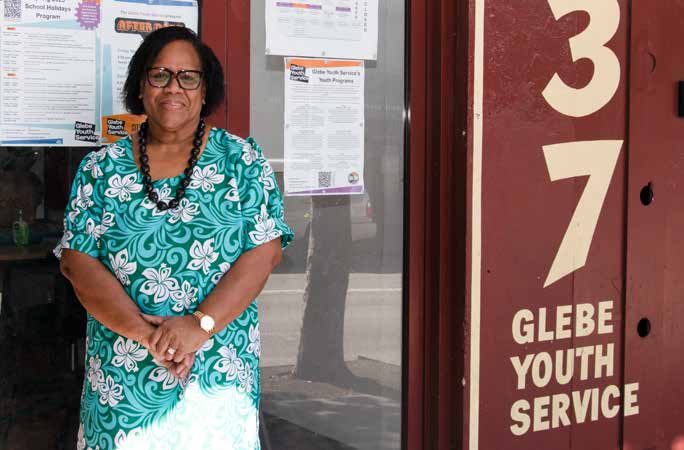
“I remember there’s a lady that just lived across the road over there,” Keresi Balewai Rabuatoka says as she points out the window of the Glebe Youth Service attic. “She came and knocked on my door and she had two dollars with her. She said ‘Auntie Grace, I got two dollars here with me and I need to buy something for dinner’”.
It was 2011 and Keresi, more commonly known as Grace around Glebe, had been living in the suburb for only a few years, but she had already cemented herself as a lifeline to many in the community.
“Come inside,” Keresi replied, giving her neighbour the ingredients to make spaghetti bolognese for her family.
“That’s the lifestyle around Glebe. I’m sure that every suburb’s got those,” Grace says one Wednesday morning in her neighbourhood of Glebe, a community she has called home for nearly two decades now.
From volunteering at the Glebe Youth Service, Koori Radio Station and Addison Road Community Centre, to working as a migration consultant, Grace’s numerous acts of generosity have been felt by many over the past 18 years. In speaking to Grace, her innate awareness of knowing when someone is in need of her help is striking.
“I can’t walk away if I see a gentleman or a woman or a small girl or a teenager in need,” she says. “Someone in need, especially older people. They’re always sitting around. [I ask them] how are you? How’s your day today? That is how I connect with them.”
When she first arrived in Glebe, Grace was reminded by her closest friends that while it “is a good place”, it has a reputation for being dangerous. “I said [to my friends], why is it dangerous? I don’t see anything dangerous here. It’s how you connect with people,” Grace says.
Originally hailing from Lomainasa in Tailevu Province, Fiji, she moved to Glebe after marrying her husband Peniasi Kata Rabuatoka, known to many as Ben. Becoming a step-mother to five children, Grace has never treated them as anything other than her own.
“The first day when I walked into the family home, the body language that I can see from them, they were lost,” she says. “It’s different from motherly love and it’s very tough for a stranger like me to walk into the family as a step-mother.
“Moving on to the first week, second week, third week, one month, we start to get closer and closer and closer and I told them, don’t be shy. Don’t be scared of me. If you need something, you let me know. Talk to me if you want something.”
That is exactly what she has done at the Glebe Youth Service, providing the motherly love that she is known for. Since 2009, Grace has been volunteering at the Youthy, supporting local community members in times of need.
The Food Circle program, where fresh food and other staples are hand-packed into hampers and delivered to “more than 80 families around Glebe”, has become an essential part of her volunteering routine every Thursday. For Grace, the hampers are more than just food, they allow her to connect with the community on a deeper level.
“It’s so nice to mingle with the community,” Grace says. “It’s so nice to be nice to people. It’s so nice to know that I helped someone today.”
The Youthy holds many precious memories for Grace and her family. Her stepchildren visited frequently when they were young while Grace worked as a volunteer. Grace recalls a memory of her son Uraia Rabuatoka, familiarly known as Oody, when he was seven years old.
“He came back one afternoon and it was Valentine’s Day,” she says, “He walked inside [and said], ‘Mum, Mum, where are you?’. I said ‘I’m upstairs’, and then he walked up and said ‘close your eyes, I’m coming up’… When I opened my eyes, he was kneeling down with just a single rose, and said ‘will you be my Valentine?’” Smiling, Grace says that Oody was always very close to her heart. “Even though he’s not here with us, I’m happy that he’s at peace,” she says.
Nearly a decade ago, Oody passed away from lung cancer. “I miss Oody so much,” Grace says: “It was very, very sad.”
During his final moments, locals banded together to help Oody see his home and his community one final time, driving him around Glebe. “The last day, they brought him around Glebe, around everywhere,” Grace says.
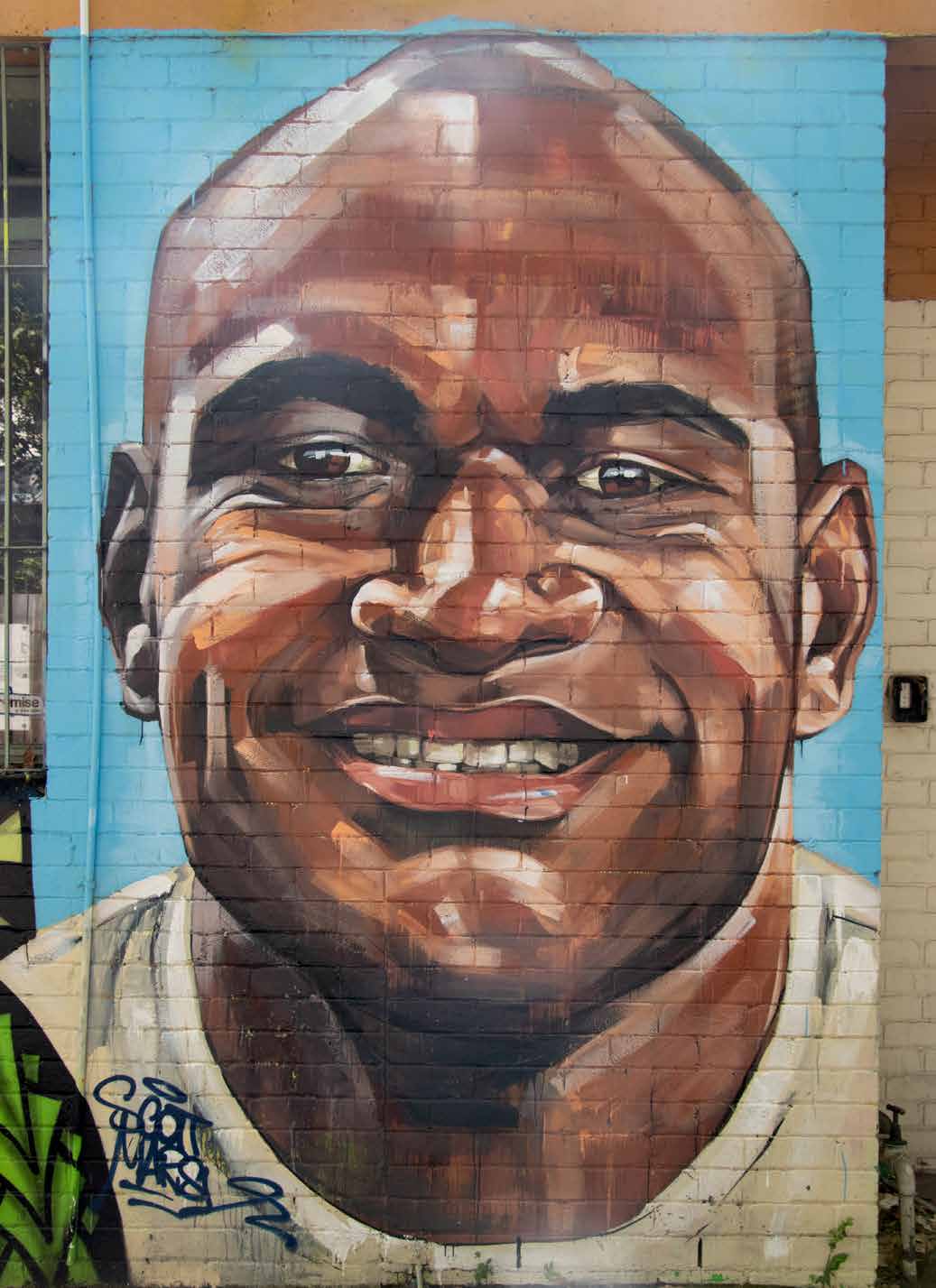
His death was felt throughout the community, with many local youth left devastated by the loss of someone they had grown up with. Despite the years that have passed, Oody’s death has been far from easy for Grace. “We have to learn to get up and be ourself again,” she says. “The best thing is to keep this happier all the time,” Grace says whilst motioning to her heart. “That is why when I see someone sad, it touches me, because I know what sad is like in here.”
Grace says many have wondered how she continues to remain optimistic to which she responds, “I chose to be like this. If you want to be happy, make this happy inside,” she says tapping her chest.
Grace’s strong-willed nature has sustained her through other battles of her own. Shortly after returning home from an operation to remove breast cancer, she grabbed her laptop and headed straight back to work. “I’m so bored there,” was her response to her husband when she called to let him know how the procedure went as she made her way to work.
During another hospital visit, Grace explains soon after undergoing major surgeries she could not lie in bed and do nothing while hearing other patients call out to the nurse for water. “I went with my drip and everything, I got a bottle of water [for them]. The doctor told me, ‘Grace you’re supposed to lie down’, and I said, ‘but I feel sorry for them.’”
In 2003, Grace’s maternal nature led her to adopt a child. “The mother came to me and she asked if I could adopt her,” she explains, “So she stayed with me until she gave birth.”
Her beloved daughter, Grace, is now 22 years old.
Tuning into a Fijian radio program one evening in 2009, Grace came across an interview with Alan Rigas, a migration agent and solicitor where she was left inspired by his work. Calling the presenter of the show who was also a friend of hers at the time, she asked if she could come and meet Alan that night.
“I went in there just as they finished… I walked inside and shook his hand and told him ‘I really love what you’re doing,’” she says. For the last 16 years Grace has worked closely with Alan as a migration consultant, helping Fijians and other migrants like herself secure work and permanent visas. “I only show [them] the right door to go to because he’s a migration agent and knows better,” she says.
“I salute this gentleman because he handles the matters very differently from other lawyers that I know. He says, ‘don’t worry about the money. I want you to live here legally, not illegally.’”
Consulting with migrants at all hours of the day, Grace shares individuals’ situations with immigration solicitors at Alan’s practice to help them understand what support and services are required. “It makes it easier to show them the right path,” she says.
Many Fijian migrants are often apprehensive to approach immigration consultants or the police, Grace explains. “They understand English, they can speak English… but it’s very scary for them.
“It’s good to help, especially when people are in need, when [they] go to a new country, away from home and no one cares. It’s very sad.”
Her identity is firmly cemented in her Pacific Islander upbringing. Since Grace was a child, she had always known she wanted to be a presenter. Grace believed she would be some sort of announcer or TV presenter. Her most notable work, the radio show ‘The Fiji Voice of Australia’, is a testament to her young self and her passion for the Fijian identity.
The three-hour long program has aired weekly since 2017. It is the longest segment of the well-known Koori Radio in Sydney, offering listeners the latest news coming out of Fiji, along with music, community announcements and the history of the island nation. Despite the late timeslot of 8-11pm, Grace was pleasantly surprised to know that Fijians from around Australia have been tuning in to her show. “I thought they went to sleep,” she says, “but our Fijian community sometimes work late hours; especially in the factory areas. They work as security. They’re driving semi-trailers. They use my radio station when they work,” she says.
Along with her consultancy work, the radio show has provided aid for Fijians across the country who are struggling to navigate the complexities of living abroad. Every Tuesday, Grace discusses immigration help for Fijians in need.
One family from Brisbane pursued immigration advice after listening to Grace’s commentary on the show. “I helped show them the right place, to show them the right door,” Grace explains. “They’re from Brisbane. And they heard on the radio and they called me. People from around the states… they called me because they heard this from the radio. And then I connect them with this law.
“If you got stuck and you don’t know where to go, call me. This is my e-mail. Let me know what’s happening to you with your case.”
After working a while at Koori Radio, she began volunteering at Addison Road Community Organisation, a Marrickvillebased charity that saves more than 475,000 kilograms of food from “fruits and vegetables” to “cakes, lots of doughnuts and croissants” going to waste every year. When Grace first started there, she made it her mission to volunteer every day. Now committing to every Wednesday, she helps out with the medical checks, laundry, salon, dinner and food hampers.
These food hampers were vital during the COVID-19 lockdowns. Under a five kilometre travel radius restriction imposed on Sydneysiders, not all of the Inner West could make it to Marrickville. Even though Addi Road was subjected to restricted trading, Rosanna Barbero, CEO of Addi Road, asked Grace if she could deliver food hampers to the Glebe community. She rallied her local Fijian community to create a bus delivery system, deemed as essential, that allowed more people to receive the food.
“I called a pastor, and the pastor knows the congregation. ‘What about a bus?’ they asked me. They can’t drive because we’re not allowed to drive. She [Rosanna] said ‘We can give them a pass’,” Grace says. “The Fijian community got their trucks, their cars, their vans to come and help the Addison Road Community Centre. We deliver food everywhere… hampers, whatever.”
Grace’s tenacity to continually provide for others despite her hardships has been vital for countless members of the Glebe community. Her perseverance to be a shoulder to lean on has been indispensable for many.
“The community, they need a bridge. I count myself as a bridge through the community,” she says. “That’s why I’m standing here.”
“I can’t leave Glebe. Glebe is my home. Glebe is my village, and Glebe is my community.”
While Grace’s unwavering commitment to serving others around her can be replicated in many other places, it seems there will never be another place that evokes such cherished warmth and familiarity for her. Certainly nowhere else can replicate her beloved community.
“I can’t leave Glebe. Glebe is my home. Glebe is my village, and Glebe is my community.”
If you or someone you know needs support, call 13YARN – 13 92 76 or Lifeline – 13 11 14. 24 hours a day, 7 days a week.