
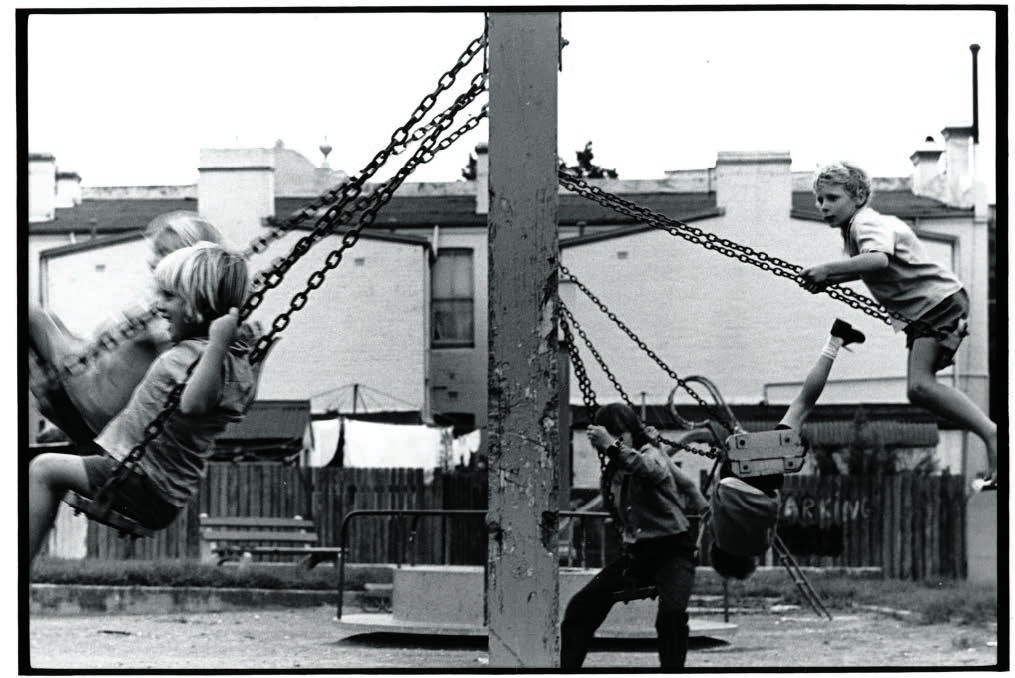
“Few places in Australia are richer in history than the inner-Sydney suburb of Glebe” wrote Prime Minister Gough Whitlam in 1985. He was reflecting upon his government’s purchase of The Glebe Estate from the Church of England just over a decade prior. The Anglican Archbishop of Sydney attracted nation-wide attention in 1972 when expressing vocal concern for the severe poverty felt throughout Glebe— conditions that the church had no way (or no intention) of addressing themselves. In 1974, the Whitlam government’s $17.5 million purchase of The Estate marked a potential turning point for public housing in not only Glebe, but the entire country. Never before had the Commonwealth Government purchased a housing estate outside of the territories. Celebrated by many Glebe locals and the broader population alike, it was seen as a crucial step towards providing adequate living conditions at affordable prices. But only 12 months later, Whitlam was infamously kicked out of office, and the sense of hope had all but vanished beneath the asbestos of Australian politics. What followed was a return to business-as-usual profit-driven approaches by state and federal governments alike.
Prior to Whitlam’s unprecedented intervention, The Church of England had possessed the lands since 1789—just one year 8after the Gadigal and Wangal People witnessed the First Fleet drift into the unspoiled waters of Port Jackson.
The church was granted 400 acres by Governor Phillip under orders of the British authorities. In fact, the name Glebe is itself an artefact of this transaction, referring to “a piece of land serving as part of a clergyman’s benefice and providing income”. This land was mostly auctioned off in 1828, except for three lots which remained in the church’s possession—two of which were given to St Phillips Church (known henceforth as the St Phillips Estate), while the remaining lot was granted to the Archbishop of Sydney, and subsequently named Bishopthorpe.
The conditions of these areas were often decried in the decades after. In August of 1921, one journalist vividly described the severity of one home: “there is no bath, no copper, no washhouse, the bottom has fallen out of the tiny top stove…the plaster has fallen away from the walls in many places, leaving the lathes showing like gaunt ribs—as gaunt as the ribs on some of the uncannily old-looking children of this purlieu…the walls are a mass of mildew and damp”. The author finally reveals that “a father, mother and eight young children live in this apology of a home.”
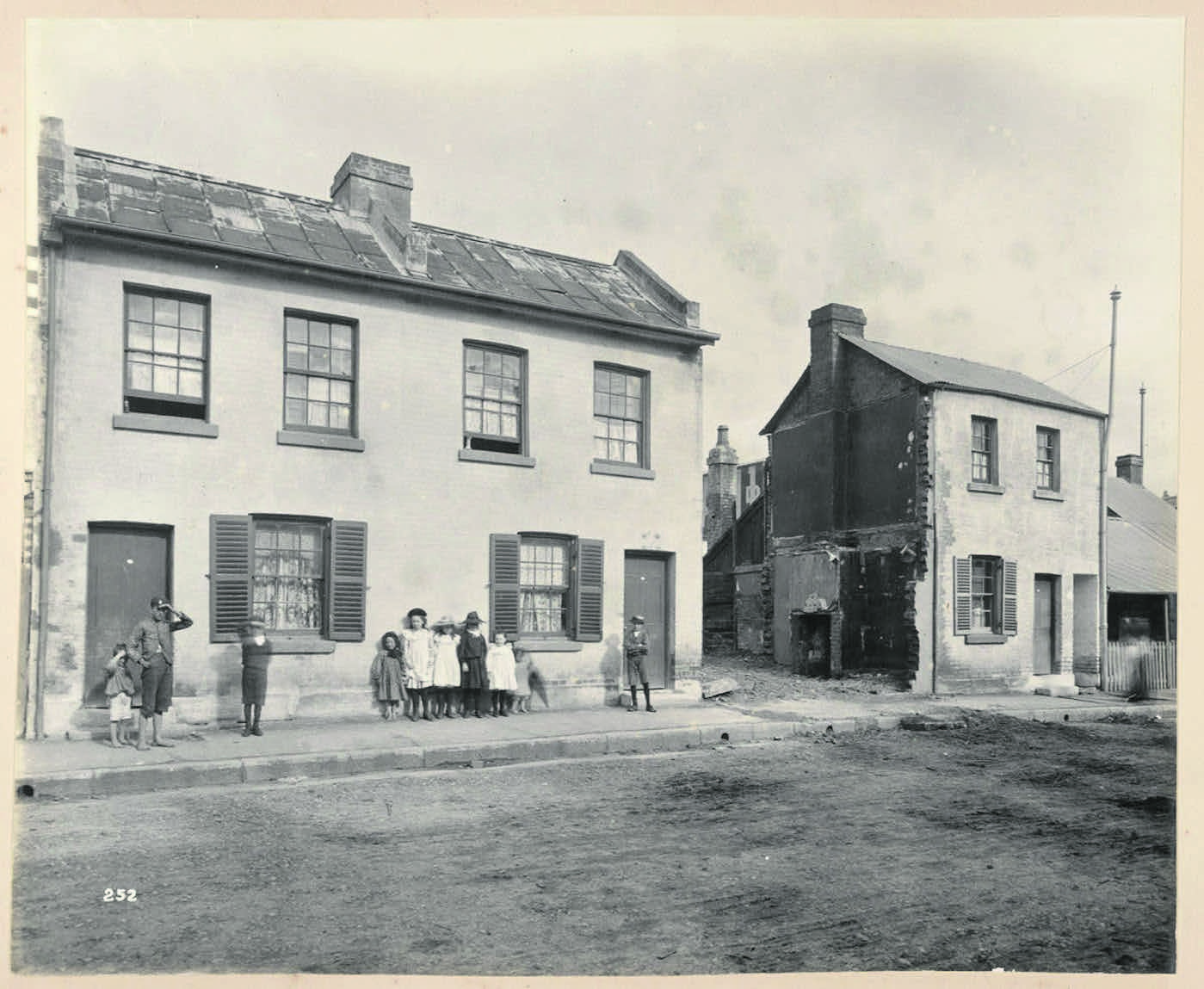
But the impoverished living conditions did little to dampen the community’s charisma during this time. The locals of the 1920s reflect the ensemble of a bustling Charles Dickens novel. There was Veronica Brolly—a resident of Mitchell Street who was known as the local gossip: “if you told her something, it was a guarantee the rest of the street would quickly know about it,” writes historian Max Solling. Over on Elger Street lived a man known as Professor Paddy “the street poet” Collins.
Often donning a white lab-coat, Paddy would sell his poems and songs “for a penny a sheet” to audiences at Wentworth Park during the Saturday Rugby League games. He was both a product and ambassador of the working-class struggle and expressed the political injustices of the depression era— evident within the following excerpt from his poem, Political Black Crows.
“Our politicians are black crows, They’d pick your eyes and bleed your nose, Indeed, they are the workers’ foes Without the slightest doubt. Old men of old who blazed the track O’er the mountains away back, These carrion crows, alas, alack, Are trying to make them starve.”
Local woman Elsie Bullen was better known as “Jockey Pike”. Jockey earned her nickname and reputation by constantly walking to-and-from Circular Quay. It was rumoured that she went there each day to meet the ship carrying her husband home from the Great War; yet she would always return alone. These are just a few of the wellknown figures that brought life to Glebe’s slums during the early 20th century—laying the foundations for Glebe’s resilient character today.
Gough Whitlam saw the unique qualities of Glebe that grew from the soil of its struggle. Despite the declining living conditions during this period (due to The Great Depression and poor oversight by the Church), Whitlam wrote that “the area retained a close and distinctive community”. The Glebe Estate stayed in Church hands until his government’s purchase in 1974. The houses were certainly nothing like they appeared fifty years prior, yet it is safe to say they remained far below the minimum living standards of the 1970s (let-alone today), leading to the Anglican Archbishop’s pledge for government intervention and his eagerness to forgo responsibilities towards Glebe’s impoverished residents.
The Commonwealth Government’s plan was to renovate the 730 houses purchased over a five-year period in order to provide security for the lower classes, as they were increasingly being forced out of Glebe by rent increases and surging house prices. By July of 1974 many houses were re-roofed, re-painted and re-fenced—but the forces of history were again, not in Glebe’s favour. Due to the renovations, many residents were reallocated, but due to the political turbulence coming out of Canberra, these people would never to return to their homes. After Whitlam was infamously dismissed in 1975, the replacement Frasier government withdrew support for the project and 22 houses remained vacant. With Whitlam’s five-year plan now in disarray, “the new roofs were leaking more than the old ones…damp increased,” and money was now going towards patch-up renovations, rather than any significant improvements. Urgent housing needs shot up in NSW—from 9% in 1980, to 25% in 1984.
In 1981, the Frasier government announced intentions to either sell off the estates to private developers, or to the NSW Government for the sum of $50 million. All the while, the conditions of these dwellings continued to decline ever since the Church of England had wiped its hand of the “financial and administrative burden”. The only difference was that now, about 135 of these houses were empty whilst homelessness continued to surge.
On Saturday the 6th of October 1984, after 3 years of state and federal government haggling over The Estate’s transferral, the growing Squatters Union organised an historic display of collective action. Families, migrants, elderly people, many children, and “at least two cats” moved into about 40 of the vacant lots. Only a few weeks later, the Sydney Morning Herald reported that this number had more than doubled, with squatters now occupying over 100 of the vacant houses. The action caused a huge stir in the media and expressed the absurdity of so many empty dwellings while 54,000 names were listed in waiting for housing security. “While there are homeless people,” one squatter stated at the time, “houses should not be left empty”. Many of the rent-paying residents were frustrated by the prospect of their neighbours living rent-free and the ongoing disturbances the movement would bring. The squatters responded in the form of a letter which urged that they “were not queue jumping” and would “move into another house if any of the houses…(were) allocated to those members of the Glebe Estate who were there before”. It was found by some observers during the time that the squatters actually did more to maintain the conditions of the lots they inhabited, which were otherwise left to degrade when vacant.
As the sun rose on Friday the 1st of March, 1985 an army of police officers and demolition workers entered the Estate and forcibly hollowed 19 houses of their inhabitants. By nightfall, the houses in question were “thoroughly smashed up” as a result. The majority of the squatters, however, remained. They further barricaded the windows and doors of their new homes, while protestors returned to the streets holding placards amplifying their common plight for the basic human right of a roof over their heads— “empty houses are the crime,” one read. “We need homes not gutters,” read another. Several representatives of the Squatters Union entered the office of federal MP Peter Baldwin, who attempted to calm their anxieties of a return to homelessness. Baldwin urged that the estate would soon be sold to the NSW State Government, under which the State Housing Commission would act in their best interest as it had “the framework to look at these people,” while the Commonwealth Government apparently did not. And so, The Glebe Estate and its inhabitants were again being tossed around and deflected in another sordid game of hot potato. As of November in the same year, a remaining four squatters—two women and two children—were faced with eviction, and there were no plans to renovate the house in which they lived. When the family was soon-later removed, a total of 182 empty dwellings remained vacant. Only 43 houses had been worked on since they first entered government hands.
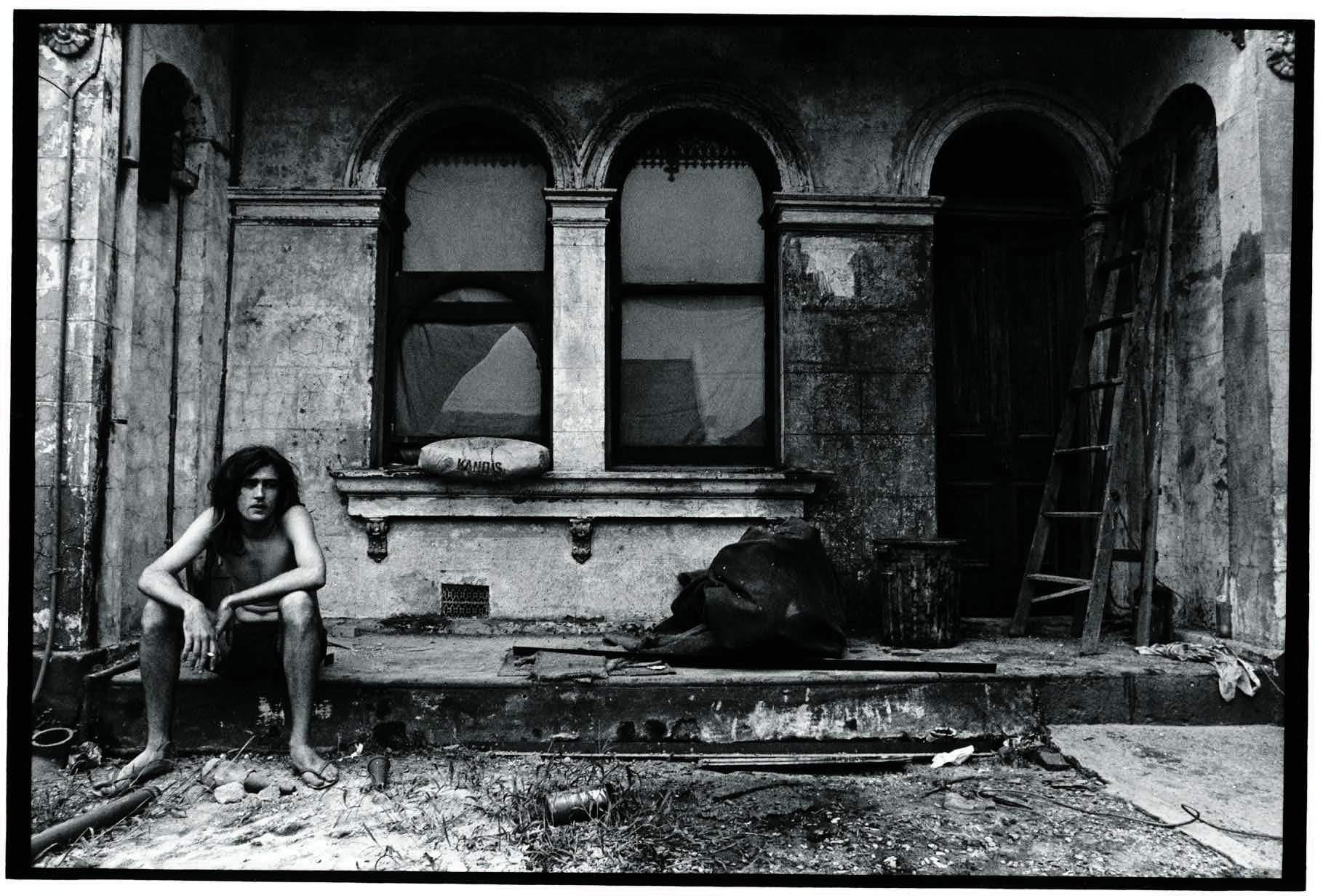
The greatest achievement of the Glebe squatters movement was in bringing to the public eye what harsh consequences were felt by the lower classes, due to political mismanagement and ideological conflict. The intention of the squatters was to emphasise the severity of the housing crisis, and in this—they succeed. There were also other lasting positive outcomes such as The Elsie Women’s Refuge, which began when several women moved into a vacant lot at 73 Westmoreland Street in March of 1974. It was the first women’s refuge in the country and inspired the establishment of countless other organisations with a similar purpose of protecting women from domestic violence.
After Whitlam was dismissed, the replacement Frasier Government leaned into a growing, neoliberal perspective that housing should be left to the “invisible hand” of the market, or otherwise strictly returned to the responsibility of State Governments. Rents within the Glebe Estate returned to market levels, contradicting the initial aims of The Project to provide accessible, affordable housing in the ongoing housing crisis. Yet Whitlam’s efforts and vision did not completely go to waste. Much of the Glebe Estate remains standing at present and is still owned by the NSW Government. This is—in part—thanks to his political foresight and ambition of the Whitlam government in projecting Glebe onto the national stage.
The rhetoric surrounding the housing crisis in the mid-late 20th century eerily reflects the situation today, which only appears to be worsening. As of November 2024, the waiting list of those in NSW needing a home had risen to an astonishing 62,592 applications (over 10,000 more than in 1984). Simultaneously, governments have continued to privatise public housing under a scale of devious guises of community benefit. In the next issue of Glebe Connections, the current state of public housing in Glebe will be explored, as well as the continued spirit of resistance that has protected its most vulnerable people from the carnage of mere financial interest—one that has kept Glebe’s heart beating throughout its troubled yet vibrant history for centuries past.