Ann Curthoys is a Sydney historian whose extensive body of work reflects the troubled past of colonial Australia. Perhaps most notably, in 2002 she published the book Freedom Ride: A freedom rider remembers, which retells her experience as a university student engulfed within the political activism of the civil rights movement during the 1960s. It is a first-hand account of how over 30 University of Sydney students – among them renowned Arrenrnte and Kalkadoon activist Charles Perkins – travelled across the country by bus to fight against racism and bring Indigenous rights to the forefront of public discussion.
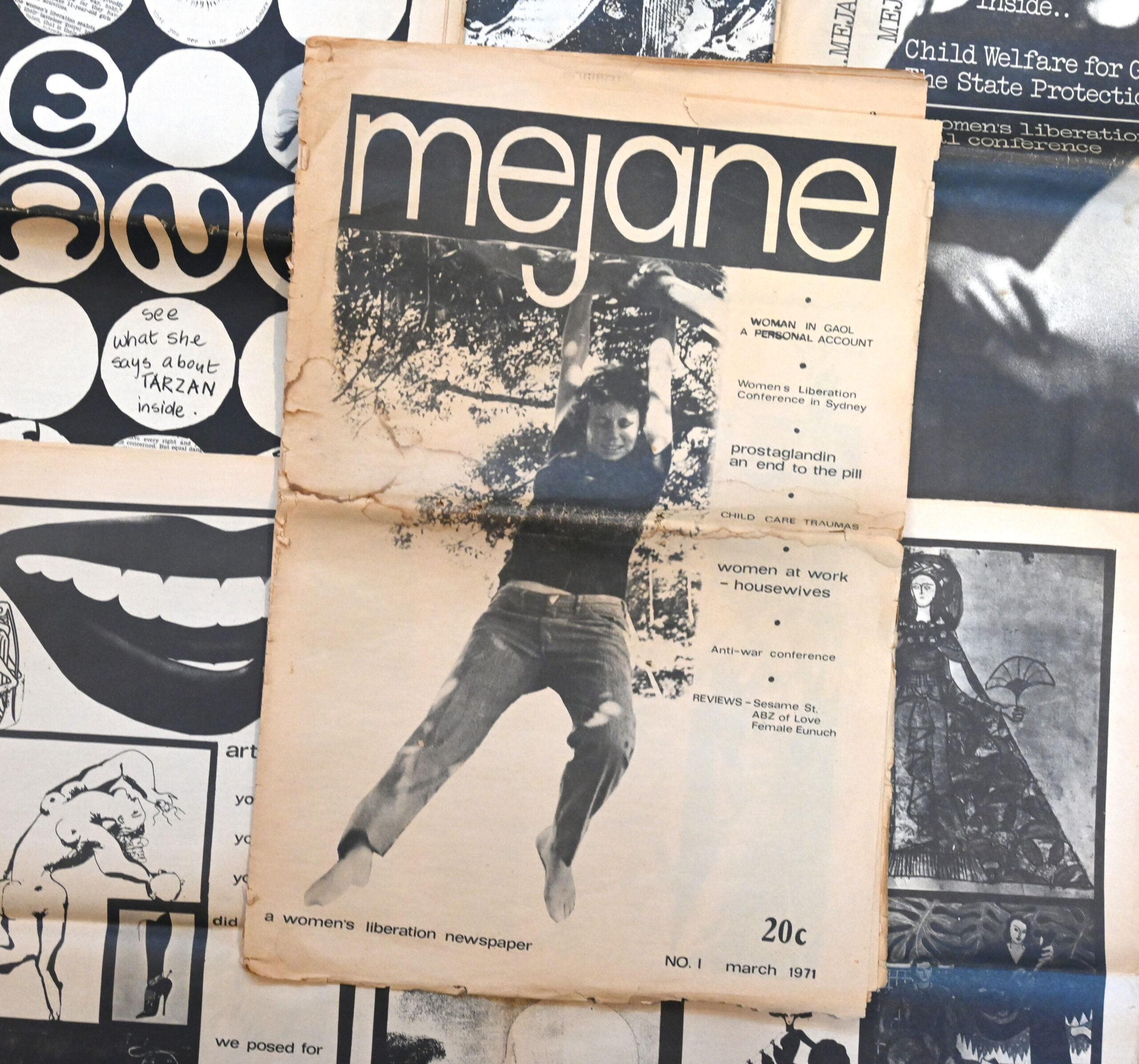
In the decade following, Ann became involved in another project, looking to the inequality faced by women across the nation. It was the first women’s liberation newspaper to ever be put to print within the country. “It was a product of Sydney Women’s Liberation, which started at 67 Glebe Point Rd,” Ann says, “there was a group that met before that in 1969, but by 1970, I was meeting there”. This period is now marked as the peak of feminism’s ‘second wave’, arriving with the emergence of a university educated generation of young women, bound together by the common plight against a male dominated system which they felt more than ready to confront. “Ours was the generation where women were getting good access to education,” Ann says, “but not a lot of the jobs that follow from that. So very restricted occupational pathways. You could be a teacher or librarian. So I think there’s that aspect of it … educated women wanting to demand more”. Australian feminism had until then scarce literature of its own, and ideas were drawn upon from the emerging feminist scholars across the pond. “We were reading lots of American stuff,” she says, “kind of reproducing it and writing little leaflets on our own. We said we’ve gotta really write our stuff. And so MeJane was really part of that, of producing our own work in Australia for Australian readers. And so, we did. And I don’t think any of us had any experience of doing a newspaper or any training.” The first edition of MeJane was released in March of 1971. The cover photo features Ann, aged 26, swinging from a tree in nearby Annandale where she and her partner (now husband) John Docker resided. Ann explains the significance of the first cover photograph (shown above as the feature image of this article). “We decided we wanted to represent the idea of Jane,” she says, “not Tarzan, but that Jane was at the centre of the story. I can’t remember how it got to be me. But it was shot in the park opposite where we lived in Annandale, now called Hinsby Park, and it all developed from there”.
“We decided we wanted to represent the idea of Jane, not Tarzan, but that Jane was at the centre of the story. I can’t remember how it got to be me. But it was shot in the park opposite where we lived in Annandale, now called Hinsby Park, and it all developed from there”.
All twelve editions were produced at 67 Glebe Point Rd, known then as The Women’s Liberation House, in which several student activists lived. The set-up was authentically DIY with essential tools like a Gestetner copying and printing machine, Letrasett (for typefaces), graph paper, a Varityper machine, and plenty of caffeine. MeJane projected a vocal resistance to the systemic subordination of women in the country. In 1970, there was a luxury tax on the contraceptive pill, and the advertising of family services was limited. To be permitted access abortion services, women had to prove that they were mentally unstable. This was on top of a routine silence around domestic violence, with no existing services for women or children to access. When asked of the underlying issues of focus, Ann speaks of, “sexist attitudes and behaviour: sexism. Although we didn’t have that word at the beginning. It was male chauvinism. Recognising all issues to do with representations in the media, lack of cultural respect, those kinds of more cultural issues. So, I think for a lot of people, those things came together, a kind of restlessness about their place in the world and an objection to sexist discourse”.
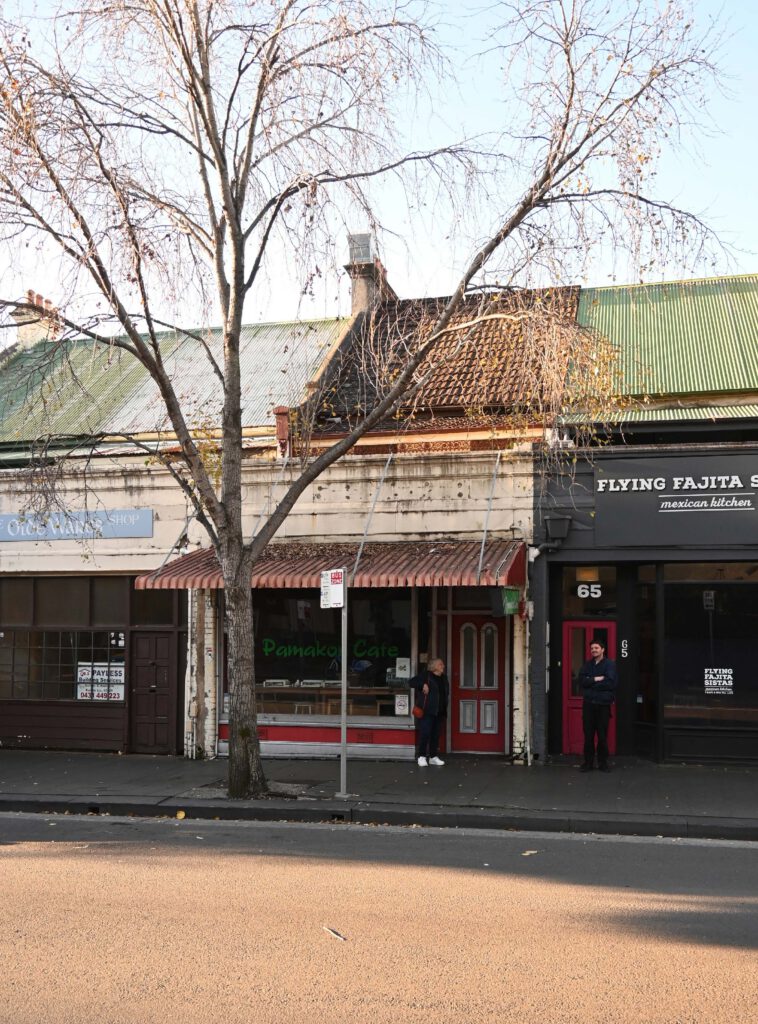
The house also acted as a venue for regular meetings of Sydney Women’s Liberation, a melting pot of ideas, friendships, critical thinking, and consequently – action. “You’d go to one meeting somehow or another,” Ann says, “you get involved and people are talking about their experiences, and you realise you’re part of a bigger group. And so, it becomes a movement of people wanting to demand more”. Of the meetings there Ann says that they “really were like nothing else. In the early stages it really was people sharing ideas or experiences. I think as time went on, it became more activism and planning. There was quite a campaign around the question of abortion in 1970. And there was the 1971 law decision which made abortion much more accessible. In those early stages, abortion was a big campaign issue”.
In a court case held in 1971, Judge Levine of Sydney Central Court ruled five Bondi health clinicians to be not guilty. They were faced with charges of conducting illegal abortions. The decision came after years of campaigning, as well as protests outside the court proceedings by Sydney Women’s Liberation as part of a broader pro-abortion coalition. Judge Levine’s ruling set a new precedent for abortion laws in Australia, opening the doors of specialised clinics and a more flexible public discourse around the issue. It seems that there was a sense of real change in the air, carrying off the inky pages of publications like MeJane, out to the picket lines of feminist rallies and protests outside the courthouses, finally wafting its way through the wooden court room doors and onto the transcript of Australian history.
“You’d go to one meeting somehow or another, you get involved and people are talking about their experiences, and you realise you’re part of a bigger group. ”
“One other feature of that early time was that the media, including television, got onto it quite early.” Ann Says, “They found it interesting, and I can remember some journalists coming and wanting to talk to people there, and they were often pretty clueless about the issues. You know, “what are you women on about?”. Very naive journalism. But we didn’t have to struggle to get attention actually”. It is likely true that the glaring oppression of women in the country could no longer remain ignored. Yet, the attention and resulting change during this consequential period can be viewed as a testament to the proactive, collectivist mindset, and the vision of a cohort of women eager to shift the course of history.
On the changes within feminist discourse since MeJane, Ann says, “it has been through all these phases really, including a lot of backlash and anti-feminism. I think in the 90s it got very hard for women to say they were feminists. I think it’s come back as a legitimate important thing. But in terms of the issues that feminists face: there’s still cultural representation. That is still there. But one thing I’ve got more involved in recently with two other women is writing a history of domestic violence in Australia. And I’ve realised that although women have made a lot of advances in a lot of areas, the violence continues, and I’ve become aware that it’s not just Australia that that’s happened. I’ve gotten very interested in why. That has now been seen as a big issue for 50 years. I think quite a lot of policy developments have been quite good, but there’s still something really fundamental going on”. Fifty years since the final edition of MeJane was published, Ann is still challenged in understanding the persistent problem of male violence. Though without the ambition of collectives like Sydney Women’s Liberation and MeJane, we’re left to drearily wonder what our current society might otherwise look like. Such movements show the power of collective action and the written word in the face of rigid oppressive systems. They provide branches of hope and inspiration to cling onto in the darker hours when things might seem all but hopeless.
In 2012, Suzanne Bellamy wrote an article reflecting on MeJane as some of the foundational years of her life. Sue passed away in 2022 at the age of seventythree. “She was a really key person,” Ann says. “She would always organise us to do the layout. And she would tell us there’s a deadline … There was no deadline, she made it up,” Ann says laughing. Sue wrote in her reflections that “we learned to swear at Glebe in a whole new way, and it was almost always hilarious”. Upon hearing this Ann laughs again, “Well, people didn’t swear then. And women particularly didn’t swear much. Men would swear with each other. But they didn’t swear in front of women. She’s right. That’s where you got to practise swearing. It’s a world that you kind of knew was there, but it wasn’t your world. She was very funny Sue, a very charismatic person. The one that kept it together”.
This article is dedicated to Suzanne Bellamy, Camille Guy, Gale Kelly, Sue Wills, Martha Kay, Joyce Stevens, Julie Gibson, Bessie Guthrie, Lesley Lynch, Sandra Hawker, Martha Ansara, Coonie Sandford, Lyndall Ryan, Mary Murnane, and Sydney Women’s Liberation for giving a voice to voiceless women across the country.
The echoes of which still resonate fifty years on.